
ISRAEL AUTHOR · TRANSLATIONS INTO ENGLISH · POETRY
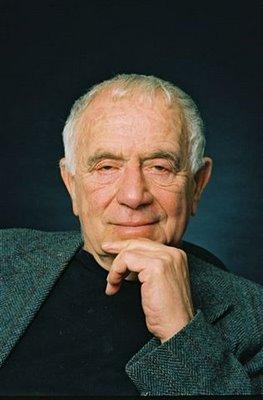
Yehuda Amichai
Also known as: Jehuda Amichai, Yehuda AMICHAI
Israeli poet
WHO stands on that cliff, like a figure of stone,
— from Poems
Most acclaimed

Travels
1958
Here is a record of Michael Crichton's astonishing adventures. It is a vision of travel not as escape but as exhilaration, as a testing of self, and as spiritual education. Crichton shows us travel as turmoil and as peace. All of this voyages, outward and inward, from his twenties to his mid-forties, have been journeys into awareness--leading him to the excitement and benison of direct expeirence undimmed by expectations, theories, or old assumptions. His remarkable book is in itself a fascinating realm in which the adventurous are invited to travel.
Love Poems
In a career that has spanned more than a quarter century, Nikki Giovanni has earned the reputation as one of America's most celebrated and contoversial writers.Now, she presents a stunning collection of love poems that includes more than twenty new works.From the revolutionary "Seduction" to the tender new poem, "Just a Simple Declaration of Love," from the whimsical "I Wrote a Good Omelet" to the elegiac "All Eyez on U," written for Tupac Shakur, these poems embody the fearless passion and spirited wit for which Nikki Giovanni is beloved and revered.Romantic, bold, and erotic, Love Poems expresses notions of love in ways that are delightfully unexpected. Articulating in sensuous verse what we know only instinctively, Nikki Giovanni once again confirms her place as one of our nations's most distinguished poets and powerful truth-tellers.
Poems
This is an edition of all the known poems of Mark Akenside, the eighteenth-century English poet and physician, whose poetry has not been newly edited for more than a century. This edition will thus provide scholars and students with a much-needed opportunity to reassess the extent of Akenside's contribution to literary culture, and it will also clarify his role in the development of the aesthetic theories of his own generation and the one that followed. The career of Mark Akenside (1721-70) spans a period of extraordinarily fast change in English literature: his first major poem, The Pleasures of Imagination, appeared in the year of Pope's death; and Akenside died in the year Wordsworth was born. His works not only reflected the very considerable changes that took place during these years; they also contributed in many ways to the shifts in focus, interest, and emphasis that characterize the literature of the later eighteenth century. Akenside's fascination with the imagination, its characteristics and functions, resulted in an intriguing and influential blend of the poetic and the philosophical in his longer poems, The Pleasures of Imagination (1744) and The Pleasures of the Imagination (1772). The earlier work explores the then new subject of aesthetics in greater detail than it had ever been explored before, presenting various original insights and arguments. Yet it would be wrong to see the poem as merely a versified philosophical treatise; its complex structure offers satisfactions beyond those of sequential logic, and the examples cited to illustrate the central ideas are imbued with considerable vigor and clarity. As products of, and contributors to, the eighteenth-century enthusiasm for aesthetics, Akenside's longer poems are captivating examples of the eighteenth- and nineteenth-century experiment in developing the philosophical poem into a major literary form. It is for this reason above all others that they are valued by Coleridge and the writers of the next generation. Because of the comparative obscurity into which Akenside's works fell after the demise of the long philosophical poem in the latter part of the nineteenth century, they have not by and large attracted the attention of modern bibliographers. In this edition numerous bibliographical and textual puzzles presented by his poems are solved for the first time. The apparatus, meanwhile, demonstrates the full extent of the poet's urge to revise - an urge that extended from the wholesale rewriting of some poems to subtle alterations of textual minutiae, showing a mind and an ear alive to nuances of meaning and intonation.