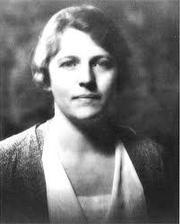
Pearl S. Buck
Personal Information
Description
Pearl S. Buck had always lived in China except for the time she spent in the United States when she was being educated. She studied at Randolph-Macon College and at Cornell University. She taught at the University of Nanking and at the Government University in Nanking under two national regimes. She lived in Nanking during the 1930's. The Good Earth was Mrs. Buck's second published novel. East Wind: West Wind appeared under the John Day imprint in 1930. She contributed articles and stories to various magazines, among them The Atlantic Monthly, The Nation, and Asia.
Books
Dragon Seed (Progress English)
Dragon Seed is a fictional novel which describes the lives of Chinese peasants in a village outside Nanjing, China immediately prior to and during the Japanese invasion in 1937.
Pearl S. Buck's oriental cookbook
Varied collection of recipes from all the countries of the Orient - Indonesia, Thailand, Burma, India, Pakistan, China, the Philippines, Indochina, Korea, Malaysia, and Japan.
The hidden flower
Forbidden love between an American serviceman and an aristocratic Japanese young woman set in post-WW II Japan. This proves to be the source of great pain in an era of racial intolerance.
The good deed
Collection of ten stories ranging in time from World War II to the present.
Mandala
Set in India, Mandala is about an Indian Prince and Princess and their lives. The Prince and Princess live fairly uneventful lives, until their daughter does not want to marry the man chosen for her, the Prince falls for a foreign woman, and the Princess becomes close to a missionary priest. Things get serious when their son dies, and the Prince continues to look for his son's reincarnated spirit among his people.
Fighting Angel
The story of a North American missionary, the author's father, who travelled the roads of China for more than fifty years.
The three daughters of Madame Liang
An excellent book about 3 daughters deciding to move back to China during the time of Chairman Mao. The mother is an incredible portrait of Old China adapting to new ways. A must read for Buck fans!
Pavilion of Women
A los cuarenta años, Madame Wu, esposa de un miembro de una de las dinastías de terratenientes más consideradas de China, abandona voluntariamente la vida matrimonial y busca una concubina para su marido. Su decisión cambia la vida de todos los que la rodean... A las puertas de la Segunda Guerra Mundial, la familia se enfrenta a la encrucijada entre tradición, comunismo y pensamiento occidental, con una lucha más importante de fondo: la del espíritu humano por su libertad...
The Good Earth
This tells the poignant tale of a Chinese farmer and his family in old agrarian China. The humble Wang Lung glories in the soil he works, nurturing the land as it nurtures him and his family. Nearby, the nobles of the House of Hwang consider themselves above the land and its workers; but they will soon meet their own downfall. Hard times come upon Wang Lung and his family when flood and drought force them to seek work in the city. The working people riot, breaking into the homes of the rich and forcing them to flee. When Wang Lung shows mercy to one noble and is rewarded, he begins to rise in the world, even as the House of Hwang falls.
East Wind, West Wind
Pearl S. Buck ha sabido describir en sus libros el punto justo en que se encuentran las civilizaciones oriental y occidental. Al trazarnos el retrato de una familia distinguida, nos muestra los conflictos que, de manera inevitable, surgen entre padres e hijos cuando las ideas occidentales penetran en los baluartes de la cultura china. La joven Kwei-lan, hija de un rico patriarca chino, acaba de contraer matrimonio. Su marido, cuya exquisita educación ancestral se ha desvanecido por influencia de la cultura occidental, rechaza inicialmente a la esposa. Nuevas costumbres y usos, algunos en contradicción con aquellas convicciones en las que fue educada, deberá aceptar la esposa paulatinamente si desea conseguir el amor de su marido y comprender las díficiles situaciones familiares que provoca el contacto entre las culturas de Oriente y Occidente.
The mother
Pearl Buck paints the portrait of a poor woman living in a remote village whose joys are few and hardships are many. As the ancient traditions, which she bases her philosophies upon, begin to collide with the new ideals of the communist era, this peasant woman must find a balance between them and deal with the consequences.
Prentice Hall Literature--Silver
Grade Level 7-9
The child who never grew
The Child Who Never Grew is Buck’s candid memoir of her relationship with her oldest daughter, who was born with a rare type of mental retardation. A forerunner of its kind, the memoir was published in 1950 and helped demolish the cruel taboos surrounding learning disabilities. Buck describes life with her daughter, Carol, whose special needs led Buck to send her to one of the best schools for disabled children in the United States—which she paid for in part by writing The Good Earth, her multimillion-selling classic novel. Brave and touching, The Child Who Never Grew is a heartrending memoir of parenting. As Buck writes, “I learned respect and reverence for every human mind. It was my child who taught me to understand so clearly that all people are equal in their humanity and that all have the same human rights.”
Come, My Beloved
A Division of Agricultural Sciences' Circular about avocado pests
