Discover

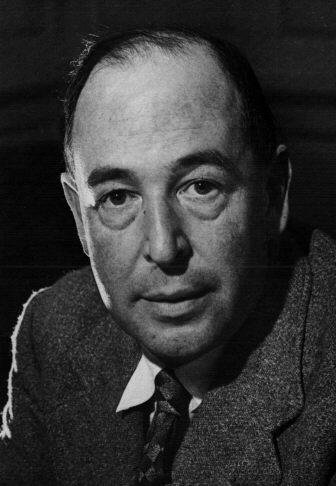
C. S. Lewis

Personal Information

Born November 29, 1898
Died November 22, 1963 (64 years old)
Belfast, United Kingdom
Also known as: Clive Staples Lewis, C. S. 루이스
172 books
4.0 (723)
6,731 readers

Description

Clive Staples Lewis was an Irish-born British novelist, academic, medievalist, literary critic, essayist, lay theologian and Christian apologist.

Books

Newest First

The Four Loves

4.0 (11)
184

The novel based on the The Four Loves radio talks by C. S. Lewis.

The Last Battle

3.9 (72)
483

When evil comes to Narnia, Jill and Eustace help fight the great last battle and Aslan leads his people to a glorious new paradise.

The Magician's Nephew

0.0 (0)
1

"How Aslan created Narnia and gave the gift of speech to its animals."

Surprised by Joy

3.4 (12)
124

Autobiography of the English theologian, novelist, and scholar, concerning his early years. The author's spiritual journey from Chrisitanity to atheism and then back to Christianity.

The dark tower, and other stories

0.0 (0)
40

A compilation of all of Lewis's shorter fiction including several science fiction tales.

The Horse and His Boy

4.0 (78)
516

A boy and a talking horse share an adventurous and dangerous journey to Narnia to warn of invading barbarians.

The chronicles of Narnia

0.0 (0)
7

The well-known and well-loved books that make up C.S. Lewis's "Chronicles of Narnia" have long held a prominent place on many a child's (and adult's) bookshelf. Since their publication in the 195Os, the books' depiction of the fantasy land of Narnia has inspired the wonder, delight, and imaginations of children around the world. More than just fairy tales, the stories show readers that all is not as it seems, that perseverance can bring forth great rewards, and that growth is a continual and unpredictable process. Most important, arguably, is the ongoing struggle between good and evil depicted in the "Chronicles.". These themes are displayed amid the experiences of several children, particularly Lucy, Edmund, Susan, and Peter Pevensie. Beginning with the first book of the series, The Lion, the Witch and the Wardrobe (1950), we follow the children as they magically enter the kingdom of Narnia for the first of many adventures there, including their meeting the memorable lion, Aslan. In the sequel, Prince Caspian, they help the prince and his army of Talking Beasts conquer the usurping Telemarines; the following novel, The Voyage of the "Dawn Treader," continues Caspian's story by recounting his voyage to the End of the World. The fourth book, The Silver Chair, returns to the theme of an evil witch, first explored in The Lion, while The Horse and His Boy details Narnia's near-invasion by the Calormenes. The Magician's Nephew accounts for the creation of Narnia, and the seventh tale, The Last Battle (1956), tells of Narnia's final days. Colin Manlove has carefully studied the tales and shows that they are patterned narratives with many complex, intertwined threads. He relates these narratives to Lewis's views on stories, and also sets Lewis's books in their literary context, both juvenile and adult. After a discussion of the critical receptions of the tales, Manlove supplies a full chapter on each book for in-depth analysis. Questions that may occur fleetingly to the casual reader, such as the matter of possible Christian imagery (most notably in Aslan's sacrificial death and resurrection), are examined fully to give the reader a wider scope of reference. Ultimately, Manlove contends that these stories mirror Lewis's view of the universe as both mysterious and complex.

The Voyage of the Dawn Treader

4.1 (101)
400

Lucy, Edmund, and their cousin travel back to Narnia through a painting where they board a ship named "The Dawn Treader." They find King Caspian and a mouse on the ship and they find mystical creatures and go on a mission that will decide Narnia's fate!

That hideous strength

3.5 (13)
134

2. That hideous strength : a modern fairy-tale for grown-ups Add to My List by Lewis, C. S. (Clive Staples), 1898-1963. ... That hideous strength : a modern fairy-tale for grown-ups / C.S. Lewis. ... Publisher, Date: New York : Scribner Classics, 1996. - Contributor biographical information Description: 380 p. ; 25 cm. Local Availability 0 (of 1) System Availability 0 (of 1) Call Number: F Lew 1996 Summary Table of Contents Large Cover Image Book Discussion Guides More titles like this More authors like this Librarian's View Edition: 1st Scribner Classics ed. ISBN: 0684833670 System Availability: 1 Current Holds: 0 Availability Full Display Place Request Hide Details Summary Written during the dark hours immediately before and during the Second World War, C. S. Lewis's Space Trilogy, of whichThat Hideous Strengthis the third volume, stands alongside such works as Albert Camus'sThe Plagueand George Orwell's1984as a timely parable that has become timeless, beloved by succeeding generations as much for the sheer wonder of its storytelling as for the significance of its moral concerns. For the trilogy's central figure, C. S. Lewis created perhaps the most memorable character of his career, the brilliant, clear-eyed, and fiercely brave philologist Dr. Elwin Ransom. Appropriately, Lewis modeled Dr. Ransom on his dear friend J. R. R. Tolkien, for in the scope of its imaginative achievement and the totality of its vision of not one but two imaginary worlds, the Space Trilogy is rivaled in this century only by Tolkien's trilogy The Lord of the Rings. Readers who fall in love with Lewis's fantasy series The Chronicles of Narnia as children unfailingly cherish his Space Trilogy as adults; it, too, brings to life strange and magical realms in which epic battles are fought between the forces of light and those of darkness. But in the many layers of its allegory, and the sophistication and piercing brilliance of its insights into the human condition, it occupies a place among the English language's most extraordinary works for any age, and for all time.InThat Hideous Strength,the final installment of the Space Trilogy, the dark forces that have been repulsed inOut of the Silent PlanetandPerelandraare massed for an assault on the planet Earth itself. Word is on the wind that the mighty wizard Merlin has come back to the land of the living after many centuries, holding the key to ultimate power for the force that can find him and bend him to its will. A sinister technocratic organization that is gaining force throughout England, N.I.C.E. (the National Institute of Coordinated Experiments), secretly controlled by humanity's mortal enemies, plans to use Merlin in their plot to "recondition" society. Dr. Ransom forms a countervailing group, Logres, in opposition, and the two groups struggle to a climactic resolution that brings the Space Trilogy to a magnificent, crashing close.

C.S. Lewis letters to children

0.0 (0)
32

A collection of letters from the English author of the Narnia books to a variety of children.

The Grand Miracle

1.0 (1)
6

One of this century's greatest writers of fact, fiction, and fantasy explores, in utterly beautfiul terms, questions of faith in the modern world: On the experience of miracles; On silence and religious belief; On the assumed conflict between work and prayer, and much more.

The Screwtape Letters

4.1 (29)
646

A milestone in the history of popular theology, The Screwtape Letters is an iconic classic on spiritual warfare and the dynamics of temptation.This profound and striking narrative takes the form of a series of letters from Screwtape, a devil high in the Infernal Civil Service, to his nephew Wormwood, a junior colleague engaged in his first mission on earth, trying to secure the damnation of a young man who has just become a Christian. Although the young man initially looks to be a willing victim, he changes his ways and is "lost" to the young devil.Dedicated to Lewis's friend and colleague J. R. R. Tolkien, The Screwtape Letters is a timeless classic on spiritual conflict and the psychology of temptation which are part of our religious experience
