
UNITED KINGDOM AUTHOR · FICTION · DETECTIVE AND MYSTERY
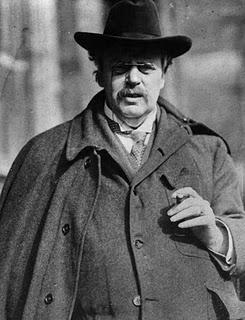
Gilbert Keith Chesterton
Also known as: G. K. Chesterton, G. Keith Chesterton
Gilbert Keith Chesterton was an English writer, lay theologian, poet, philosopher, dramatist, journalist, orator, literary and art critic, biographer, and Christian apologist.
Rabelais, or his wild illustrator Gustave Dore, must have had something to do with the designing of the things called flats in England and America.
— from The Club of Queer Trades
Most acclaimed

The 50 Greatest Mysteries of All Time
[Purloined Letter]( / Edgar Allan Poe A terribly strange bed / Wilkie Collins The three strangers / Thomas Hardy T[he red-headed league]( / Arthur Conan Doyle The corpus delecti / Melville Davisson Post Gentlemen and players / E.W. Hornung A journey / Edith Wharton The leopard man's story / Jack London A retrieved reformation / O. Henry The problem of Cell 13 / Jacques Futrelle The absent-minded coterie / Robert Barr The invisible man / G.K. Chesterton The infallible Godahl / Frederick Irving Anderson The adventure of the unique "Hamlet" / Vincent Starrett The Gioconda smile / Aldous Huxley Haircut / Ring Lardner The killers / Ernest Hemingway The hands of Mr. Ottermole / Thomas Burke The little house at Croix-Rousse / Georges Simenon The case of the missing patriarchs / Logan Clendening Clerical error / James Gould Cozzens The two bottles of relish / Lord Dunsany The chaser / John Collier The perfect crime / Ben Ray Redman Yours truly, Jack the Ripper / Robert Bloch The blind spot / Barry Perowne The catbird seat / James Thurber Recipe for murder / C.P. Donnel Jr. The nine mile walk / Harry Kemelman Kill or be killed / Ogden Nash The specialty of the house / Stanley Ellin Nearly perfect / A.A. Milne The Gettysburg Bugle / Ellery Queen The last spin / Evan Hunter Stand up and die! / Mickey Spillane A new leaf / Jack Ritchie The snail-watcher / Patricia Highsmith The long way down / Edward D. Hoch The man who never told a lie / Isaac Asimov I have / John Gardner [Quitters, Inc.]( / Stephen King Horn man / Clark Howard The new girl friend / Ruth Rendell By the dawn's early light / Lawrence Block Iris / Stephen Greenleaf High Darktown / James Ellroy The Pietro Andromache / Sara Paretsky Soft monkey / Harlan Ellison The hand of Carlos / Charles McCarry Karen makes out / Elmore Leonard
Great Short Tales of Mystery and Terror
Each story in Great Short Tales of Mystery and Terror is an example of the work of an outstanding author--from Edgar Allan Poe and Sir Arthur Conan Doyle to such modern masters as Agatha Christie, Ross Macdonald, Georges Simenon and a score of other famous names. Appearing in these pages are the world's greatest fictional detectives--Sherlock Holmes, Hercule Poirot, Father Brown, James Bond, Lew Archer, Ellery Queen, Inspector Maigret and Perry Mason, all at work on some of their more baffling and fascinating cases. Contents: [THE RED-HEADED LEAGUE]( / Sir Arthur Conan Doyle THE TURN OF THE TIDE / C. S Forester THE SUMMER PEOPLE / Shirley Jackson [THE CASK OF AMONTILLADO]( / Edgar Allan Poe THE THIRD FLOOR FLAT / Agatha Christie THE MAN WHO LIKED DICKENS / Evelyn Waugh WAS IT A DREAM / Guy de Maupassant THE FOURTH MAN / John Russell THE WENDIGO / Algernon Blackwood THE TOUCH OF NUTMEG MAKES IT / John Collier THE ABSENCE OF MR. GLASS / G. K. Chesterton MIRIAM / Truman capote THE LOG OF THE EVENING STAR / Alfred Noyes CASTING THE RUNES / M. R. James [MAN FROM THE SOUTH]( / Roald Dahl THE WHOLE TOWNS SLEEPING / Ray Bradbury THE ARROW OF GOD / Leslie Charteris THE TWO BOTTLES OF RELISH / Lord Dunsany THE GETTYSBURG BUGLE / Ellery Queen [The Damned Thing]( / Ambrose Bierce DON'T LOOK NOW / Daphne du Maurier THE HANDS OF MR. OTITRMOLE / Thomas Burke AN ALPINE DIVORCE / Robert Barr THE INCAUTIOUS BURGLAR / John Dickson Carr THANATOS PALACE HOTEL / André Maurois THE GHOST.SHIP / Richard Middleton THE RATS IN THE WALLS / H. P. Lovecraft AETER.DINNER STORY / William Irish ANOTHER SOLUTION j Gilbert Highet THE WAXWORK / A. M. Burrage FOR YOUR EYES ONLY / Ian Fleming THE FOGHORN / Gertrude Atherton LEININGEN VERSUS THE ANTS / c-arl. Stephenson THE INTERRUPTION / W. W. Jacobs AN INVITATION TO THE HUNT / George Hitchcock THE VOICE IN THE NIGHT / William Hope Hodgson MIDNIGHT BLUE / Ross Macdonald THE REIVRN OF IMRAY / Rudyard Kipling JOURNEY BACKWARD INTO TIME / Georges Simenon THE MOVIE PEOPLE / Robert Bloch BROKER'S SPECIAL / Stanley Ellin THE SEA RAIDERS / H. G. Wells THE CASE OF THE IRATE WITNTESS / Erie Stanley Gardner SREDNI VASHTAR / Saki (H. H. Munro) THE NINE BILLION NAMES or GOD / Arthur C. Clarke