
FRANCE AUTHOR · TRANSLATIONS INTO ENGLISH · HISTORY AND CRITICISM
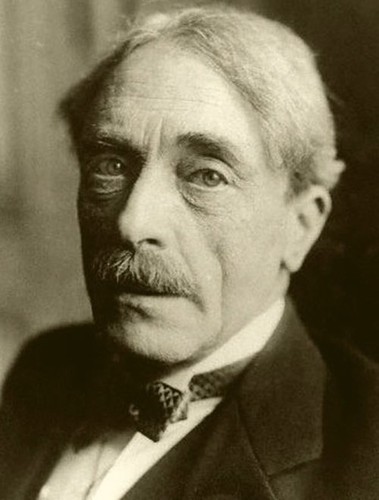
Paul Valéry
Also known as: Paul Valery, Paul Ambroise Valéry
Paul Valery occupies a position in the history of French letters that is at once strategic and highly problematic. Critics have affixed to him various labels, all of them partially correct. He has been called the last French symbolist, the first post-symbolist, a masterful classical prosodist, an advocate of logical positivism, and a cerebral narcissist.
Two very beautiful naked girls are crouched facing each other.
— from Essays, 1987
Most acclaimed

Plays
Miller Plays: 6 is the final volume in Methuen Drama's acclaimed series of work by Arthur Miller who, during his lifetime, was acknowledged as 'the greatest American dramatist of our age' (Evening Standard). Featuring two plays from the 1990s and his final two plays (2002 and 2004), it is the first ever publication of Miller's final play, Finishing the Picture. Inspired by his experience during the filming of The Misfits with his then wife Marilyn Monroe, the play was completed and produced at the Goodman Theatre, Chicago, just months before the playwright's death in Feburary 2005. Broken Glass (1994) is set in Brooklyn in 1938 and intertwines a woman's obsession with the news from Germany that government thugs are smashing Jewish stores, with her strange relationship with her husband. Mr Peter's Connections (1998) is an unforgettable journey through one man's mind at a time of suspended consciousness, where the living and dead intermingle in his memory. Resurrection Blues is Miller's astonishing black comedy set in a South American banana republic, that satirises global politicsand the predatory nature of a media-saturated culture. The volume also features a chronology of the writer's work and an introduction by Enoch Brater, professor of English Literature at the University of Michigan.
Charms and Other Pieces
"Paul Valery's most celebrated collection Charmes was first published in 1922. It contains several of his most famous poems, including 'Ebauche d'un serpent' and 'Le cimetiere marin' - in Yvor Winters' view 'the two greatest short poems ever written.' The collection as a whole has achieved classic status as the finest work by the finest modern French poet. Here it is introduced and discussed by Peter Dale who has also appended some early poems, and one much later piece, of related interest." "Peter Dale has been working on his translations for some thirty years, As ever, he takes the hardest - and for the reader, most rewarding - route in making versions with corresponding rhyme and metre. The result is a fresh view of an intriguing poet,somewhat neglected but now revived in English."--book jacket.
Essays
1987
The titles of Ralph Waldo Emerson’s essays consist of a range of general concepts such as character, experience, friendship, history, intellect, love, nature, politics, prudence and, most famously, self-reliance. However, in no case is the content of an essay limited to considerations relevant to its title concept. Emerson’s style is digressive and aphoristic, his lengthy paragraphs strewn with terse, dogmatic assertions. The pieces record the diffuse preconceptions and opinions of the author, typically without arguing for them. “Nature,” Emerson’s first published essay, was published independently five years before his first collection of essays. It became a foundational text for transcendentalism, the New England intellectual movement that upheld the divine character of the natural world and the importance of spiritual connection with it. In its emphasis on reason, individual conscience, and innate human goodness, transcendentalism was related to Unitarianism, where Emerson began his career as a minister. While Emerson resigned from this post after only a few years, he retained a lifelong concern with religion and theology that is frequently manifest in his essays. Even in the earlier essays Emerson expresses in passing a general opposition to slavery, but he has sometimes been criticized for remaining aloof from the social issues of his day, and especially from abolition. Emerson’s growing willingness to think and speak about slavery as he aged is visible in the collection; its final essay is a lecture given before the American Anti-Slavery Society. In “Politics,” he includes “emancipat[ing] the slave” alongside befriending the poor, building schools and cherishing the arts in a list of causes that he takes to represent “real good.” Emerson’s essays were especially influential among the members of the Transcendental Club that met in Cambridge, Massachusetts, which included Henry Thoreau among its members. Reading the essays was also instrumental in the literary development of Emerson’s later correspondent Walt Whitman, who in Leaves of Grass aimed to attain the ideal of the American poet described in “The Poet.” In German translation, the essays were read and appreciated by Nietzsche, who chose a quotation from “History” as the epigraph for the first edition of his 1882 book The Gay Science and in the same book named Emerson among the few men he judged to be “masters of prose.” The essays collected here were originally released in two volumes, or “series,” the first in 1841 and the second in 1844. In the original editions, each essay was prefaced by a poem of Emerson’s own authorship. While some of these poems were omitted in later editions, all have been included here.