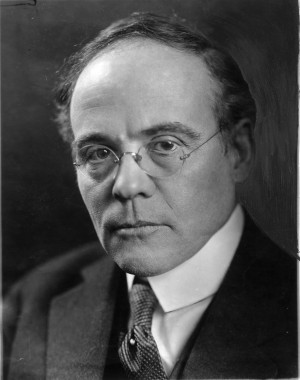

UNITED STATES AUTHOR · POETRY · HISTORY
Edgar Lee Masters
Also known as: Lee Edgar Masters, Edgar E. Masters
Edgar Lee Masters (August 23, 1868 – March 5, 1950) was an American attorney, poet, biographer, and dramatist. He is the author of Spoon River Anthology (1915), The New Star Chamber and Other Essays, Songs and Satires, The Great Valley, The Serpent in the Wilderness, An Obscure Tale, The Spleen, Mark Twain: A Portrait, Lincoln: The Man, and Illinois Poems. In all, Masters published twelve plays, twenty-one books of poetry, six novels and six biographies, including those of Abraham Lincoln, Mark Twain, Vachel Lindsay, and Walt Whitman.
Abraham Lincoln wasn't the sort of man who could lose himself in a crowd.
— from Lincoln, 1905
Most acclaimed

Prentice Hall Literature--Timeless Voices, Timeless Themes--The American Experience
Modern Biblical criticism (as opposed to pre-Modern criticism) is the use of critical analysis to understand and explain the Bible without appealing to the supernatural. During the eighteenth century, when it began as historical-biblical criticism, it was based on two distinguishing characteristics: (1) the scientific concern to avoid dogma and bias by applying a neutral, non-sectarian, reason-based judgment to the study of the Bible, and (2) the belief that the reconstruction of the historical events behind the texts, as well as the history of how the texts themselves developed, would lead to a correct understanding of the Bible. This sets it apart from earlier, pre-critical methods; from the anti-critical methods of those who oppose criticism-based study; from the post-critical orientation of later scholarship; and from the multiple distinct schools of criticism into which it evolved in the late twentieth and early twenty-first centuries. The emergence of biblical criticism is most often attributed by scholars to the German Enlightenment (c. 1650 – c. 1800), but some trace its roots back further, to the Reformation. Its principal scholarly influences were rationalist and Protestant in orientation; German pietism played a role in its development, as did British deism.
Poems
This is an edition of all the known poems of Mark Akenside, the eighteenth-century English poet and physician, whose poetry has not been newly edited for more than a century. This edition will thus provide scholars and students with a much-needed opportunity to reassess the extent of Akenside's contribution to literary culture, and it will also clarify his role in the development of the aesthetic theories of his own generation and the one that followed. The career of Mark Akenside (1721-70) spans a period of extraordinarily fast change in English literature: his first major poem, The Pleasures of Imagination, appeared in the year of Pope's death; and Akenside died in the year Wordsworth was born. His works not only reflected the very considerable changes that took place during these years; they also contributed in many ways to the shifts in focus, interest, and emphasis that characterize the literature of the later eighteenth century. Akenside's fascination with the imagination, its characteristics and functions, resulted in an intriguing and influential blend of the poetic and the philosophical in his longer poems, The Pleasures of Imagination (1744) and The Pleasures of the Imagination (1772). The earlier work explores the then new subject of aesthetics in greater detail than it had ever been explored before, presenting various original insights and arguments. Yet it would be wrong to see the poem as merely a versified philosophical treatise; its complex structure offers satisfactions beyond those of sequential logic, and the examples cited to illustrate the central ideas are imbued with considerable vigor and clarity. As products of, and contributors to, the eighteenth-century enthusiasm for aesthetics, Akenside's longer poems are captivating examples of the eighteenth- and nineteenth-century experiment in developing the philosophical poem into a major literary form. It is for this reason above all others that they are valued by Coleridge and the writers of the next generation. Because of the comparative obscurity into which Akenside's works fell after the demise of the long philosophical poem in the latter part of the nineteenth century, they have not by and large attracted the attention of modern bibliographers. In this edition numerous bibliographical and textual puzzles presented by his poems are solved for the first time. The apparatus, meanwhile, demonstrates the full extent of the poet's urge to revise - an urge that extended from the wholesale rewriting of some poems to subtle alterations of textual minutiae, showing a mind and an ear alive to nuances of meaning and intonation.
Lincoln
1905
The phenomenal national bestseller that is "the Lincoln biography for this generation" (Arthur Schlesinger, Jr.)-now in paperback. Drawing on resources not available until recently, including Lincoln's personal papers, archives, and newspaper reports, two-time Pulitzer Prize-winning author David Herbert Donald presents a masterful account of Lincoln's rise to the presidency and the political and personal challenges he faced while in office. David Herbert Donald's Lincoln is a stunningly original portrait of Lincoln's life and presidency. Donald brilliantly depicts Lincoln's gradual ascent from humble beginnings in rural Kentucky to the ever-expanding political circles in Illinois, and finally to the presidency of a country divided by civil war. Donald goes beyond biography, illuminating the gradual development of Lincoln's character, chronicling his tremendous capacity for evolution and growth, thus illustrating what made it possible for a man so inexperienced and so unprepared for the presidency to become a great moral leader. In the most troubled of times, here was a man who led the country out of slavery and preserved a shattered Union-in short, one of the greatest presidents this country has ever seen.