
UNITED KINGDOM AUTHOR · FICTION · ENGLISH
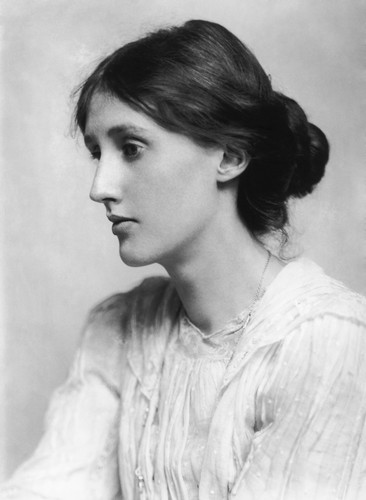
Virginia Woolf
Also known as: Adeline Virginia Woolf, Virginia, Woolf
Virginia Woolf was an English novelist, essayist, diarist, epistler, publisher, feminist, and writer of short stories, regarded as one of the foremost modernist literary figures of the twentieth century. [Comment from Ursula Le Guin on The Guardian]: > You can't write science fiction well if you haven't read it, though not all who try to write it know this. But nor can you write it well if you haven't read anything else. Genre is a rich dialect, in which you can say certain things in a particularly satisfying way, but if it gives up connection with the general literary language it becomes a jargon, meaningful only to an ingroup. Useful models may be found quite outside the genre. I learned a lot from reading the ever-subversive Virginia Woolf. > I was 17 when I read [Orlando]. It was half-revelation, half-confusion to me at that age, but one thing was clear: that she imagined a society vastly different from our own, an exotic world, and brought it dramatically alive. I'm thinking of the Elizabethan scenes, the winter when the Thames froze over. Reading, I was there, saw the bonfires blazing in the ice, felt the marvellous strangeness of that moment 500 years ago – the authentic thrill of being taken absolutely elsewhere. > How did she do it? By precise, specific descriptive details, not heaped up and not explained: a vivid, telling imagery, highly selected, encouraging the reader's imagination to fill out the picture and see it luminous, complete. > In [Flush], Woolf gets inside a dog's mind, that is, a non-human brain, an alien mentality – very science-fictional if you look at it that way. Again what I learned was the power of accurate, vivid, highly selected detail. I imagine Woolf looking down at the dog asleep beside the ratty armchair she wrote in and thinking what are your dreams? and listening . . . sniffing the wind . . . after the rabbit, out on the hills, in the dog's timeless world. > Useful stuff, for those who like to see through eyes other than our own. : : :
While waiting to buy a book in which to record my impressions first of Christina Rossetti, then of Byron, I had better write them here.
— from A Writer's Diary
Most acclaimed

A Writer's Diary
An invaluable guide to the art and mind of Virginia Woolf, drawn by her husband from the personal record she kept over a period of twenty-seven years. Included are entries that refer to her own writing, others that are clearly writing exercises accounts of people and scenes relevant to the raw material of her work and comments on books she was reading. Edited and with a Preface by Leonard Woolf Indices. --
The letters of Vita Sackville-West to Virginia Woolfe
2001
After they met in 1922, Vita Sackville-West, a British novelist married to foreign diplomat Harold Nicolson, and Virginia Woolf began a passionate relationship that lasted until Woolf’s death in 1941. Their revealing correspondence leaves no aspect of their lives untouched: daily dramas, bits of gossip, the strains and pleasures of writing, and always the same joy in each other’s company. This volume, which features over 500 letters spanning 19 years, includes the writings of both of these literary icons. DeSalvo and Leaska established the chronological order of the letters and placed them in sequence, and they have also included relevant diary entries and letters Vita and Virginia wrote to other friends where they add context and illumination to the narrative. Annotations throughout the text identify peripheral characters, clarify allusions, and provide background. As the New York Times noted, "the result is a volume that reads like a book, not just a gathering of marvelous scraps." In his introduction Mitchell A. Leaska observes, "Rarely can a collection of correspondence have cast into more dramatic relief two personalities more individual or more complex; and rarely can an enterprise of the heart have been carried out so near the verge of archetypal feeling."
The Second Common Reader
Contains 26 essays on aspects of English literature. Among her subjects are the writings of Mary Wollstonecraft, Dorothy Wordsworth, and Christina Rossetti. She also reflects on the poetry of John Donne; the works of Daniel Defoe, Lawrence Sterne, George Meredith, and Thomas Hardy; Lord Chesterfield’s letters; and Thomas De Quincey’s autobiography. Noteworthy too is the last essay, "How Should One Read a Book?".