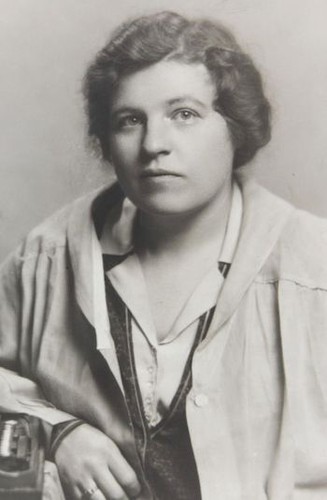

UNITED STATES AUTHOR · FICTION · CHILDREN
Rachel Field
Also known as: Rachel FIELD, Rachel Lyman Field
Rachel Lyman Field (September 19, 1894 – March 15, 1942) was an American novelist, poet, and children's fiction writer. She is best known for the Newbery Award–winning Hitty, Her First Hundred Years. Field also won a National Book Award, Newbery Honor award and two of her books are on the Lewis Carroll Shelf Award list. In May 2021, a complete biography of Rachel Field's life, written by author Robin Clifford Wood , will be published by She Writes Press.
Bless this soft and waiting bed Where I presently shall be Wrapped in sweet security
— from Prayer For A Child
Most acclaimed

If once you have slept on an island
A poetic description of the changes that come over you once you have experienced life on an island.
All through the night
A woman compelled. . . In the glittering world of Regency England, Anne Wilder played a dangerous game. A widowed lady by day, by night she became a masked thief preying on society's elite. She roved high above London's black rooftops, compelled by phantoms from her past to take ever greater risks. Until her restless spirit led her into Colonel Jack Seward's trap. . . where seduction was her only way out. A man obsessed. . . She'd played him for a fool, taking advantage of his hungry response to escape from his clutches. But as Jack hunted for his thief, his heart fell captive to a self-possessed widow. Torn between illicit passion and tender love, Jack is duty-bound to capture the audacious criminal, even if it means ripping society apart to do so. Now he stalked her through the ton, never realizing the lovely widow who captured his heart was the same woman who roused his most violent passions.
Poems
This is an edition of all the known poems of Mark Akenside, the eighteenth-century English poet and physician, whose poetry has not been newly edited for more than a century. This edition will thus provide scholars and students with a much-needed opportunity to reassess the extent of Akenside's contribution to literary culture, and it will also clarify his role in the development of the aesthetic theories of his own generation and the one that followed. The career of Mark Akenside (1721-70) spans a period of extraordinarily fast change in English literature: his first major poem, The Pleasures of Imagination, appeared in the year of Pope's death; and Akenside died in the year Wordsworth was born. His works not only reflected the very considerable changes that took place during these years; they also contributed in many ways to the shifts in focus, interest, and emphasis that characterize the literature of the later eighteenth century. Akenside's fascination with the imagination, its characteristics and functions, resulted in an intriguing and influential blend of the poetic and the philosophical in his longer poems, The Pleasures of Imagination (1744) and The Pleasures of the Imagination (1772). The earlier work explores the then new subject of aesthetics in greater detail than it had ever been explored before, presenting various original insights and arguments. Yet it would be wrong to see the poem as merely a versified philosophical treatise; its complex structure offers satisfactions beyond those of sequential logic, and the examples cited to illustrate the central ideas are imbued with considerable vigor and clarity. As products of, and contributors to, the eighteenth-century enthusiasm for aesthetics, Akenside's longer poems are captivating examples of the eighteenth- and nineteenth-century experiment in developing the philosophical poem into a major literary form. It is for this reason above all others that they are valued by Coleridge and the writers of the next generation. Because of the comparative obscurity into which Akenside's works fell after the demise of the long philosophical poem in the latter part of the nineteenth century, they have not by and large attracted the attention of modern bibliographers. In this edition numerous bibliographical and textual puzzles presented by his poems are solved for the first time. The apparatus, meanwhile, demonstrates the full extent of the poet's urge to revise - an urge that extended from the wholesale rewriting of some poems to subtle alterations of textual minutiae, showing a mind and an ear alive to nuances of meaning and intonation.