
PAPAL STATES AUTHOR · TRANSLATIONS INTO ENGLISH · ITALIAN
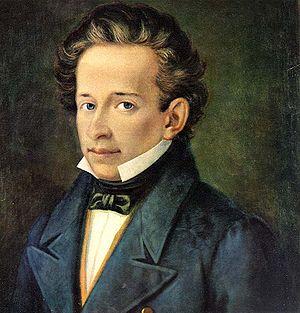
Giacomo Leopardi
Also known as: Leopardi, Giacomo, conte, Giacomo Homere-Leopardi
WHO stands on that cliff, like a figure of stone,
— from Poems
Most acclaimed

Thoughts
When TLC was between albums, I had no way to release my creativity. One night, feeling put-out by my boyfriend and wondering about how much women had to go through to make a relationship work, I sat down and started writing poems. "Unpretty" was the first. Up until then, I hadn't realized how badly I needed to release what I was feeling inside. They were my thoughts from the heart, and my art. The poems cover a whole range of topics: Love, relationships, heartbreak, body image, family, society, abortion, and many other things. They each mean alot to me, and I hope they inspire you, give you a different perspective on what's going on around you, or just help you relax. You'll find a little bit of me in these words, and maybe you'll find a little bit of yourself or someone you know. I reached out to my friends, including my fans, while I was putting Thoughts. together and they realty inspired me and helped me figure out which stories to tell. Stories about the important people in my life, like my mom who's always been there for me, my family, my TLC partners Lisa and Rozonda, and those who have all helped me along the way. I've had to deal with some tough stuff, like my relationship with my dad, who left when I was three, my never-ending battle with sickle cell, the bad high school years, my self-image problems, and my fight to survive in this crazy music business. Sharing these stories and poems has helped me face big issues in my life. Maybe they'll help you, too. Or maybe they'll give you a better understanding of who I am as a person. I can only express myself so much through my songs. On my own, though, I can let you into my heart and mind. Thank you for allowing me to share my Thoughts with you. Love, Tionne
Poems and Prose
2001
"The distinctive autumnal and melancholy tone of Trakl's work - especially admired by his patron Ludwig Wittgenstein - reflects the spiritual and social disintegration on the eve of the First World War. The generalized sense of anguish and exaltation of this period is the background to Trakl's transcendent, often hymnic, always lyrical voice and to his haunting imagery in which purgatory and paradise are never far apart. This bilingual edition, the most comprehensive to date, gives English-language readers the chance to get to know Trakl's work more fully than ever before."--Jacket.
Poems
This is an edition of all the known poems of Mark Akenside, the eighteenth-century English poet and physician, whose poetry has not been newly edited for more than a century. This edition will thus provide scholars and students with a much-needed opportunity to reassess the extent of Akenside's contribution to literary culture, and it will also clarify his role in the development of the aesthetic theories of his own generation and the one that followed. The career of Mark Akenside (1721-70) spans a period of extraordinarily fast change in English literature: his first major poem, The Pleasures of Imagination, appeared in the year of Pope's death; and Akenside died in the year Wordsworth was born. His works not only reflected the very considerable changes that took place during these years; they also contributed in many ways to the shifts in focus, interest, and emphasis that characterize the literature of the later eighteenth century. Akenside's fascination with the imagination, its characteristics and functions, resulted in an intriguing and influential blend of the poetic and the philosophical in his longer poems, The Pleasures of Imagination (1744) and The Pleasures of the Imagination (1772). The earlier work explores the then new subject of aesthetics in greater detail than it had ever been explored before, presenting various original insights and arguments. Yet it would be wrong to see the poem as merely a versified philosophical treatise; its complex structure offers satisfactions beyond those of sequential logic, and the examples cited to illustrate the central ideas are imbued with considerable vigor and clarity. As products of, and contributors to, the eighteenth-century enthusiasm for aesthetics, Akenside's longer poems are captivating examples of the eighteenth- and nineteenth-century experiment in developing the philosophical poem into a major literary form. It is for this reason above all others that they are valued by Coleridge and the writers of the next generation. Because of the comparative obscurity into which Akenside's works fell after the demise of the long philosophical poem in the latter part of the nineteenth century, they have not by and large attracted the attention of modern bibliographers. In this edition numerous bibliographical and textual puzzles presented by his poems are solved for the first time. The apparatus, meanwhile, demonstrates the full extent of the poet's urge to revise - an urge that extended from the wholesale rewriting of some poems to subtle alterations of textual minutiae, showing a mind and an ear alive to nuances of meaning and intonation.