
REPUBLIC OF FLORENCE AUTHOR · BIOGRAPHY · TRANSLATIONS INTO ENGLISH
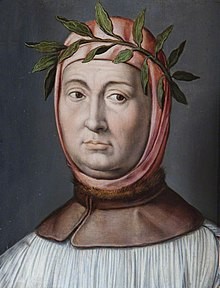
Giovanni Boccaccio
Also known as: Certaldese, G. Boccaccio
Giovanni Boccaccio was an Italian writer, poet, correspondent of Petrarch, and an important Renaissance humanist. Born in the town of Certaldo, he became so well known as a writer that he was sometimes simply known as "the Certaldese" and one of the most important figures in the European literary panorama of the fourteenth century.
MOST gracious ladies, knowing that you are all by nature pitiful, I know that in your judgment this work will seem to have a painful and sad origin.
— from Decamerone, 1906
Most acclaimed

Pearl
A New Dakotah Territory Saga From Bestselling Author Lauraine Snelling! Book 1 of Dakotah Treasures. Author Lauraine Snelling once again takes readers west to the untamed land of Dakota Territory, introducing new characters both unique and appealing. Ruby Torvald and her young sister, Opal, have received an inheritance from their long-lost father who left home years ago to seek his fortune in the Black Hills. When they leave their comfortable situation in Chicago and arrive at the mining town of Medora to claim their inheritance, the sisters discover that rather than the legacy of gold they expected, their father has left them a shocking bequest. Ruby’s bold determination in the face of scandal leads the reader on a journey both heartwarming and inspiring.
Decamerone
1906
Decameron, collection of tales by Giovanni Boccaccio, probably composed between 1349 and 1353. The work is regarded as a masterpiece of classical Italian prose. While romantic in tone and form, it breaks from medieval sensibility in its insistence on the human ability to overcome, even exploit, fortune. The Decameron comprises a group of stories united by a frame story. As the frame narrative opens, 10 young people (seven women and three men) flee plague-stricken Florence to a delightful villa in nearby Fiesole. Each member of the party rules for a day and sets stipulations for the daily tales to be told by all participants, resulting in a collection of 100 pieces. This storytelling occupies 10 days of a fortnight (the rest being set aside for personal adornment or for religious devotions); hence, the title of the book, Decameron, or “Ten Days’ Work.” Each day ends with a canzone (song), some of which represent Boccaccio’s finest poetry. –Britannica
Genealogy of the pagan gods
Giovanni Boccaccio's Genealogy of the Pagan Gods is an ambitious work of humanistic scholarship whose goal is to plunder ancient and medieval literary sources so as to create a massive synthesis of Greek and Roman mythology. The work also contains a famous defense of the value of studying ancient pagan poetry in a Christian world. The complete work in fifteen books contains a meticulously organized genealogical tree identifying approximately 95o Greco-Roman mythological figures. The scope is enormous: 723 chapters indude over a thousand citations from two hundred Greek, Roman, medieval, and Trecento authors. Throughout the Genealogy, Boccaccio deploys an array of allegorical, historical, and philological critiques of the ancient myths and their iconography. Much more than a mere compilation of pagan myths, the Genealogy incorporates hundreds of excerpts from and comments on ancient poetry, illustrative of the new spirit of philological and cultural inquiry emerging in the early Renaissance. It is at once the most ambitious work of literary scholarship of the early Renaissance and a demonstration to contemporaries of the moral and cultural value of studying ancient poetry. This is the first volume of a projected three-volume set of Boccaccios complete Genealogy. --Book Jacket.