
REPUBLIC OF FLORENCE AUTHOR · POETRY · TRANSLATIONS INTO ENGLISH
Dante Alighieri
Also known as: Dante Aligheri, Dante Alghieri
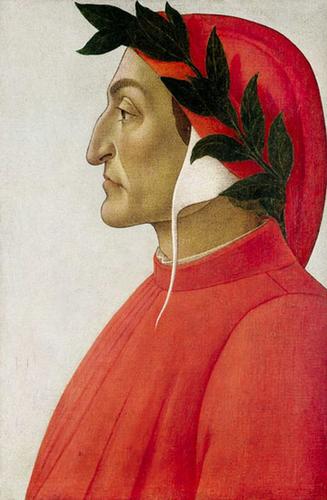
Dante was an Italian poet of the Middle Ages. The name Dante is, according to the words of Jacopo Alighieri, a hypocorism for Durante. In contemporary documents it is followed by the patronymic Alagherii or de Alagheriis; it was Boccaccio who popularized the form Alighieri. : Painter of this picture of Dante is Sandro Botticelli, See the new edition of the comedy published by Ateliê Editorial of São Paulo, Brazil, trabslation in verso terza rima complete by João Trentino Ziller
IN the middle of the journey of our life I came to myself within a dark wood where the straight way was lost.
— from Inferno, 2008
Most acclaimed

Inferno
2008
From one of our finest military historians, a monumental work that shows us at once the truly global reach of World War II and its deeply personal consequences. World War II involved tens of millions of soldiers and cost sixty million lives -- an average of twenty-seven thousand a day. For thirty-five years, Max Hastings has researched and written about different aspects of the war. Now, for the first time, he gives us a magnificent, single-volume history of the entire war. Through his strikingly detailed stories of everyday people -- of soldiers, sailors and airmen; British housewives and Indian peasants; SS killers and the citizens of Leningrad, some of whom resorted to cannibalism during the two-year siege; Japanese suicide pilots and American carrier crews—Hastings provides a singularly intimate portrait of the world at war. He simultaneously traces the major developments—Hitler's refusal to retreat from the Soviet Union until it was too late; Stalin's ruthlessness in using his greater population to wear down the German army; Churchill's leadership in the dark days of 1940 and 1941; Roosevelt's steady hand before and after the United States entered the war—and puts them in real human context. Hastings also illuminates some of the darker and less explored regions under the war's penumbra, including the conflict between the Soviet Union and Finland, during which the Finns fiercely and surprisingly resisted Stalin's invading Red Army; and the Bengal famine in 1943 and 1944, when at least one million people died in what turned out to be, in Nehru's words, "the final epitaph of British rule" in India. Remarkably informed and wide-ranging, Inferno is both elegantly written and cogently argued. Above all, it is a new and essential understanding of one of the greatest and bloodiest events of the twentieth century. - Publisher.
Il Paradiso
The Divine Comedy stands as one of the towering creations of world literature, and its climactic section, the Paradiso, is perhaps the most ambitious poetic attempt ever made to represent the merging of individual destiny with universal order. Having passed through Hell and Purgatory, Dante is led by his beloved Beatrice to the upper sphere of Paradise, wherein lie the sublime truths of Divine will and eternal salvation, to at last experience a rapturous vision of God.
Œuvres complètes
1990
En introduction, histoire critique des oeuvres de Pascal, et inventaire descriptif des sources. En première partie, écrits biographiques, mémoires et témoignages du XVIIe siècle relatifs à Pascal et à sa famille. Oeuvres historiques de Gilberte Pascal et de Marguerite Périer. (jaquette).