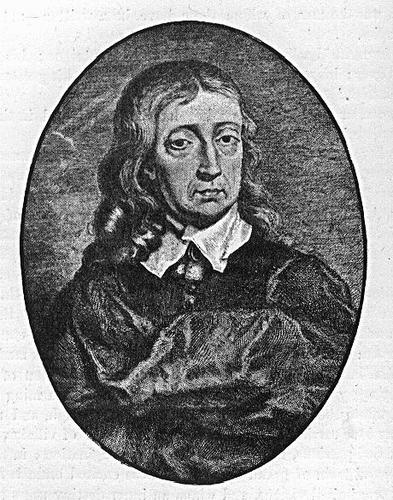
John Milton
Personal Information
Description
John Milton was an English poet, author, polemicist and civil servant for the Commonwealth of England. He is best known for his epic poem Paradise Lost.
Books
Shakespeare & Love Sonnets
A Treasury of Christmas Classics
Selected poems
Wolf's Complete Book of Terror
The Ones Who Walk Away from Omelas / Ursula K. Le Guin I Love My Love / Helen Adam I Have No Mouth, and I Must Scream / Harlan Ellison The Tattooer / Junichiro Tanizaki A Selection from Steps / Jerzy Kosinski Axolotl / Julio Cortazar [Wish]( / Roald Dahl The Lottery / Shirley Jackson It's a Good Life / Jerome Bixby They Bite / Anthony Boucher The Last Night of the World / Ray Bradbury Born of Man and Woman / Richard Matheson Piazza Piece / John Crowe Ransom The South / Jorge Luis Borges The Fly / George Langelaan The Doll / Algernon Blackwood The Ghost / Richard Hughes The Hunted Beast / T. F. Powys End / Langston Hughes The Rival Dummy / Ben Hecht Caterpillars / E. F. Benson Lukundoo / Edward Lucas White Sredni Vashtar / Saki (H. H. Munro) The Picture un the House / H. P. Lovecraft Pollock and the Porroh Man / H. G. Wells The Spider / Hans Heinz Ewers The White Wolf of the Hartz Mountains / Frederick Marryat Tcheriapin / Sax Rohmer My Doll Janie / Lola Ridge The Monkey's Paw / W. W. Jacobs The Mark of the Beast / Rudyard Kipling Manacled / Stephen Crane Yuki-Onna / Lafcadio Hearn Mujina / Lafcadio Hearn The Squaw / Bram Stoker The Yellow Wallpaper / Chalotte Perkins Gilman The Black Mass, Episode from La-bas (Down There) / J. K. Huysmans The Magic Shirt / Anonymous Carmilla / Joseph Sheridan Le Fanu Not to Be Taken at Bed-time / Rosa Mulholland The Very Sad Tale of the Matches / Heinrich Hoffmann The Man-Tiger / Anonymous The Hours in the Life of a Lousy-Haired Man, Episode from Maldoror Varney, the Vampyre / James Malcolm Rymer The Horla / Guy de Maupassant A Carrion / Charles Baudelaire [Pit and the Pendulum]( / Edgar Allan Poe [Black Cat]( / Edgar Allan Poe [Birthmark]( / Nathaniel Hawthorne La Belle Helene / Prosper Merimee Nuckelavee / Anonymous La Bella Dame Sans Merci / John Keats Isabella, or The Pot Basil The Erl-King / Johann Wolfgang von Goethe The Count de Gernande, Episode from Justine / The Marquis de Sade Lord Randal / Anonymous The Painted Skin / P'u Sung-ling Satan at the Gates of Hell, from Paradise Lost, Book II / John Milton The Milk-White Doo / Anonymous The Wife of Usher's Well / Anonymous Bluebeard / Charles Perrault The Vampire, Episode from The Golden Ass / Lucius Apuleius Jael / Book of Judges
Paradise Lost and Other Poems
Presents three major works by the seventeenth-century English poet, including his epic poem "Paradise Lost," which depicts the creation, fall, and redemption of humankind and the moral and spiritual dilemmas of God's judgment.
Selected essays
"With his wit, eloquence and shrewd perception of contemporary morals, Samuel Johnson was the most versatile of Augustan writers. His dictionary, dramas and poetry established his reputation, but it was the essays published in The Rambler, The Adventurer and The Idler that demonstrated the range of his talent. Tackling ethical questions such as the importance of self-knowledge, awareness of mortality, the role of the novel, and, in a lighter vein, marriage, sleep and deceit, these brilliant and thought-provoking essays are a mirror of the time in which they were written and a testament to Johnson's stature as the leading man of letters of his age." "This new edition contains a broad selection of essays presenting both the forcefully argued moral pieces of Johnson's middle years and the more light-hearted essays of his later work. The introduction places the works in their historical and literary context, and there is also a chronology of Johnson's life and times."--Jacket.
John Milton's Last Thoughts on the Trinity: Extracted from His Posthumous Work Entitled "A ..
Areopagitica
Areopagitica: A speech for the Liberty of Unlicensed Printing to the Parliament of England is John Milton's famous tract against censorship. Published in 1644, Areopagitica is named after a speech by Isocrates, a fifth century BC Athenian orator. The work is counted as one of the most influential and inspired defenses of the right to freedom of expression in history. It is also a personal issue for Milton who was submitted to censorship himself when he tried to publish his defenses of divorce, radical works for the time that gained no quarter with censors. Distributed as a pamphlet, Milton's powerful arguments against 1643's Licensing Order note that classical Greek and Roman society was never subjected to such censorship, and he uses many classical and biblical references to reinforce his argument.
Poems of John Milton
This is a collection of poems from John Milton. Milton worked in a range of styles, from the classical to the religious and from the lyrical to the epic.