Discover
Oct 31, 1795 — Feb 23, 1821· 25 yrs

UNITED KINGDOM OF GREAT BRITAIN AND IRELAND AUTHOR · POETRY · POETS

John Keats

65
BOOKS
3.9
AVG RATING (47)
1
READERS

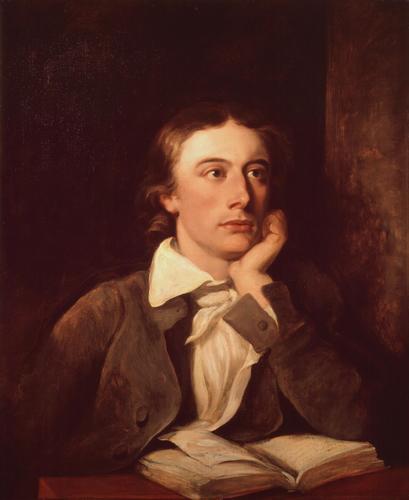
John Keats was the latest born of the great Romantic poets. Along with Byron and Shelley, he was one of the key figures in the second generation of the movement, despite publishing his work over only a four year period. During his short life, his work was not well received by critics, but his posthumous influence on poets such as Alfred Tennyson and Wilfred Owen was significant. The poetry of Keats was characterised by sensual imagery, most notably in the series of odes which remain among the most popular poems in English literature. The letters of Keats are among the most celebrated by any English poet.

Moorgate, United Kingdom of Great Britain and Ireland
Wikipedia

Now Morning from her orient chamber came,

— from Selected poetry

Most acclaimed

#2

Selected poetry

0.0 (0)

"Thomas Carlyle commented over 150 years ago that the name Goethe conjured up something vague and monstrous to English ears - a reaction still recognizable today. As a contribution towards redressing this situation this volume, published on the 250th anniversary of Goethe's birth, contains the largest selection of his poetry in English verse translation ever published. The poems (alongside their German originals) are arranged chronologically and, among much else, include his most famous lyric verse, longer poems in their entirety, passages from his poetic drama Faust and from his popular, but in English little-known, romantic idyll Hermann and Dorothea, and the whole of his long-suppressed masterpiece The Diary, sometimes referred to as the most erotic moral poem ever written. A substantial introduction sets the poetic work in the context of Goethe's often surprisingly unsettled life."--BOOK JACKET.

#1

Prentice Hall Literature -- Platinum

0.0 (0)

A novel is an extended work of narrative fiction usually written in prose and published as a book. The word derives from the Italian: novella for 'new', 'news', or 'short story (of something new)', itself from the Latin: novella, a singular noun use of the neuter plural of novellus, diminutive of novus, meaning 'new'. According to Margaret Doody, the novel has "a continuous and comprehensive history of about two thousand years", with its origins in the Ancient Greek and Roman novel, Medieval chivalric romance, and the tradition of the Italian Renaissance novella. The ancient romance form was revived by Romanticism, in the historical romances of Walter Scott and the Gothic novel. Some novelists, including Nathaniel Hawthorne, Herman Melville, Ann Radcliffe, and John Cowper Powys, preferred the term romance.
#3

Eminent domain

0.0 (0)

Books

Newest First
