Discover

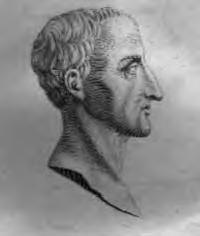
Sextus Propertius

Personal Information

Born March 7, 2047
Died March 15, 2026 (-21 years old)
Assisi, Ancient Rome
Also known as: Sextus Aurelius Propertius, Propertius
18 books
3.0 (1)
12 readers

Description

Very little information is known about Propertius outside of his own writing. His praenomen "Sextus" is mentioned by Aelius Donatus, a few manuscripts list him as "Sextus Propertius", but the rest of his name is unknown. From numerous references in his poetry it is clear he was born and raised in Umbria; modern Assisi claims for itself the honor of his birthplace. As a boy his father died and the family lost land as part of a confiscation, probably the same one which reduced Virgil's estates when Octavian alloted lands to his veterans in 41 BC. Combining this with cryptic references in Ovid implying he was younger than his contemporary Tibullus, a birthdate in the early 40s seems appropriate. After his father's death, Propertius' mother set him on course for a public career--indicating his family still had some wealth—while the abundance of obscure mythology present in his poetry indicates he received a good education. Frequent mention of friends like Tullus--the nephew of Lucius Volcatius Tullus, consul in 33 BCE—plus the fact that he lived on Rome's Esquiline hill indicate he moved among the children of the rich and politically connected during the early part of the 20's decade. It was during this time that he met Cynthia, the older woman who would inspire him to express his poetic genius. Propertius published a first book of love elegies in 25 BC, with Cynthia herself as the main theme; the book's complete devotion gave it the natural title Cynthia Monobiblos. The Monobiblos must have attracted the attention of Maecenas, a patron of the arts who took Propertius into his circle of court poets. A second, larger book of elegies was published perhaps a year later, one that includes poems addressed directly to his patron and (as expected) praises for Augustus. The 19th century classics scholar Karl Lachmann argued—based on the unusually large number of poems in this book and Propertius' mention of tres libelli--that the single book II actually comprises two separate books of poetry mashed together in the manuscript tradition. Though some editors have previously numbered the poems accordingly, the idea has fallen out of favor in more recent times. The publication of a third book came sometime after 23 BC. Its content shows the poet beginning to move beyond simple love themes, as some poems (e.g. III.5) use Amor merely as a starting point for other topics. The book also shows the poet growing tired of the demanding yet fickle Cynthia, and implies a bitter end to their torrid love affair. Book IV, published sometime after 16 BC, displays more of the poet's ambitious agenda, and includes several aetiological poems explaining the origin of various Roman rites and landmarks. Book IV—the last Propertius wrote—has only half the number of poems as Book I. Given the change in direction apparent in his poetry, scholars assume only his death a short time after publication prevented him from further exploration; the collection may in fact have been published posthumously. It is also possible that Propertius had children, either with Cynthia or a later liaison. An elegy of Ovid dated to 2 BC makes it clear that Propertius was dead by this time. [Wikipedia]

Books

Newest First

The complete elegies of Sextus Propertius

0.0 (0)
1

"The Roman poet Propertius is best known as the writer who perfected the Latin love elegy, a technical as much as a psychological and cultural feat. Propertius has been admired for both his metrical genius and the modernity of his narrative flow." "Many of the poems here pay tribute to Cynthia, Propertius' romantic obsession, but the scope of these 107 elegies is broad. Propertius' poetry offers a look into life in the Augustan age, addressing social, political, and historical subjects. A contemporary of Vergil and Horace, Propertius has influenced scores of poets - from Ovid to Housman to Pound." "His poetry appears here for the first time in a dual-language edition with the translations facing the original Latin. Rendered into English by a poet who is also one of the nation's preeminent Propertius experts, the volume brings Propertius' difficult mix of vernacular and high literary allusion into contemporary language."--BOOK JACKET.

Elegiarum Libri IV

0.0 (0)
0

Book digitized by Google from the library of Harvard University and uploaded to the Internet Archive by user tpb.

Charm

0.0 (0)
6

CHARM is a beautifully illustrated re-telling of the Cinderella story which takes all the much-loved elements of the classic fairytale (the handsome prince, the fairy godmother, the enchanted mouse, the beautiful girl and, of course, the iconic balls) and puts a modern spin on the characters, their motives and their desires.

Properz

0.0 (0)
0

Latin/German bilingual edition of collected poems of Propertius with introduction & notes.

Sex. Aurelii Propertii Carmina =: The elegies of Propertius

0.0 (0)
0

Book digitized by Google from the library of Oxford University and uploaded to the Internet Archive by user tpb.

Poems

Francisco de Quevedo, George Meredith, Patrick Branwell Brontë, Hugh MacDiarmid, Buonarroti, Michelangelo, Tristan Tzara, Anne Hebert, Allan Ramsay, Francis Thompson, Michael S. Harper, Wyatt, Thomas Sir, Philip Morin Freneau, Ryōkan, Ernest Warburton Shurtleff, Paul Celan, D. M. Thomas, Sextus Propertius, Edith Södergran, Octavio Paz, Frances Sargent Locke Osgood, Bei Dao, Mirza Asadullah Khan Ghalib, Vicente Aleixandre, Claudio Rodríguez, Samuel Rogers, George Mackay Brown, Hans Magnus Enzensberger, Dylan Thomas, Saint-John Perse, Joseph Addison, Giuseppe Ungaretti, Stéphane Mallarmé, Thomas Moore, Tappan, William B., William Henry Burleigh, Coventry Kersey Dighton Patmore, Stephen Spender, Dorothy Parker, Sir Philip Sidney, Ennis Rees, Edwin Morgan, Alonzo Lewis, William Cullen Bryant, Elizabeth Barrett Browning, Manuel Machado, Wilfred Owen, Philip Larkin, William Barnes, Fanny Kemble, William Vaughn Moody, Dinah Maria Mulock Craik, Robert Louis Stevenson, Maksimilian Aleksandrovich Voloshin, Michael Drayton, Jeanne Marie Bouvier de La Motte Guyon, Cyprian Norwid, José Asunción Silva, Matthew Prior, Robert Hugh Benson, W. S. Merwin, James Thomas Fields, John Crowe Ransom, Sitakant Mahapatra, Agatha Christie, James Clarence Mangan, Arthur Rimbaud, Robert Seymour Bridges, Bickersteth, Edward Henry, Francesco Filelfo, W. R. Rodgers, Henry Harbaugh, Edmund Waller, Publius Vergilius Maro, Edmund Blunden, Xu, Zhimo, Anne Michaels, Czesław Miłosz, Aleksandr Aleksandrovich Blok, Tu Fu, Hodgson, Ralph, William Walsham How, Adam Zagajewski, Margaret Atwood, Paul Éluard, Anita Ganeri, Christopher Stuart-Clark, Georg Heym, Ralph Gustafson, Katharine Tynan, William Carlos Williams, A. J. B. Beresford Hope, Rudyard Kipling, Luís de Camões, W. H. Davies, Albius Tibullus, 寒山, Walter De la Mare, Zalman Shazar, Brooke, Rupert, Charles Olson, Joachim Du Bellay, William Butler Yeats, Frank O'Hara, Nuala Ní Dhomhnaill, Kōnstantinos Petrou Kabaphēs, Allen Tate, Jim Harrison, Frederick William Faber, Richard Chenevix Trench, D. H. Lawrence, Stephen Crane, Walter Raleigh, Edwin Arlington Robinson, Wallace Stevens, Percy Bysshe Shelley, César Vallejo, Robert Penn Warren, King, Henry, Rubén Darío, Paul Verlaine, Will Carleton, John Masefield, Adelaide Anne Procter, Mary Baker Eddy, Edith Dame Sitwell, William Winter, John Ashbery, Alda Merini, ʻAbd al-Raḥmān Raḥmān, Thomas Blacklock, Hans Christian Andersen, Richard Watson Gilder, Randall Jarrell, Maurice Thompson, Stephen G. Bulfinch, W. H. Auden, John Sterling, Barker, George, Lucy Larcom, Lord Byron, Robinson Jeffers, Ben Jonson, Lydia H. Sigourney, Léopold Sédar Senghor, Rita Dove, William Shakespeare, Gilbert Keith Chesterton, Mary Leadbeater, Geoffrey Chaucer, Ai, Qing, Robert Underwood Johnson, Carl Sandburg, Anna Laetitia Barbauld, Francis Gerry Fairfield, Charles Tomlinson, Roque Dalton, T. W. H. Crosland, Richard Eberhart, Mihai Eminescu, A. D. Hope, Jan Kochanowski, Stephen Greenleaf Bulfinch, Robert Bulwer Lytton, James Russell Lowell, Langston Hughes, Dante Gabriel Rossetti, Edgar Allan Poe, Hayyim Nahman Bialik, Ford Madox Ford, Jaroslav Seifert, Conrad Aiken, Bret Harte, John Greenleaf Whittier, George Seferis, José de Espronceda, Pedro Salinas, Nadezhda Mandelʹshtam, Miguel Hernandez, Hannah Flagg Gould, Ralph Waldo Emerson, Stetson, Augusta E., Günter Grass, Henry A. Beers, Denise Levertov, Allen Ginsberg, Amy Lowell, Glover, Richard, Antonio Porta, Odysseas Elytis, Kathleen Raine, Mary Elizabeth Coleridge, François Villon, Gwendolyn MacEwen, Thom Gunn, Laurence Binyon, Derek Mahon, Dannie Abse, Iain Banks, Adrienne Rich, Ishmael Reed, Edgar Lee Masters, Florence Earle Coates, Georg Trakl, Gunnar Ekelöf, Christine de Pisan, John Davidson, Salvatore Quasimodo, Mark Strand, Clarke, Austin, Pierre Jean de Béranger, Александр Сергеевич Пушкин, George Crabbe, Mi-la-ras-pa, Franz Werfel, Henri Michaux, Horatio Nelson Powers, Harold Pinter, Robert Bly, William Thomas Moncrieff, Mary Robinson, Yevgeny Aleksandrovich Yevtushenko, Ella Young, Archibald MacLeish, John Buchan, Eliza Allen Starr, Robert W. Service, Pierre de Ronsard, Stephen Phillips, H. D. (Hilda Doolittle), Gaius Valerius Catullus, Maurice Baring, John Wilmot, Earl of Rochester, Cecil Frances Alexander, Clare, John, Algernon Charles Swinburne, Alice Meynell, George Herbert, John Wieners, Cecil Day-Lewis, Anne Stevenson, Joseph Dacre Carlyle, Clara Sophia Jessup Bloomfield-Moore, Sappho, Alexander Pope, Rita Mae Brown, Charles Simic, Pope John Paul II, Dora Greenwell, Louis MacNeice, Antonia Pozzi, John Lydgate, Thomas Gray, Jonathan Swift, Joseph von Eichendorff, Edward Thomas, C. H. Sisson, Sir Muhammad Iqbal, Emily Dickinson, Jean Toomer, Siegfried Sassoon, Pablo Neruda, Robert Herrick, Gabriela Mistral, Charles Baudelaire, Meredith Nicholson, Frederick George Scott, Rafael Alberti, Edna Dean Proctor, Jean Cocteau, Michelangelo Buonarroti, Victor Hugo, Henry Lawson, A. M. Klein, Kobayashi, Issa, Charles Kingsley, Mark Akenside, William Wordsworth, Giuseppe Gioachino Belli, Julia C. R. Dorr, Annette von Droste-Hülshoff, Charles Churchill, Charles G. D. Roberts, Martin, Theodore Sir, Oscar Wilde, Bo Li, Elizabeth Jane Coatsworth, Robert Graves, Abram Joseph Ryan, Rainer Maria Rilke, Mary Oliver, Archibald Lampman, Anna Akhmatova, Ady, Endre, Jean Ingelow, Ugo Foscolo, Boris Leonidovich Pasternak, Z. N. Gippius, Robert Henryson, Clinton Scollard, Bernard] [Barton, Rosalía de Castro, Wright, Judith, Felicia Dorothea Browne Hemans, Elizabeth Bishop, Anthony Hecht, Iolo Aneurin Williams, Ken MacLeod, Heinrich Heine, Christopher Smart, Wei Wang, Ron Rash, Joseph Brodsky, John Skelton, John Mitchel, Robert Edward Duncan, Hartley Coleridge, E. E. Cummings, Al Purdy, Abraham Cowley, Arthur Hugh Clough, Osip Mandelʹshtam, Eliza Lee (Cabot) Follen, Vladimir Nabokov, Frances Ridley Havergal, Charles Dickens, Thomas Kinsella, James Ingram Merrill, Giacomo Leopardi, Sir George Etherege, Hermann Hesse, Rocco Scotellaro, Ridgely Torrence, Fernando Pessoa, Graham Handley, Luis de León, Alice Cary, Kenneth Koch, Gerard Manley Hopkins, Yehuda Amichai, Thomas Hall Shastid, William Bell Scott, Keith Castellain Douglas, Herbert Edward Read, Pier Paolo Pasolini, Eugene Field, Johann Christian Günther, Alfred Lord Tennyson, Padraic Colum, Philip Sherrard, Wisława Szymborska, Ḥāfiẓ, Thomas Chatterton, Francesco Berni, William Blake, T. S. Eliot, George Santayana, Henry Wadsworth Longfellow, Giovanni Pascoli, Ivor Gurney, Robert Creeley, Maya Angelou, C. S. Lewis, Nikolaĭ Alekseevich Nekrasov, Guillaume Apollinaire, Stevie Smith, Bertolt Brecht, Wotton, Henry Sir, Ernest Hemingway, Samuel Taylor Coleridge, Eugenio Montale, Philip Levine, Marina T͡Svetaeva, Ernesto Cardenal, Emile Nelligan, George MacBeth, Jean Follain, Witter Bynner, Christopher John Brennan, Reginald Heber, Jules Laforgue, Miguel Torga, Vicente Huidobro, Lady Mary Wroth, Vega, Garcilaso de la, Ezra Pound, John of the Cross, Christina Georgina Rosetti, Richmond Alexander Lattimore, Katherine Mansfield, Matthew Arnold, Frederic William Henry Myers, James Gates Percival, Theodore Roethke, Clement Clarke Moore, Desiderius Erasmus, Rachel Field, Robert Frost, Oliver Wendell Holmes, Sr., Iain Crichton Smith, Edwin Arnold, Byron Herbert Reece, E. F. Ellet, J. P. Clark-Bekederemo, William McGonagall, Gerald Gould, Federico García Lorca, W. S. Gilbert, J.R.R. Tolkien, Lily Brett, Paul Laurence Dunbar, John Berryman, Neil Gaiman, Juan Gelman, Thomas, R. S., William Cowper, Samuel ha-Nagid, Clarence Brown, Luis de Góngora y Argote, Delmira Agustini, Juan Ramón Jiménez, Edna St. Vincent Millay, Juan Meléndez Valdés, Aurelius Clemens Prudentius, Pindar, Peter, Richard Wilbur, Corregidor, Hayden Carruth, Mīr Taqī Mīr
0.0 (0)
2
