
CROWN OF CASTILE AUTHOR · CATHOLIC CHURCH · MYSTICISM
John of the Cross
Also known as: Saint John of the Cross, Joannes a Cruse
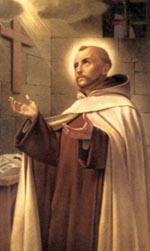
John of the Cross (Spanish: Juan de la Cruz; Latin: Ioannes a Cruce; né Juan de Yepes y Álvarez; 24 June 1542 – 14 December 1591) was a Spanish Catholic priest, mystic, and Carmelite friar. He is a major figure of the Counter-Reformation in Spain, and he is one of the 38 Doctors of the Church. Influenced by the older Carmelite nun Teresa of Ávila, he joined the Carmelite Order and was instrumental in the founding of the Discalced Carmelites, who wished to return to the stricter observances of the original Carmelite rule. He is also widely known for his writings. Both his poetry and his studies on the development of the soul are considered the summit of mystical Christian literature and among the greatest works of all Spanish literature.
WHO stands on that cliff, like a figure of stone,
— from Poems
Most acclaimed

Poems
This is an edition of all the known poems of Mark Akenside, the eighteenth-century English poet and physician, whose poetry has not been newly edited for more than a century. This edition will thus provide scholars and students with a much-needed opportunity to reassess the extent of Akenside's contribution to literary culture, and it will also clarify his role in the development of the aesthetic theories of his own generation and the one that followed. The career of Mark Akenside (1721-70) spans a period of extraordinarily fast change in English literature: his first major poem, The Pleasures of Imagination, appeared in the year of Pope's death; and Akenside died in the year Wordsworth was born. His works not only reflected the very considerable changes that took place during these years; they also contributed in many ways to the shifts in focus, interest, and emphasis that characterize the literature of the later eighteenth century. Akenside's fascination with the imagination, its characteristics and functions, resulted in an intriguing and influential blend of the poetic and the philosophical in his longer poems, The Pleasures of Imagination (1744) and The Pleasures of the Imagination (1772). The earlier work explores the then new subject of aesthetics in greater detail than it had ever been explored before, presenting various original insights and arguments. Yet it would be wrong to see the poem as merely a versified philosophical treatise; its complex structure offers satisfactions beyond those of sequential logic, and the examples cited to illustrate the central ideas are imbued with considerable vigor and clarity. As products of, and contributors to, the eighteenth-century enthusiasm for aesthetics, Akenside's longer poems are captivating examples of the eighteenth- and nineteenth-century experiment in developing the philosophical poem into a major literary form. It is for this reason above all others that they are valued by Coleridge and the writers of the next generation. Because of the comparative obscurity into which Akenside's works fell after the demise of the long philosophical poem in the latter part of the nineteenth century, they have not by and large attracted the attention of modern bibliographers. In this edition numerous bibliographical and textual puzzles presented by his poems are solved for the first time. The apparatus, meanwhile, demonstrates the full extent of the poet's urge to revise - an urge that extended from the wholesale rewriting of some poems to subtle alterations of textual minutiae, showing a mind and an ear alive to nuances of meaning and intonation.
Obra completa
1996
Don Juan (Spanish: [doŋ ˈxwan]), also known as Don Giovanni (Italian), is a legendary fictional Spanish libertine who devotes his life to seducing women. The original version of the story of Don Juan appears in the 1630 play El burlador de Sevilla y convidado de piedra (The Trickster of Seville and the Stone Guest) by Tirso de Molina. The play includes most of the elements found and later adapted in subsequent works, including the setting (Seville), the characters (Don Juan, his servant, his love interest, and her father, whom he kills), moralistic themes (honor, violence and seduction, vice and retribution), and the dramatic ending in which Don Juan dines with and is then dragged down to hell by the stone statue of the father he had previously slain. Tirso de Molina's play was subsequently adapted into numerous plays and poems, of which the most famous include a 1665 play, Dom Juan, by Molière; a 1787 opera, Don Giovanni, with music by Mozart and a libretto by Lorenzo da Ponte largely adapting Tirso de Molina's play; a satirical and epic poem, Don Juan, by Lord Byron; and Don Juan Tenorio, a romantic play by José Zorrilla. By linguistic extension, from the name of the character, "Don Juan" has become a generic expression for a womanizer, and stemming from this, Don Juanism is a non-clinical psychiatric descriptor.
Dark night of the soul
What a beautiful translation!..Starr offers us an entryway and a path into this sixteenth-century mystic's mind, and gives us a fine, personal introduction to begin our luminous journey." (Natalie Goldberg, bestselling author of Writing Down the Bones) While imprisoned for his attempts to reform the Church, 16th-century Spanish mystic John of the Cross composed many of his now classic poems of the soul's longing for God. Escaping his captors, John fell into a state of ecstasy and finished Dark Night of the Soul, with additional commentary for other seekers. Now, for the first time, a scholar unaffiliated with the Catholic Church has crafted "an engaging and evocative translation of John's most famous treatise." Drawing from Buddhist, Hindu and Judaic traditions, Mirabai Starr's fresh new translation restores the beauty and candor of the original while offering profound new relevance for the 21st-century seeker. ...