Discover
Jun 27, 1872 — Feb 9, 1906· 33 yrs

UNITED STATES AUTHOR · AFRICAN AMERICANS · POETRY

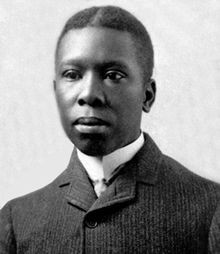
Paul Laurence Dunbar

Also known as: Paul L. Dunbar, Paul Dunbar

49
BOOKS
4.0
AVG RATING (19)
1
READERS
Dayton, United States
Wikipedia

Most acclaimed

#1

Prentice Hall Literature -- Platinum

0.0 (0)

A novel is an extended work of narrative fiction usually written in prose and published as a book. The word derives from the Italian: novella for 'new', 'news', or 'short story (of something new)', itself from the Latin: novella, a singular noun use of the neuter plural of novellus, diminutive of novus, meaning 'new'. According to Margaret Doody, the novel has "a continuous and comprehensive history of about two thousand years", with its origins in the Ancient Greek and Roman novel, Medieval chivalric romance, and the tradition of the Italian Renaissance novella. The ancient romance form was revived by Romanticism, in the historical romances of Walter Scott and the Gothic novel. Some novelists, including Nathaniel Hawthorne, Herman Melville, Ann Radcliffe, and John Cowper Powys, preferred the term romance.
#2

Prentice Hall Literature--Timeless Voices, Timeless Themes--The American Experience

0.0 (0)

Modern Biblical criticism (as opposed to pre-Modern criticism) is the use of critical analysis to understand and explain the Bible without appealing to the supernatural. During the eighteenth century, when it began as historical-biblical criticism, it was based on two distinguishing characteristics: (1) the scientific concern to avoid dogma and bias by applying a neutral, non-sectarian, reason-based judgment to the study of the Bible, and (2) the belief that the reconstruction of the historical events behind the texts, as well as the history of how the texts themselves developed, would lead to a correct understanding of the Bible. This sets it apart from earlier, pre-critical methods; from the anti-critical methods of those who oppose criticism-based study; from the post-critical orientation of later scholarship; and from the multiple distinct schools of criticism into which it evolved in the late twentieth and early twenty-first centuries. The emergence of biblical criticism is most often attributed by scholars to the German Enlightenment (c. 1650 – c. 1800), but some trace its roots back further, to the Reformation. Its principal scholarly influences were rationalist and Protestant in orientation; German pietism played a role in its development, as did British deism.

#3

I greet the dawn

1978

5.0 (1)

A brief biography of the poet precedes a collection of his works, most in standard English rather than dialect, with such themes as love, hate, death, nature, and religion.

Books

Newest First
