
GERMANY AUTHOR · FICTION · TRANSLATIONS INTO ENGLISH
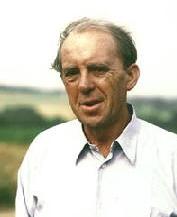
Heinrich Böll
Also known as: Heinrich. Böll, Heinrich Boll
One of Germany's foremost post-World War II writers. Böll was awarded the Georg Büchner Prize in 1967 and the Nobel Prize for Literature in 1972.
Maria Concepcion walked carefully, keeping to the middle of the white dusty road, where the maguey thorns and the treacherous curved spines of organ cactus had not gathered so profusely.
— from Short stories
Most acclaimed

Short stories
For over three decades, Reynolds Price has been one of America's most distinguished writers, in a career that has been remarkable both for its virtuosity and for the variety of literary forms he has embraced. Now he shows himself as much a master of the story as he is of the novel, in a volume that presents fifty stories, including two early collections - The Names and Faces of Heroes and Permanent Errors - as well as more than two dozen new stories that have never been gathered together before. In his introduction, Mr. Price explains how, after the publication of his first two collections, he wrote no new stories for almost twenty years. "But once I needed - for unknown reasons in a new and radically altered life - to return to the story, it opened before me like a new chance...A collection like this then," he adds, "...will show a writer's pre-occupations in ways the novel severely rations (novels are partly made for that purpose - the release from self, long flights through the Other). John Keats's assertion that 'the excellence of every Art is its intensity' has served as a license and standard for me. From the start my stories were driven by heat - passion and mystery, often passion for the mystery I've found in particular rooms and spaces and the people they threaten or shelter - and my general aim is the transfer of a spell of keen witness, perceived by the reader as warranted in character and act.". There is, indeed, much for the reader to "witness" here of passion and mystery, of character and act. And the variety of stories - many of them set in Reynolds Price's native North Carolina, but a surprising number set in distant parts: Jerusalem in "An Early Christmas," the American Southwest in "Walking Lessons," and a number in Europe - will astonish even his most devoted readers. In short, The Collected Stories of Reynolds Price is as deeply rewarding a book as any he has yet published.
Verlorene Ehre der Katharina Blum
1994
The Lost Honour of Katharina Blum, or: how violence develops and where it can lead (original German title: Die verlorene Ehre der Katharina Blum oder: Wie Gewalt entstehen und wohin sie führen kann, pronounced [diː fɛʁˈloːʁənə ˈʔeːʁə deːɐ̯ kataˈʁiːnaː ˈbluːm ˈʔoːdɐ viː ɡəˈvalt ʔɛntˈʃteːən ʔʊnt voˈhɪn ziː ˈfyːʁən ˈkan]) is a 1974 novel by Heinrich Böll. The story deals with the sensationalism of tabloid news and the political climate of panic over Red Army Faction terrorism in the 1970s Federal Republic of Germany. The main character, Katharina Blum, is an innocent housekeeper whose life is ruined by an invasive tabloid reporter and a police investigation when the man with whom she has just fallen in love turns out to be wanted by the police because of a bank robbery. The book's fictional tabloid paper, Die Zeitung (The Newspaper), is modelled on the actual German Bild-Zeitung. (Source: [Wikipedia](
Prentice Hall Literature -- Platinum
A novel is an extended work of narrative fiction usually written in prose and published as a book. The word derives from the Italian: novella for 'new', 'news', or 'short story (of something new)', itself from the Latin: novella, a singular noun use of the neuter plural of novellus, diminutive of novus, meaning 'new'. According to Margaret Doody, the novel has "a continuous and comprehensive history of about two thousand years", with its origins in the Ancient Greek and Roman novel, Medieval chivalric romance, and the tradition of the Italian Renaissance novella. The ancient romance form was revived by Romanticism, in the historical romances of Walter Scott and the Gothic novel. Some novelists, including Nathaniel Hawthorne, Herman Melville, Ann Radcliffe, and John Cowper Powys, preferred the term romance.