
SPAIN AUTHOR · TRANSLATIONS INTO ENGLISH · SPANISH POETRY
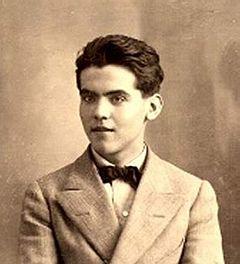
Federico García Lorca
Also known as: Frederico Garcia Lorca, Garcia Lorca
Federico García Lorca (Fuente Vaqueros, Granada, 5 June 1898 - camino de Víznar a Alfacar, Granada, 18 August 1936) was a Spanish poet, playwright, and theatre director. He achieved international recognition as an emblematic member of the Generation of '27, a group consisting of mostly poets who introduced the tenets of European movements (such as symbolism, futurism, and surrealism) into Spanish literature. He was killed by Nationalist forces at the beginning of the Spanish Civil War. His remains have never been found. Lorca universe is defined by a palpable systematism: poetry, drama and prose feed on obsessions - love, desire, sterility - and constant stylistic keys. The variety of shapes and tones never threatens that unity whose central issue is frustration.
Courage my soul, now learn to wield The weight of thine immortal shield.
— from Selected poems, 1990
Most acclaimed

La casa de Bernarda Alba
A partir de la muerte de su marido, Bernarda Alba se encierra con sus 5 hijas ya adultas para guardar luto por un período de 8 años, permitiendo únicamente el ingreso a la casa de Pepe el Romano, un misterioso aristócrata que llega a caballo cada atardecer, y que está comprometido con la hija mayor. La más joven de las hermanas y otra hermana tambien se enamoran de Pepe.
The Selected Poems of Federico Garcia Lorca
Federico García Lorca is admired the world over for the lyricism, immediacy, and beauty of his poetry. The superb translators of this collection — Stephen Spender, Langston Hughes, Ben Belitt, William Jay Smith, and W. S. Merwin — have produced English versions that catch the spirit and intensity of the originals. Presented bilingually, this is a selection of Lorca’s very best.
Selected poems
1990
Charles Olson, the poet who coined the word post-modern and helped shape the generation that would emerge under its mantle, is known for the immense range of his intellectual and poetic reach. Here, in this selection by Robert Creeley, Olson's personal friend and literary ally, is the more "intimate order" of the poet who sought to embrace all of history and human thought. Olson came from working-class immigrant roots in a Massachusetts mill town. A scholar of profound originality and vision, he worked for Roosevelt's administration during the war years, then at Black Mountain, the prototypical experimental college and enclave of avantgarde writers and artists. In 1957 he settled in Gloucester, a town on the shore north of Boston where he had spent summers as a child. It was Gloucester, with its richness of history and human use, that provided the ground of The Maximus Poems, begun as letters some years before and which over the next two decades grew into a masterwork of epic dimensions. From the more than three hundred poems making up The Maximus Poems and the comparable number in Olson's Collected Poems, Creeley's selection makes available for the first time an essential sampling of Olson's poetry. Included are paradigmatic early works like "The Kingfishers," which Guy Davenport called "the most modern of American poems, the most energetically influential text in the last thirty-five years," as well as familiar pieces from Maximus like "Maximus, to Gloucester" and "Celestial Evening." Also represented are less known poems, such as "The chain of memory is resurrection" and "The Lamp," works that reveal a more personal side of this major American poet. Together these poems demonstrate Olson's genius and grace, a poet as at home in Gloucester as in the cosmos, a reckoner with dreams and myths, and "Western man at the limit of himself."