Discover

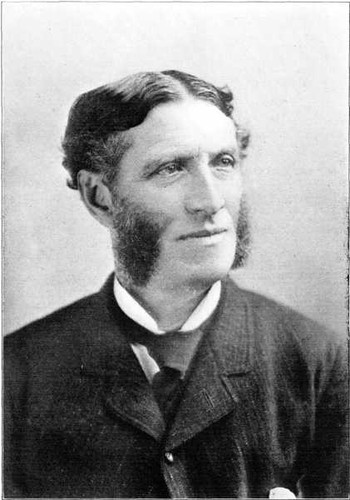
Matthew Arnold

Personal Information

Born January 1, 1822
Died January 1, 1888 (66 years old)
Laleham, United Kingdom of Great Britain and Ireland
93 books
3.2 (10)
150 readers

Description

Professor of Poetry at the University of Oxford Fellow of Oriel College

Books

Newest First

Poetry and prose

0.0 (0)
2

Seeks to supply a sounder and more uncluttered text for reading than has been heretofore available, together with variant and delected passages for study/

The Classic Hundred

0.0 (0)
15

Here in one volume are the top one hundred poems, as determined by a survey of more than 1,000 anthologies - the poems in English most frequently anthologized, the poems with the broadest, most enduring appeal. With insights into the historical period in which each poem was written, the verse form used, and connections among poems, this is the ideal introduction to poetry, as well as a treasury for the dedicated reader.

Notebooks

0.0 (0)
1

Jacques Maritain (18 November 1882 - 28 April 1973) was a French Catholic philosopher. Raised as a Protestant, he converted to Catholicism in 1906. An author of more than 60 books, he helped to revive St. Thomas Aquinas for modern times and is a prominent drafter of the Universal Declaration of Human Rights.

Selected letters of Matthew Arnold

0.0 (0)
0

Selected Letters of Matthew Arnold is a collection of 216 letters by the Victorian poet and critic Matthew Arnold (1822-88). The letters are arranged chronologically and grouped under four headings that represent stages in Arnold's adult life and career: "The Young Poet, 1844-51 " "The Married Poet and Inspector of Schools, 1851-57," "The Professor of Poetry and Literary Critic, 1857-67," and "The Critic of Society and Religion 1867-88." In these letters, Arnold, who wrote no autobiography, tells the story of his life and expresses his intimate views on a variety of subjects. In order to include the largest possible selection of interesting letters from both previously published and unpublished sources, some of the letters are given in part while others are given in their complete form. Along with the most important letters from the 1895 edition by G.W.E. Russell - principally made up of letters to family members - and the 1932 edition of letters to Author Hugh Clough by Howard F. Lowry, this new collection incorporates many significant letters from other sources, including 49 previously unpublished letters. Most of the Russell and Lowry letters have been newly edited, using the manuscript collections at Yale University and Balliol College, Oxford.

Culture and anarchy and other writings

0.0 (0)
0

First published in 1869, this celebrated work of social criticism is the reference-point for all discussion of the relations between politics and culture.

The Poetry of Cats

0.0 (0)
9

This is a unique celebration of that most beautiful and self-possessed of creatures--the cat. More than 50 poems are included, reflecting every feline mood: the comic, the aristocratic, the lazy, the cunning, the fierce, the inscrutable. Lovers of cats and lovers of poetry will be delighted by the wide-ranging nature of the collection by poets such as T.S. Elliot, Ted Hughes, W.B. Yeats, William Wordsworth, Edward Lear and many others. One of the most attractive features of the book is the choice of pictures. A stunning selection of drawings and paintings by such artists and illustrators as Renoir, Manet, Picasso, Hogarth, Cruikshank and Lear add to the charm of the verse, making this a book to be treasured by cat lovers everywhere.

Essays

Jeremy Collier, Umberto Eco, H. I. D. Ryder, Arthur Penrhyn Stanley, Walter Kasper, Béla Bartók, Clement Mansfield Ingleby, John Fiske, John Dalberg-Acton, 1st Baron Acton, Jean-Luc Nancy, Michael Pye, Octavio Paz, Sayyid Aḥmad K̲h̲ān̲, Joseph Addison, Algirdas Julien Greimas, Евгений Иванович Замятин, Henry F. (Henry Francis) Pelham, Arthur Christopher Benson, Grant, Percy Stickney, Charles Carroll Everett, Jean François Lyotard, Herbert Spencer, Raymond Williams, William Hazlitt, Giorgio Agamben, Alfred Kerr, Aleksandr Aleksandrovich Blok, William Butler Yeats, William Graham Sumner, Allen Tate, James Beattie, J. H. Plumb, William Godwin, Francis Bacon, Henry David Thoreau, Henry Thomas Buckle, Arthur Schopenhauer, Herman Friedrich Grimm, John Addington Symonds, James Hadley, James Laughlin, Joseph Isaac Schneersohn, Irving Howe, E. M. W. Tillyard, Benjamin Rush, Plutarch, Morton Feldman, Simone Weil, Ralph Waldo Emerson, Howard Zinn, Ellen Key, Salisbury, Robert Cecil marquess of, J. Logie Robertson, Oliver Goldsmith, Thomas Henry Huxley, Arnold Zweig, Hugh Miller, Mackenzie, Morell Sir, George Orwell, Bing Xin, Roland Barthes, Errico Malatesta, George John Romanes, Parsons, Theophilus, Alice Meynell, Alejo Carpentier, Charles Baudelaire, Jacques Barzun, James Huneker, Thomas Paine, Thomas Merton, Jean-Paul Sartre, Montaigne, Michel de, David Hume, Paul Valéry, Félix Guattari, Wilhelm Max Wundt, Christopher Hill, Shen, Congwen, Italo Calvino, Robert Morgan, James Martineau, Abūlkalām Āzād, Friedrich Schiller, Rosemond Tuve, René Descartes, Immanuel Kant, Joseph Alois Schumpeter, Carl Gustav Jung, John Henry Newman, Thomas De Quincey, Virginia Woolf, Matthew Arnold, Frederic William Henry Myers, Ernst Troeltsch, Martin Buber, Hermann Bahr, Thomas Mann, Charles Augustin Sainte-Beuve, Jonathan Franzen, Samuel Johnson, Anscombe, G. E. M., Charles Lamb, George Brimley, John Abercrombie, Thomas Monro, Hubert Bland
0.0 (0)
1

Umberto Eco's latest work unlocks the riddles of history in an exploration of the "linguistics of the lunatic," stories told by scholars, scientists, poets, fanatics, and ordinary people in order to make sense of the world. Exploring the "Force of the False," Eco uncovers layers of mistakes that have shaped human history, such as Columbus's assumption that the world was much smaller than it is, leading him to seek out a quick route to the East via the West and thus fortuitously "discovering" America. In a careful unveiling of the fabulous and the false, Eco shows us how serendipities - unanticipated truths - often spring from mistaken ideas. From Leibniz's belief that the I Ching illustrated the principles of calculus to Marco Polo's mistaking a rhinoceros for a unicorn, Eco tours the labyrinth of intellectual history, illuminating the ways in which we project the familiar onto the strange.

Correspondence

Montagu, Mary Wortley Lady, Gertrude Stein, Hugh MacDiarmid, Yonatan Netanyahu, Théodore de Bèze, Guy Debord, John Dalberg-Acton, 1st Baron Acton, Paul Celan, Hector Berlioz, Dylan Thomas, Wolfgang Amadeus Mozart, Stéphane Mallarmé, Delmore Schwartz, Theodor W. Adorno, Vanessa Bell, Jean Leclercq, Erik Satie, Gottfried Wilhelm Leibniz, Cyprian Norwid, Saint Catherine of Siena, John Conduitt, Wen, Yiduo, Antonio Baldini, John Crowe Ransom, William Pitt Earl of Chatham, Maria Celeste Galilei, Henry III King of France, Xu, Zhimo, M. Basil Pennington, Pietro Aretino, Max Frisch, Philip Dormer Stanhope, 4th Earl of Chesterfield, Zongtang Zuo, Maud Gonne, Paul Gauguin, William Gilmore Simms, Laurence Sterne, Saint Bernard of Clairvaux, Aldo Palazzeschi, Gregorio Mayans y Siscar, Sean O'Casey, Henry David Thoreau, Kingsley Amis, Richard Watson Gilder, Francis de Sales, François-René de Chateaubriand, Jean Dubuffet, Marianne Moore, Lloyd James Austin, Roy, M. N., Charles Victor de Bonstetten, Belgrano, Manuel, Gustav Radbruch, Edward Bond, Olive Schreiner, J. W. Johnston, Yu, Dafu, Charles Sumner, Edvard Grieg, Claude Debussy, Ludwig van Beethoven, Photius I Saint, Patriarch of Constantinople, Gershom Scholem, Gustav Mahler, Harry S. Truman, Saint Jerome, Claudio Monteverdi, Voltaire Foundation, José Martí, Zeng, Guofan, Sigmund Freud, Francis Poulenc, Cicero, Anna Freud, Jonathan Swift, Philipp Melanchthon, Sir Leslie Stephen, André Gide, Binyamin Netanyahu, Tao, Xingzhi, Paula Modersohn-Becker, Hart Crane, Giacomo Meyerbeer, Hügel, Friedrich Freiherr von, Carossa, Hans, Narcissa Prentiss Whitman, Arthur Hugh Clough, Clara Schumann, Saint Cyprian, Bishop of Carthage, Sir Walter Alexander Raleigh, Felix Mendelssohn, Hester Lynch Piozzi, Joseph de Maistre, William Blake, Immanuel Kant, George Santayana, Giuseppe Tornatore, Lei Fu, Saint Bede the Venerable, Germaine de Staël, William Makepeace Thackeray, Britten, Benjamin, Amos Bronson Alcott, Thomas Percy, Roger Chartier, Frida Kahlo, Matthew Arnold, George III King of Great Britain, John Wilson Croker, Federico García Lorca, Ferruccio Busoni, Gabriel Faure
2.0 (1)
1
