
SAINT LUCIA AUTHOR · POETRY · ENGLISH
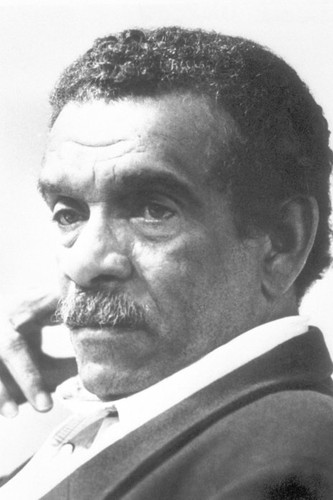
Derek Walcott
Also known as: DEREK WALCOTT
Derek Alton Walcott is a Caribbean poet, playwright, writer and visual artist. Born in Castries, Saint Lucia, he won the Nobel Prize for Literature in 1992. His work, which developed independently of the schools of magic realism emerging in both South America and Europe at around the time of his birth, is intensely related to the symbolism of myth and its relationship to culture. He is best known for his epic poem Omeros, an allusive, loose reworking of Homeric story and tradition into a journey within the Caribbean and beyond to the Africa, New England, the American West, Canada, and London (with frequent reference to the Greek Islands). Walcott founded the Trinidad Theatre Workshop in 1959, which has produced his plays (and others) since that time, and remains active with its Board of Directors. He also founded Boston Playwrights' Theatre at Boston University in 1981 with the hope of creating a home for new plays in Boston, Massachusetts. Walcott retired from teaching poetry and drama in the Creative Writing Department at Boston University in 2007. In fall 2009, he will commence a three year distinguished scholar in residence position at University of Alberta. He continues to give readings and lectures throughout the world. He divides his time between his home in the Caribbean and New York City. Source and more information
SCENE: A spacious whitewashed room in Dreissiger's house at Peterswaldau, where the weavers must deliver their finished webs.
— from Three Plays
Most acclaimed

Dream on Monkey Mountain and Other Plays
On a Caribbean island, the morning after a full moon, Felix Hobain tears through the market in a drunken rage. Taken away to sober up in jail, all that night he is gripped by hallucinations: the impoverished hermit believes he has become a healer, walking from village to village, tending to the sick, waiting for a sign from God. In this dream, his one companion, Moustique, wants to exploit his power. Moustique decides to impersonate a prophet himself, ignoring a coffin-maker who warns him he will die and enraging the people of the island. Hobain, half-awake in his desolate jail cell, terrorized by the specter of his friend's corruption, clings to his visionary quest. He will try to transform himself; to heal Moustique, his jailer, and his jail-mates; and to be a leader for his people. Dream on Monkey Mountain was awarded the 1971 Obie Award for a Distinguished Foreign Play when it was first presented in New York, and Edith Oliver, writing in The New Yorker, called it "a masterpiece."
Omeros
1990
A poem in five books, of circular narrative design, titled with the Greek name for Homer, which simultaneously charts two currents of history: the visible history charted in events -- the tribal losses of the American Indian, the tragedy of African enslavement -- and the interior, unwritten epic fashioned from the suffering of the individual in exile.
Three Plays
World-renowned historian Howard Zinn has turned to drama to explore the legacy of Karl Marx and Emma Goldman and to delve into the intricacies of political and social conscience perhaps more deeply than traditional history permits. Three Plays brings together all this work, including the previously unpublished Daughter of Venus, along with a new introductory essay on political theater, and prefaces to each of the plays.“The first act of ‘Emma,’ Howard Zinn’s play about Emma Goldman, is a small miracle. Here is a drama that holds down the heroics, polemics and didacticism to which works about heroes and heroines are prone. True, Emma is idealized; she is loving, honest, selfless, daring, but she is also human and believable.”—Walter Goodman, New York Times“[Marx in Soho is] an imaginative critique of our society’s hypocrisies and injustices, and an entertaining, vivid portrait of Karl Marx as a voice of humanitarian justice — which is perhaps the best way to remember him.” —Kirkus Reviews“[Daughter of Venus’s] central concerns — personal and social ethics; the balance of obligations to ourselves, our families, and our fellow citizens; the uses and abuses of political and scientific power — remain as timely as ever. . . . Zinn not only displays a fluid and passionately committed style but also is attempting to do something interesting with it: to interweave a story of familial tensions and national politics, and in doing so to remind us that the way we live our lives on the small, local, day-to-day scale of family life can have repercussions and implications for the life of the nation at large.”—Louise Kennedy, Boston Globe