Discover
Jun 6, 1875 — Aug 12, 1955· 80 yrs

GERMAN REICH AUTHOR · FICTION · TRANSLATIONS INTO ENGLISH

Thomas Mann

Also known as: Томас Манн, Т.Манн

76
BOOKS
4.0
AVG RATING (64)
10
READERS

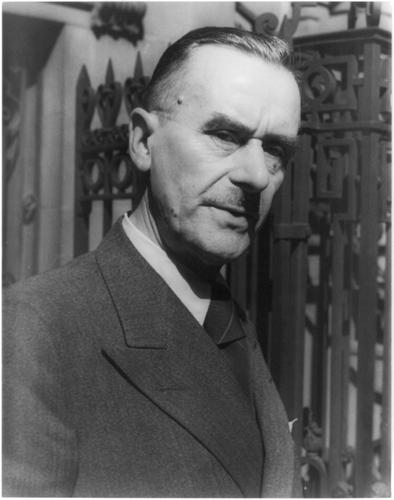
Thomas Mann was a German novelist, short story writer, social critic, philanthropist, essayist, and 1929 Nobel Prize laureate, known for his series of highly symbolic and ironic epic novels and novellas, noted for their insight into the psychology of the artist and the intellectual. His analysis and critique of the European and German soul used modernized German and Biblical stories, as well as the ideas of Goethe, Nietzsche, and Schopenhauer. His older brother was the radical writer Heinrich Mann, and three of his six children, Erika Mann, Klaus Mann and Golo Mann, also became important German writers. When Hitler came to power in 1933, the anti-fascist Mann fled to Switzerland. When World War II broke out in 1939, he emigrated to the United States, from where he returned to Switzerland in 1952. Thomas Mann is one of the most known exponents of the so called Exilliteratur.

Lübeck, German Reich
Wikipedia

AN ORDINARY YOUNG MAN was on his way from his hometown of Hamburg to Davos-Platz in the canton of Graubunden.

— from Der Zauberberg, 2005

Most acclaimed

#2

Death in Venice

1954

0.0 (0)

In DEATH IN VENICE, an elderly, famous, and wealthy writer named Aschenbach goes on vacation. He becomes fascinated with Tadzio, a young teenager who is staying with his family at Aschenbach's hotel. As his obsession grows, and despite warnings that a plague is threatening Venice, Aschenbach remains at the hotel hoping to make a connection with the elusive Tadzio. Mann's novel is celebrated for its subtle characterization, and its exploration of the struggles of the artist--the longing for transcendence and ideal beauty vs. the need to sacrifice for one's art.

#1

Der Zauberberg

2005

4.2 (15)

One of the most influential and celebrated German works of the 20th century has been newly rendered in English by Woods, twice winner of the PEN Translation Prize. First published in 1929, Mann's novel tells the story of Hans Castorp, a modern everyman who spends seven years in an Alpine sanatorium for tuberculosis patients, finally leaving to become a soldier in World War I. Isolated from the concerns of the everyday world, he is exposed to the wide range of ideas that shaped a world on the verge of explosion. Considering what was to follow, the most poignant moment comes when Naphta, a Jewish-born Jesuit, defends the use of terror and the taking of life for the sake of an all-encompassing idea. Woods's work reads more naturally than the original translation, which, while faithful to the German, was stiff and forbidding. A necessary addition to any fiction collection.
#3

Joseph, der Ernährer

0.0 (0)

Joseph is released from prison to become an advisor to the Pharaoh and is able to protect and provide for his family when they come to Eygpt to buy food.

Books

Newest First
