Discover

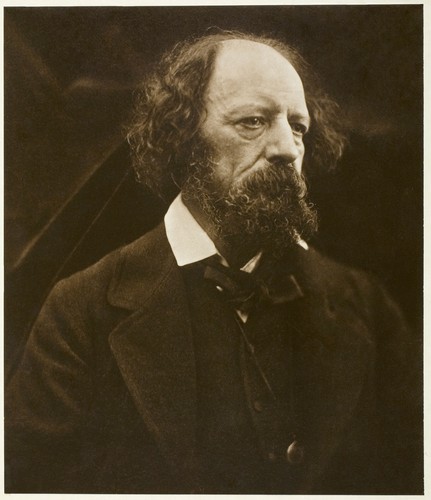
Alfred Lord Tennyson

Personal Information

Born August 6, 1809
Died October 6, 1892 (83 years old)
Somersby, United Kingdom of Great Britain and Ireland
Also known as: Alfred Tennyson, Alfred Tennyson Tennyson
117 books
3.7 (16)
296 readers

Description

Alfred Tennyson, 1st Baron Tennyson, FRS, much better known as "Alfred, Lord Tennyson," was Poet Laureate of the United Kingdom during much of Queen Victoria's reign and remains one of the most popular poets in the English language. Tennyson excelled at penning short lyrics, "In the valley of Cauteretz", "Break, Break, Break", "The Charge of the Light Brigade", "Tears, Idle Tears" and "Crossing the Bar". Much of his verse was based on classical mythological themes, such as Ulysses, although In Memoriam A.H.H. was written to commemorate his best friend Arthur Hallam, a fellow poet and fellow student at Trinity College, Cambridge, who was engaged to Tennyson's sister, but died from a cerebral hemorrhage before they were married. Tennyson also wrote some notable blank verse including Idylls of the King, Ulysses, and Tithonus. During his career, Tennyson attempted drama, but his plays enjoyed little success. Tennyson wrote a number of phrases that have become commonplaces of the English language, including: "Nature, red in tooth and claw", "'Tis better to have loved and lost / Than never to have loved at all", "Theirs not to reason why, / Theirs but to do and die", "My strength is as the strength of ten, / Because my heart is pure", "Knowledge comes, but Wisdom lingers", and "The old order changeth, yielding place to new". He is the second most frequently quoted writer in The Oxford Dictionary of Quotations after Shakespeare.

Books

Newest First

Selected poems

D. J. Enright, Jones Very, Herman Melville, Michael S. Harper, Wyatt, Thomas Sir, David Lawrence, Lewis Carroll, Paul Celan, Octavio Paz, Boynton, Henry Walcott, Pāratitācan̲, George Mackay Brown, Hans Magnus Enzensberger, Dylan Thomas, Saint-John Perse, Giuseppe Ungaretti, Stéphane Mallarmé, Sir Philip Sidney, Ennis Rees, Elizabeth Barrett Browning, John Glassco, Karl Jay Shapiro, William Barnes, Jorge Luis Borges, Niyi Osundare, Robert Louis Stevenson, Leah Goldberg, Cyprian Norwid, Yvor Winters, Anne Brontë, Carol Ann Duffy, Seán Ó Ríordáin, Czesław Miłosz, Sister Mary Madeleva, Oxenham, John, Mongane Wally Serote, Michael Rosen, Paul Éluard, Harvey Shapiro, Johannes Bobrowski, Barnabe Googe, Sophocles, Rudyard Kipling, Walter De la Mare, Aldous Huxley, Charles Olson, William Butler Yeats, Walt Whitman, Frank O'Hara, Kōnstantinos Petrou Kabaphēs, Diana Der Hovanessian, D. H. Lawrence, John Keats, Lorna Goodison, Edwin Arlington Robinson, Wallace Stevens, Percy Bysshe Shelley, César Vallejo, Paul Verlaine, Graham, W. S., Ovid, James Arlington Wright, John Ashbery, Анато́лий Александрович Биск, Tomas Tranströmer, John Updike, Gaspara Stampa, Emma Lazarus, W. H. Auden, Lord Byron, Robinson Jeffers, Fergusson, Robert, Léopold Sédar Senghor, Rita Dove, William Shakespeare, Laurie Lee, Carl Sandburg, John Frederick Nims, Langston Hughes, Yves Bonnefoy, Edgar Allan Poe, Conrad Aiken, John Greenleaf Whittier, Eugène Guillevic, Michael Longley, Günter Grass, F. R. Scott, Oliver St. John Gogarty, Muriel Rukeyser, Les A. Murray, Allen Ginsberg, Robert Pinsky, Odysseas Elytis, Pierre Reverdy, Hugo, Richard, Emily Brontë, Seamus Deane, Dannie Abse, Adrienne Rich, Laura Riding, Friedrich Hölderlin, Georg Trakl, John Davidson, Rabindranath Tagore, Pádraic H. Pearse, Clarke, Austin, Steve Griffiths, George Crabbe, Fred Wah, Robert Bly, Roy Fuller, Pierre de Ronsard, Gaius Valerius Catullus, John Wilmot, Earl of Rochester, Derek Walcott, Algernon Charles Swinburne, Cecil Day-Lewis, Anne Stevenson, David Malouf, Thomas Gray, Emily Dickinson, Siegfried Sassoon, Robert Herrick, Oscar Williams, Isaac Watts, Charlotte Brontë, Vernon Phillips Watkins, Rafael Alberti, Jean Garrigue, Zbigniew Herbert, Young, Andrew, A. M. Klein, James Tate, William Wordsworth, Charlotte Mary Mew, Theocritus, Charles Churchill, Oscar Wilde, Rainer Maria Rilke, Anna Akhmatova, George Fetherling, Robert Bringhurst, Gascoyne, David, Robert Henryson, Lewis, Saunders, Pratt, E. J., Rosalía de Castro, Thomas Merton, Edward Robeson Taylor, John Shaw Neilson, Christopher Smart, Ai Weiwei, John Skelton, Kevin Crossley-Holland, U. A. Fanthorpe, Margaret Avison, John Peale Bishop, Al Purdy, Boileau, Vladimir Nabokov, Thompson, Denys, Giacomo Leopardi, Kenneth Rexroth, Adam Czerniawski, Kenneth Koch, Gerard Manley Hopkins, Robin Hyde, John Ciardi, Alfred Lord Tennyson, Andrew Marvell, David John Murray Wright, Thomas Chatterton, William Blake, T. S. Eliot, Henry Wadsworth Longfellow, Giovanni Pascoli, Guillaume Apollinaire, Stevie Smith, Andrew Barton 'Banjo' Paterson, John Gay, Emile Nelligan, Henrik Nordbrandt, Ausiàs March, Aaron J. Clarke, Jules Laforgue, Ezra Pound, John Hollander, Christina Georgina Rosetti, George William Russell, Theodore Roethke, Jaime Torres Bodet, Jibanananda Das, Gyula Illyés, Robert Frost, John Milton, Attilio Bertolucci, Federico García Lorca, Sir Walter Scott, Lars Gustafsson, Anne Sexton, John Berryman, W. D. Snodgrass, Heinz Piontek, Kenneth Patchen, Bill Bissett, William Peskett, Sylvia Townsend Warner, Sophie Hannah, António Machado
0.0 (0)
0

Queen Mary

4.0 (1)
1

The final part of Tennyson's trilogy of plays, Queen Mary depicts the decline of Roman Catholic influence in England.

Tennyson's The princess

2.0 (1)
21

A princess founds a University exclusive for women, and men are forbidden to enter. Her betrothed, a prince, together with some friends, disguise themselves as women in order to win her back

Gareth and Lynette, etc.

0.0 (0)
0

Poem, translated in Sanskrit prose.

Select poems

0.0 (0)
2

"Ephrem the Syrian is the most important poet and theologian of the Syriac Christian tradition. His numerous hymns, homilies, and commentaries were highly influential for later generations, and his poetry continues to be broadly used in the liturgies of Syrian Christian churches. This new translation of twenty poems, the only edition of Ephrem that features a text in vocalized serto script with a facing translation, offers a broad and varied introduction to Ephrem's work. Arranged according to his concept of salvation history, this book will allow readers to further explore his poetry in both its original language and in a contemporary English translation." -- From the publisher.

Prentice Hall Literature - Timeless Voices, Timeless Themes - The British Tradition

James Joyce, Tony Blair, Bei Dao, Confucius, Saki, Dylan Thomas, Joseph Addison, Doris Lessing, Stephen Spender, Sir Philip Sidney, Elizabeth Barrett Browning, Philip Larkin, Jorge Luis Borges, Thomas Babington Macaulay, A. E. Housman, Arthur Rimbaud, Sydney Smith, Tu Fu, Nadine Gordimer, Edmund Spenser, Sophocles, Rudyard Kipling, Brooke, Rupert, William Butler Yeats, D. H. Lawrence, Graham Greene, Anita Desai, Elizabeth Bowen, John Keats, Walter Raleigh, Percy Bysshe Shelley, Ovid, Thomas Jefferson, Arthur C. Clarke, W. H. Auden, Lord Byron, Ben Jonson, William Shakespeare, Geoffrey Chaucer, Christopher Marlowe, Όμηρος, Edgar Allan Poe, Suckling, John Sir, Joanna Baillie, Mary Wollstonecraft, William Trevor, Emily Brontë, Alan Sillitoe, Richard Lovelace, John Donne, George Orwell, Winston Churchill, Derek Walcott, Sappho, Alexander Pope, Louis MacNeice, Thomas Gray, Jonathan Swift, Muriel Spark, Jane Austen, Siegfried Sassoon, Pablo Neruda, Charles Baudelaire, Charlotte Brontë, Anna Quindlen, Kobayashi, Issa, Thomas Malory, Thomas More, Ted Hughes, Anna Akhmatova, Eavan Boland, Mohandas Karamchand Gandhi, Heinrich Heine, Francis Jeffrey, Buson Yosa, Charles Dickens, Gerard Manley Hopkins, Yehuda Amichai, Daniel Defoe, Seamus Heaney, Alfred Lord Tennyson, Andrew Marvell, William Blake, T. S. Eliot, Stevie Smith, Joseph Conrad, Samuel Taylor Coleridge, Virginia Woolf, Francesco Petrarca, Matthew Arnold, Mary Shelley, John Milton, V. S. Naipaul, Samuel Pepys, James Boswell, Samuel Johnson
3.0 (3)
20

Familiar poems, annotated

0.0 (0)
5

Ozymandias / Percy Bysshe Shelley The destruction of Sennacherib / George Gordon Byron The vision of Belshazzar / George Gordon Byron Alexander's feast / John Dryden Antony to Cleopatra / William Haines Lytle The angels' song / Edmund Hamilton Sears Boadicea / William Cowper The Pied Piper of Hamlin / Robert Browning Bruce to his men at Bannockburn / Robert Burns Lepanto / Gilbert Keith Chesterton The "revenge" / Alfred Tennyson The landing of the pilgrim fathers / Felicia Dorothea Hemans On the late massacre in Piedmont / John Milton The deacon's masterpiece / Oliver Wendell Holmes Paul Revere's ride / Henry Wadsworth Longfellow Concord hymn / Ralph Waldo Emerson On the extinction of the Venetian Republic / William Wordsworth Incident of the French camp / Robert Browning The star-spangled banner / Francis Scott Key On first looking into Chapman's Homer / John Keats A visit from Saint Nicholas / Clement Clarke Moore Old Ironsides / Oliver Wendell Holmes The Helen / Edgar Allan Poe Anne Rutledge / Edgar Lee Masters The charge of the Light Brigade / Alfred Tennyson Maryland, my Maryland / James Ryder Randall Battle-hymn of the republic / Julia Ward Howe Barbara Frietchie / John Greenleaf Whittier O captain! My captain! / Walt Whitman Invictus / William Ernest Henley The modern major-general / William Schwenk Gilbert The new Colossus / Emma Lazarus Recessional / Rudyard Kipling Cargoes / John Masefield Miniver Cheevy / Edwin Arlington Robinson In Flanders fields / John McCrae Fire and ice / Robert Frost
