
RUSSIAN EMPIRE AUTHOR · SOCIAL LIFE AND CUSTOMS · DIARIES
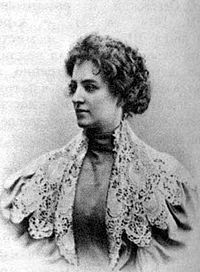
Z. N. Gippius
Also known as: Zinaida Gippius, Zinaida Hippius, Zinaida Nikolaevna Gippius-Merezhkovskaia
Zinaida Nikolayevna Gippius was a Russian poet, playwright, novelist, editor, religious thinker, and one of the major figures in Russian symbolism.
WHO stands on that cliff, like a figure of stone,
— from Poems
Most acclaimed

Poems
This is an edition of all the known poems of Mark Akenside, the eighteenth-century English poet and physician, whose poetry has not been newly edited for more than a century. This edition will thus provide scholars and students with a much-needed opportunity to reassess the extent of Akenside's contribution to literary culture, and it will also clarify his role in the development of the aesthetic theories of his own generation and the one that followed. The career of Mark Akenside (1721-70) spans a period of extraordinarily fast change in English literature: his first major poem, The Pleasures of Imagination, appeared in the year of Pope's death; and Akenside died in the year Wordsworth was born. His works not only reflected the very considerable changes that took place during these years; they also contributed in many ways to the shifts in focus, interest, and emphasis that characterize the literature of the later eighteenth century. Akenside's fascination with the imagination, its characteristics and functions, resulted in an intriguing and influential blend of the poetic and the philosophical in his longer poems, The Pleasures of Imagination (1744) and The Pleasures of the Imagination (1772). The earlier work explores the then new subject of aesthetics in greater detail than it had ever been explored before, presenting various original insights and arguments. Yet it would be wrong to see the poem as merely a versified philosophical treatise; its complex structure offers satisfactions beyond those of sequential logic, and the examples cited to illustrate the central ideas are imbued with considerable vigor and clarity. As products of, and contributors to, the eighteenth-century enthusiasm for aesthetics, Akenside's longer poems are captivating examples of the eighteenth- and nineteenth-century experiment in developing the philosophical poem into a major literary form. It is for this reason above all others that they are valued by Coleridge and the writers of the next generation. Because of the comparative obscurity into which Akenside's works fell after the demise of the long philosophical poem in the latter part of the nineteenth century, they have not by and large attracted the attention of modern bibliographers. In this edition numerous bibliographical and textual puzzles presented by his poems are solved for the first time. The apparatus, meanwhile, demonstrates the full extent of the poet's urge to revise - an urge that extended from the wholesale rewriting of some poems to subtle alterations of textual minutiae, showing a mind and an ear alive to nuances of meaning and intonation.
Selected works
1959
Since his first play, And Things That Go Bump in the Night, which premiered in 1965, McNally has proven himself to be a trailblazing figure and unique voice in American theater, known for his exploration of gay themes and his chronicling of America's changing social attitudes over the past fifty years. His thirty-three plays, nine musicals, three operas, and seven scripts for film and television, are a testament to his astonishing commitment to writing. In Selected Plays, for the very first time, McNally collects a set of eight plays that he considers the most important of his oeuvre, including the Tony-nominated Mothers and Sons and the critically acclaimed And Away We Go, neither of which have been previously published. Introducing each play with a personal essay that recounts an anecdote or discusses an aspect of the play that proceeds it, McNally himself frames his own life in the theater. Selected Plays is a landmark publication, a memoir in plays from one of America's most highly regarded and best-loved playwrights.