
UNITED STATES AUTHOR · FICTION · HISTORY
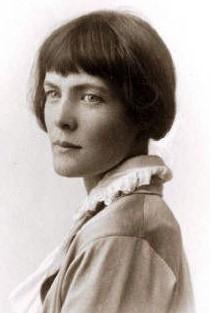
H. D. (Hilda Doolittle)
Also known as: Delia Alton, Rhoda Peters
Hilda "H.D." Doolittle was an American poet, novelist, and memoirist known for her association with the early 20th century avant-garde Imagist group of poets such as Ezra Pound and Richard Aldington. She published under the pen name of H.D. - Wikipedia
WHO stands on that cliff, like a figure of stone,
— from Poems
Most acclaimed

Prentice Hall Literature--Timeless Voices, Timeless Themes--The American Experience
Modern Biblical criticism (as opposed to pre-Modern criticism) is the use of critical analysis to understand and explain the Bible without appealing to the supernatural. During the eighteenth century, when it began as historical-biblical criticism, it was based on two distinguishing characteristics: (1) the scientific concern to avoid dogma and bias by applying a neutral, non-sectarian, reason-based judgment to the study of the Bible, and (2) the belief that the reconstruction of the historical events behind the texts, as well as the history of how the texts themselves developed, would lead to a correct understanding of the Bible. This sets it apart from earlier, pre-critical methods; from the anti-critical methods of those who oppose criticism-based study; from the post-critical orientation of later scholarship; and from the multiple distinct schools of criticism into which it evolved in the late twentieth and early twenty-first centuries. The emergence of biblical criticism is most often attributed by scholars to the German Enlightenment (c. 1650 – c. 1800), but some trace its roots back further, to the Reformation. Its principal scholarly influences were rationalist and Protestant in orientation; German pietism played a role in its development, as did British deism.
Writing on the Wall
"From the first slave writings to contemporary hip hop, the canon of African American literature offers a powerful counter-narrative to dominant notions of American culture, history, and politics. Resonant with voices of prophecy and resistance, the African American literary tradition runs deep with emancipatory currents that have had an indelible impact on the United States and the world. Mumia Abu-Jamal has been one of our most important contributors to this canon for decades, writing from the confines of the US prison system to give voice to those most silenced by chronic racism, impoverishment, and injustice. Writing on the Wall is a selection of one hundred previously unpublished essays that crystalize Mumia Abu-Jamal's essential perspectives on community, politics, power, social change, and US history. From discussions of Rosa Parks and Trayvon Martin to John Walker Lindh and Edward Snowden, Abu-Jamal articulates lucid, humorous, and often prescient insight into the past, present, and future of American politics and society. Written as radio commentaries from his prison cell in Death Row, where he was held in solitary confinement for close to thirty years, Mumia's revolutionary perspective brims with hope, encouragement, and profound faith in the possibility of social change and redemption. MUMIA ABU-JAMAL is an award-winning journalist and author of two best-selling books, Live From Death Row and Death Blossoms, which address prison life from a critical and spiritual perspective. In 1981 he was elected president of the Association of Black Journalists (Philadelphia chapter). That same year he was arrested for allegedly killing a white police officer in Philadelphia. He was convicted and sentenced to death in 1982, in a process that has been described as an epic miscarriage of justice. After spending more than 28 years on death row, in 2011 his death sentence was vacated when the Supreme Court allowed to stand the decisions of four federal judges who had earlier declared his death sentence unconstitutional. He is now serving a life sentence without the possibility of parole. In spite of his three-decade-long imprisonment, most of which was spent in solitary confinement on Death Row, Abu-Jamal has relentlessly fought for his freedom and for his profession. From prison he has written seven books and thousands of radio commentaries. He holds a BA from Goddard College and an MA from California State University, Dominguez Hills. His books have sold more than 100,000 copies and have been translated into seven languages. JOHANNA FERNÁNDEZ is a former Fulbright Scholar to Jordan and Assistant Professor of History at Baruch College of the City University of New York where she teaches 20th Century US history and African American History. She is author of the forthcoming When the World Was Their Stage: A History of the Young Lords Party, 1968-1976 (Princeton University Press). Fernandez is the writer and producer of the film, Justice on Trial: the Case of Mumia Abu-Jamal and she is featured in the critically acclaimed documentary about Mumia Abu-Jamal, Long Distance Revolutionary. Her writings have been published internationally, from Al Jazeera to the Huffington Post. She gives interviews often and has appeared in a diverse range of print, radio, online and televised media including Democracy Now! with Amy Goodman, the Fox News shows Hannity and Megyn Kelley, Al Jazeera and The New York Times. She is a coordinator of the Campaign to Bring Mumia Home. CORNEL WEST is a scholar, philosopher, activist and author of over a dozen books including his bestseller, Race Matters. He appears frequently in the media, and has appeared on the Bill Maher Show, Colbert Report, CNN and C-Span as well as on Tavis Smiley's PBS TV Show. "--
Poems
This is an edition of all the known poems of Mark Akenside, the eighteenth-century English poet and physician, whose poetry has not been newly edited for more than a century. This edition will thus provide scholars and students with a much-needed opportunity to reassess the extent of Akenside's contribution to literary culture, and it will also clarify his role in the development of the aesthetic theories of his own generation and the one that followed. The career of Mark Akenside (1721-70) spans a period of extraordinarily fast change in English literature: his first major poem, The Pleasures of Imagination, appeared in the year of Pope's death; and Akenside died in the year Wordsworth was born. His works not only reflected the very considerable changes that took place during these years; they also contributed in many ways to the shifts in focus, interest, and emphasis that characterize the literature of the later eighteenth century. Akenside's fascination with the imagination, its characteristics and functions, resulted in an intriguing and influential blend of the poetic and the philosophical in his longer poems, The Pleasures of Imagination (1744) and The Pleasures of the Imagination (1772). The earlier work explores the then new subject of aesthetics in greater detail than it had ever been explored before, presenting various original insights and arguments. Yet it would be wrong to see the poem as merely a versified philosophical treatise; its complex structure offers satisfactions beyond those of sequential logic, and the examples cited to illustrate the central ideas are imbued with considerable vigor and clarity. As products of, and contributors to, the eighteenth-century enthusiasm for aesthetics, Akenside's longer poems are captivating examples of the eighteenth- and nineteenth-century experiment in developing the philosophical poem into a major literary form. It is for this reason above all others that they are valued by Coleridge and the writers of the next generation. Because of the comparative obscurity into which Akenside's works fell after the demise of the long philosophical poem in the latter part of the nineteenth century, they have not by and large attracted the attention of modern bibliographers. In this edition numerous bibliographical and textual puzzles presented by his poems are solved for the first time. The apparatus, meanwhile, demonstrates the full extent of the poet's urge to revise - an urge that extended from the wholesale rewriting of some poems to subtle alterations of textual minutiae, showing a mind and an ear alive to nuances of meaning and intonation.