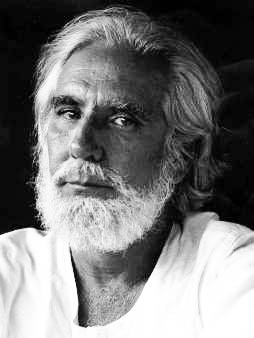
Ernesto Cardenal
Personal Information
Description
There is no description yet, we will add it soon.
Books
Love
The origin of species and other poems
"Along with its title poem, a meditation on Charles Darwin's theory of evolution, this volume by Latin American poet Ernesto Cardenal includes twenty new poems--some appearing for the first time in English and some previously unpublished--and new cantos supplementing Cosmic Canticle"--Provided by publisher.
Quetzalcoatl
"Quetzalcoatl was written during Lawrence's first stay in Mexico, in May and June 1923, and registers his initial responses to those aspects of Mexican landscape, religion, politics and culture which would fascinate him over the following two years. On leaving Mexico in July 1923, he described Quetzalcoatl as 'nearly finished', intending to revise it later, but in the event actually rewrote it almost completely, and it was published as The Plumed Serpent in 1926. This is the first scholarly edition of the original manuscripts and typescripts of Quetzalcoatl, and includes a record of all revisions Lawrence made in the course of writing it, detailed explanatory notes and an introduction outlining its compositional history. With the publication of this volume, all Lawrence's novels, in their first, intermediate and final versions, are now available in the Cambridge edition"--
Cosmic canticle
Long descriptive poems, collages of surreal scientific knowledge. Snap-shots of the origin of the universe, quantum physics, and the evolution of our solar system and life on Earth. Facts and images from biology, anthropology, history, theology, personal memory, and revolutionary ideals. The work takes on the very largest themes of existence in the form of a rapid cycling cut-up, the monologue of an old mind in an advanced state of knowledge.
Pluriverse
"Pluriverse: New and Selected Poems is the most extensive compilation of poems in English by Ernesto Cardenal. Follow Cardenal's poetic development across six decades, from the early exterioristno poems and romantic epigrams of the early 1950s, to the increasingly spiritually and politically engaged verse he wrote as priest and activist - including his classic revolutionary documentary poem "Zero Hour" - to the shorter victory and ecology poems and the elegies to fallen Sandinistas, to the cosmic-mystical-scientific dimensions of his later work. "Here they are-," editor Jonathan Cohen writes in his Introduction, "to gladden your heart and enrich your soul.""--BOOK JACKET.