Discover
Oct 11, 1926 — Jan 22, 2022· 95 yrs

VIETNAM AUTHOR · BUDDHISM · DOCTRINES

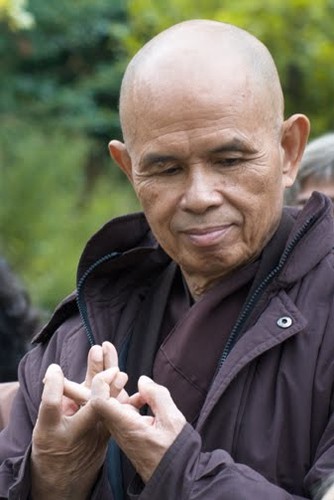
Thích Nhất Hạnh

Also known as: Nhá̂t Hạnh Thích, Nhrat Hạnh Thích

69
BOOKS
4.3
AVG RATING (90)
13
READERS

Thích Nhất Hạnh (pronounced [tʰǐk ɲə̌t hâːˀɲ]) was a Vietnamese Buddhist monk, teacher, author, poet and peace activist based in France.

Huế, Vietnam
Wikipedia

Twenty years ago at a conference I attended of theologians and professors of religion, an Indian Christian friend told the assembly.

— from Living Buddha, living Christ

Most acclaimed

#1

Living Buddha, living Christ

4.6 (7)

Buddha and Christ, perhaps the two most pivotal figures in the history of humankind, each left behind a legacy of teachings and practices that have shaped the lives of billions of people over the course of two millennia. If they were to meet on the road today, what would each think of the other's spiritual views and practices? Thich Nhat Hanh has been part of a decades-long dialogue between the two greatest living contemplative traditions, and brings to Christianity an appreciation of its beauty that could only be conveyed by an outsider. In a lucid, meditative prose, he explores the crossroads of compassion and holiness at which the two traditions meet, and reawakens our understanding of both. "On the altar in my hermitage," he says, "are images of Buddha and Jesus, and . . . I touch both of them as my spiritual ancestors." >A rare combination of mystic, scholar, and activist, Vietnamese monk Thich Nhat Hanh is one of the most beloved Buddhist teachers in the West. "[Thich Nhat Hanh] is a holy man, for he is humble and devout. . . . His ideas for peace . . . would build a monument to ecumenism, to world brotherhood, to humanity." —Dr. Martin Luther King, Jr., in nominating Thich Nhat Hanh for the Nobel Peace Prize in 1967
#2

Cultivating the Mind of Love

1996

0.0 (0)
#3

Buddha Mind, Buddha Body

0.0 (0)

Buddha Mind, Buddha Body expands upon the themes in Thich Nhat Hanh's book Understanding Our Mind. It opens with the question: Is free will possible? This concept becomes a leitmotif as the author considers how the mind functions and how we can work with it to cultivate more freedom and understanding, how to be in closer touch with reality, and how to create the conditions for our own happiness. Nhat Hanh discusses the connection between psychology, neuroscience, and meditation. He describes the importance of creativity and visualization in a successful meditation practice, presents basic Buddhist practices (particularly walking and sitting meditation), and writes movingly about the importance of brotherhood and sisterhood in finding love, happiness, and harmonious coexistence with others. Punctuated with memorable stories from the life of the Buddha as well as anecdotes and observations from his own life, Buddha Mind, Buddha Body conveys powerful life lessons in Nhat Hanh's characteristically light, humorous style.

Books

Newest First
