Discover

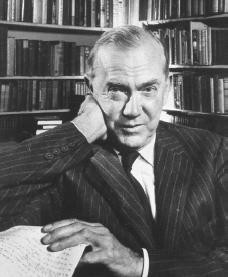
Graham Greene

Personal Information

Born October 2, 1904
Died April 3, 1991 (86 years old)
Berkhamsted, United Kingdom
Also known as: Greene, Graham, Graham GREENE
117 books
3.8 (213)
1,270 readers

Description

Henry Graham Greene (2 October 1904 – 3 April 1991) was an English writer and journalist regarded by many as one of the leading novelists of the 20th century. Combining literary acclaim with widespread popularity, Greene acquired a reputation early in his lifetime as a major writer, both of serious Catholic novels, and of thrillers. He was shortlisted for the Nobel Prize in Literature several times. Through 67 years of writing, which included over 25 novels, he explored the conflicting moral and political issues of the modern world. The Power and the Glory won the 1941 Hawthornden Prize and The Heart of the Matter won the 1948 James Tait Black Memorial Prize and was shortlisted for the Best of the James Tait Black. Greene was awarded the 1968 Shakespeare Prize and the 1981 Jerusalem Prize. Several of his stories have been filmed, some more than once, and he collaborated with filmmaker Carol Reed on The Fallen Idol (1948) and The Third Man (1949). He converted to Catholicism in 1926 after meeting his future wife, Vivien Dayrell-Browning. Later in life he took to calling himself a "Catholic agnostic". Source: [Wikipedia](

Books

Newest First

Eleven

3.0 (2)
17

The stories in Eleven are small masterpieces of Patricia Highsmith’s particular art—that of obsession and foreboding, of probing the dark corners of the human psyche. From the eerily outlandish (a man suffocated by countless snails) to the irrational and brutal (a child’s revenge on his mother for cooking his pet turtle), Eleven presents a gallery of bizarre characters, each driven by strange, unspoken urges, and their cumulative effect is at least as unsettling as any of her novels. [publisher page]

The power and the glory

4.3 (11)
243

One of Greene’s most powerful novels, the book takes as its theme the era of religious suppression in Mexico during the early 1930’s. An unnamed Catholic priest, an alcoholic with a shameful past in search of either oblivion or redemption, travels through Mexico administering the rites of the church to the poor landless peasants, hunted by a remorseless police officer and always in fear of being betrayed by those he is attempting to help.

Great Tales of Crime and Detection

0.0 (0)
13

Out the window / Lawrence Block Major crimes / Loren D. Estleman Silent warning / William J. Carroll, Jr. The third man / Graham Greene The cross of Lorraine / Isaac Asimov Nameless enemy / Miriam Allen DeFord Tragedy of a handkerchief / Michael Innes Unc foils show foe / John Jakes Dangerous widows / Mignon G. Eberhart Ride the lightning / John Lutz Till Tuesday / Jeremiah Healy The day of the losers / Dick Francis The case of the Pietro Andromache / Sara Paretsky Susu and the 8:30 ghost / Lillian Jackson Braun The investigation of things / Charles Ardai The trailor murder mystery / Abraham Lincoln The importance of trifles / Avram Davidson The double-barrelled detective story / Mark Twain The adventure of the oval window / John H. Dirckx Your appointment is cancelled / Antonia Fraser Le Chateau de L'Arsenic / Georges Simenon The nine mile walk / Harry Kemelman Crime in rhyme / Robert Bloch [The Purloined Letter]( / Edgar Allan Poe [The man with the twisted lip]( / Arthur Conan Doyle

Masterpieces of Fantasy and Wonder

0.0 (0)
21

A rich & varied collection of the best short fantasy fiction of the last two centuries. Escape into the fantastic worlds of Charles Dickens, J.M. Barrie, Graham Greene, Harlan Ellison, and others found in these 38 magical tales.

Oliver Twist

0.0 (0)
0

As is so often the case with Charles Dickens's writing, characters and situations from his 1837-39 novel Oliver Twist seem to have found life apart from the text: little Oliver's asking for "more," Bumble's pomposity, Fagin's treachery, and the Artful Dodger's shenanigans have become standard literary and cultural reference points. Generations of readers have found different elements to savor - from the melodramatic alternation between sentimentality and terror to the fairy-tale plot to the cast of remarkable characters. And of course there's the novel's social implications: Dickens pointedly maintained in his preface to the book's 1841 edition that Oliver Twist was important precisely because of its realistic, uncompromising account of the harshness and cruelty of life in early Victorian England. In this engaging study of Dickens's sccond book (it initially appeared as a magazine serial), Richard J.^ Dunn uses the author's admission that he put his "whole heart and soul" into the novel's writing to explore the connections between Dickens's own adversity - having to work under wretched conditions in a blacking factory as a boy - and the dire and often life-threatening situations the bastard child Oliver must endure before, as Dickens put it, "trimumphing at last." Taking a controversial and timely subject - England's poor laws, whose debates in Parliament he covered as a court reporter - and a child as his hero, Dickens, Dunn contends, drew together two worlds: the destitute London slums that served as a breeding ground for criminal activity and the innocent world we associate with childhood. Dunn points out that Oliver's "progress" from dark world to light shows, almost paradoxically, that these worlds are linked and will always coexist, however secure one may feel in the latter.^ The colorful array of characters that either help along or hinder Oliver's progress Dunn analyzes in detail, but to the book's most controversial character, the sinister yet only-all-too-human Fagin, he devotes an entire chapter. Dunn observes that Oliver, though the novel's "hero," in many ways functions as a blank sheet of paper on which the impressions of Dickens's richly drawn personalities, particularly Fagin, are cast. Such characters, Dunn notes, provide us wide the clues to the wholeness of thought to which Oliver aspires. Dunn underscores the importance of the George Cruikshank drawings that accompanied the serialized Oliver Twist, considering these visual renderings (four of which are reprodueed here) as more of a collaborative than a purely illustrative effort. And to round out this lively study, Dunn examines the myriad stage and screen adaptations of Oliver Twist, which found new life in Oliver!, the Academy Award-winning film of the 1960s.

The Quiet American

4.0 (21)
190

One of Graham Greene's best works. The story is set at the time of the French war against the Viet Cong and tells the story of liberal British journalist Thomas Fowler, his mistress Phuong, and their relationship with American idealist Pyle. The latter is an earnest young man indocrinated with geo-political theory and whose attempts to shape the world to American ideals ends in his own personal tragedy and drastically alters the lives of the other two participants. Written before the US involvement in Vietnam this is a strangely prophetic work and seriously encapsulates the British viewpoint towards that conflict. A beautifully written book and highly recommended.

The Other Persuasion

0.0 (0)
22

Contains: Before dark (1893) / by Marcel Proust ; translated by Richard Howard -- Mabel Neathe (1903) / by Gertrude Stein -- Prologue to Women in love (1921) / by D.H. Lawrence -- Miss Ogilvy finds herself (1926) / by Radclyffe Hall -- Arthur Snatchfold (1928) / by E.M. Forster -- Divorce in Naples (1931) / by William Faulkner -- Just boys (1931-1934) / by James T. Farrell -- The knife of the times (1932) / by William Carlos Williams -- The sea change / by Ernest Hemingway -- Momma (1947) / by John Horne Burns -- Pages from Cold Point (1950) / by Paul Bowles -- Letters and life (1952) / by Christopher Isherwood -- My brother writes poetry for an Englishman (1953) / by Marris Murray -- Two on a party (1954) / by Tennessee Williams -- You may safely gaze (1956) / by James Purdy -- Pages from an abandoned journal (1956) / by Gore Vidal -- Johnnie (1958) / by Joan O'Donovan -- The threesome (1961) / by Helen Essary Ansell -- A step towards Gomorrah (1961) / by Ingeborg Bachmann ; translated by Michael Bullock -- Jurge Dulrumple (1962) / by John O'Hara -- The wreck (1962) / by Maude Hutchins -- The beautiful room is empty (1966) / by Edmund White -- Chagrin in three parts (1967) / by Graham Greene -- Miss A. and Miss M. (1972) / by Elizabeth Taylor -- Burning th bed (1973) / by Doris Betts -- Middle children (1975) / by Jane Rule.

Prentice Hall Literature - Timeless Voices, Timeless Themes - The British Tradition

James Joyce, Tony Blair, Bei Dao, Confucius, Saki, Dylan Thomas, Joseph Addison, Doris Lessing, Stephen Spender, Sir Philip Sidney, Elizabeth Barrett Browning, Philip Larkin, Jorge Luis Borges, Thomas Babington Macaulay, A. E. Housman, Arthur Rimbaud, Sydney Smith, Tu Fu, Nadine Gordimer, Edmund Spenser, Sophocles, Rudyard Kipling, Brooke, Rupert, William Butler Yeats, D. H. Lawrence, Graham Greene, Anita Desai, Elizabeth Bowen, John Keats, Walter Raleigh, Percy Bysshe Shelley, Ovid, Thomas Jefferson, Arthur C. Clarke, W. H. Auden, Lord Byron, Ben Jonson, William Shakespeare, Geoffrey Chaucer, Christopher Marlowe, Όμηρος, Edgar Allan Poe, Suckling, John Sir, Joanna Baillie, Mary Wollstonecraft, William Trevor, Emily Brontë, Alan Sillitoe, Richard Lovelace, John Donne, George Orwell, Winston Churchill, Derek Walcott, Sappho, Alexander Pope, Louis MacNeice, Thomas Gray, Jonathan Swift, Muriel Spark, Jane Austen, Siegfried Sassoon, Pablo Neruda, Charles Baudelaire, Charlotte Brontë, Anna Quindlen, Kobayashi, Issa, Thomas Malory, Thomas More, Ted Hughes, Anna Akhmatova, Eavan Boland, Mohandas Karamchand Gandhi, Heinrich Heine, Francis Jeffrey, Buson Yosa, Charles Dickens, Gerard Manley Hopkins, Yehuda Amichai, Daniel Defoe, Seamus Heaney, Alfred Lord Tennyson, Andrew Marvell, William Blake, T. S. Eliot, Stevie Smith, Joseph Conrad, Samuel Taylor Coleridge, Virginia Woolf, Francesco Petrarca, Matthew Arnold, Mary Shelley, John Milton, V. S. Naipaul, Samuel Pepys, James Boswell, Samuel Johnson
3.0 (3)
20

The Man Within

3.3 (3)
17

Graham Greene’s first published novel tells the story of Andrews, a young man who has betrayed his fellow smugglers and fears their vengeance. Fleeing from them, with no hope of pity or salvation, he takes refuge in the house of a young woman, also alone in the world. Elizabeth persuades him to give evidence against his accomplices in court, but neither she nor Andrews is aware that to both criminals and authority, treachery is as great a crime as smuggling.
