
REPUBLIC OF FLORENCE AUTHOR · TRANSLATIONS INTO ENGLISH · CORRESPONDENCE
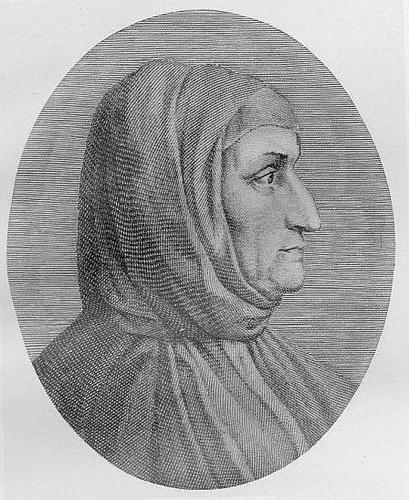
Francesco Petrarca
Also known as: F. Petrarch, Francesca Petrarca
Italian scholar, poet and one of the earliest Renaissance humanists
My name is Cassie.
— from The secret, 2001
Most acclaimed

Africa
"These volumes offer a one-stop resource for researching the lives, customs, and cultures of Africa's nations and peoples. Unparalleled in its coverage of contemporary customs in all of Africa, this multivolume set is perfect for both high school and public library shelves. The three-volume encyclopedia will provide readers with an overview of contemporary customs and life in North Africa and sub-Saharan Africa through discussions of key concepts and topics that touch everyday life among the nations' peoples. While this encyclopedia places emphasis on the customs and cultural practices of each state, history, politics, and economics are also addressed. Because entries average 14,000 to 15,000 words each, contributors are able to expound more extensively on each country than in similar encyclopedic works with shorter entries. As a result, readers will gain a more complete understanding of what life is like in Africa's 54 nations and territories, and will be better able to draw cross-cultural comparisons based on their reading."--Publisher's description.
The secret
2001
Secretum (De secreto conflictu curarum mearum, translated as The Secret or My Secret Book) is a trilogy of dialogues in Latin written by Petrarch sometime from 1347 to 1353, in which he examines his faith with the help of Saint Augustine, and "in the presence of The Lady Truth". Secretum was not circulated until some time after Petrarch's death, and was probably meant to be a means of self-examination more than a work to be published and read by others. The dialogue opens with Augustine chastising Petrarch for ignoring his own mortality and his fate in the afterlife by not devoting himself fully to God. Petrarch concedes that this lack of piety is the source of his unhappiness, but he insists that he cannot overcome it. The dialogue then turns to the question of Petrarch's seeming lack of free will, and Augustine explains that it is his love for temporal things (specifically Laura), and his pursuit of fame through poetry that "bind his will in adamantine chains". Petrarch's turn towards religion in his later life was inspired in part by Augustine's Confessions, and Petrarch imitates Augustine's style of self-examination and harsh self-criticism in Secretum. The ideas expressed in the dialogues are taken mostly from Augustine, particularly the importance of free will in achieving faith. Other notable influences include Cicero and other Pre-Christian thinkers. Secretum can be seen as an attempt by Petrarch to reconcile his Renaissance humanism and admiration of the classical world with his Christian faith. Especially important are his rejection of love for temporal things not because it is a sin, but because it prevents him from knowing the eternal, a position that resembles classical philosophy far more than the contemporary Christian theology. Classical writers are also regarded as sources of authority supporting Christianity, and Secretum quotes them more frequently than scripture."--Wikped, July 2014.
Letters
"A landmark of postmodern American fiction, Letters is (as the subtitle genially informs us) "an old time epistolary novel by seven fictitious drolls & dreamers each of which imagines himself factual." Seven characters (including the Author himself) exchange a novel's worth of letters during a 7-month period in 1969, a time of revolution that recalls the U.S.'s first revolution in the 18th century - the heyday of the epistolary novel. Recapitulating American history as well as the plots of his first six novels, Barth's seventh novel is a witty and profound exploration of the nature of revolution and renewal, rebellion and reenactment, at both the private and public levels. It is also an ingenious meditation on the genre of the novel itself, recycling an older form to explore new directions, new possibilities for the novel."--BOOK JACKET.