Discover

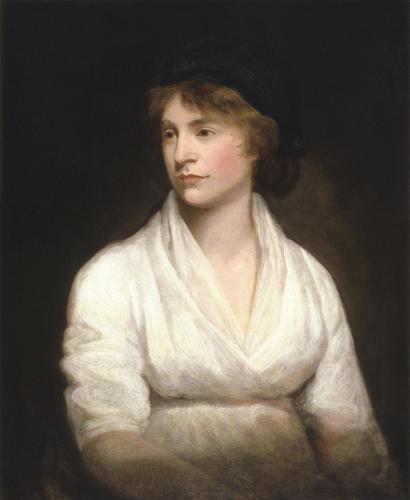
Mary Wollstonecraft

Personal Information

Born April 27, 1759
Died September 10, 1797 (38 years old)
Spitalfields, Kingdom of Great Britain
Also known as: WOLLSTONECRAFT, MARY, 1759-1797., MARY WOLLSTONECRAFT
30 books
3.6 (16)
384 readers

Description

Mary Wollstonecraft (pronounced /ˈwʊlstən.krɑːft/; 27 April 1759 – 10 September 1797) was an eighteenth-century British writer, philosopher, and advocate of women's rights. During her brief career, she wrote novels, treatises, a travel narrative, a history of the French Revolution, a conduct book, and a children's book. Wollstonecraft is best known for A Vindication of the Rights of Woman (1792), in which she argues that women are not naturally inferior to men, but appear to be only because they lack education. She suggests that both men and women should be treated as rational beings and imagines a social order founded on reason.

Books

Newest First

Mary

0.0 (0)
7

"Two great theologians endeavor to restore the importance of Marian doctrine and devotion for the contemporary Church by offering a spiritually rich approach to Mariology. This effort brings into new relief the Marian contours of ecclesial faith. Ratzinger and von Balthasar show that Mary is both the embodiment of the Church, and the mother who co-operates in giving birth to the Church in the souls of believers."--Jacket.

Prentice Hall Literature - Timeless Voices, Timeless Themes - The British Tradition

James Joyce, Tony Blair, Bei Dao, Confucius, Saki, Dylan Thomas, Joseph Addison, Doris Lessing, Stephen Spender, Sir Philip Sidney, Elizabeth Barrett Browning, Philip Larkin, Jorge Luis Borges, Thomas Babington Macaulay, A. E. Housman, Arthur Rimbaud, Sydney Smith, Tu Fu, Nadine Gordimer, Edmund Spenser, Sophocles, Rudyard Kipling, Brooke, Rupert, William Butler Yeats, D. H. Lawrence, Graham Greene, Anita Desai, Elizabeth Bowen, John Keats, Walter Raleigh, Percy Bysshe Shelley, Ovid, Thomas Jefferson, Arthur C. Clarke, W. H. Auden, Lord Byron, Ben Jonson, William Shakespeare, Geoffrey Chaucer, Christopher Marlowe, Όμηρος, Edgar Allan Poe, Suckling, John Sir, Joanna Baillie, Mary Wollstonecraft, William Trevor, Emily Brontë, Alan Sillitoe, Richard Lovelace, John Donne, George Orwell, Winston Churchill, Derek Walcott, Sappho, Alexander Pope, Louis MacNeice, Thomas Gray, Jonathan Swift, Muriel Spark, Jane Austen, Siegfried Sassoon, Pablo Neruda, Charles Baudelaire, Charlotte Brontë, Anna Quindlen, Kobayashi, Issa, Thomas Malory, Thomas More, Ted Hughes, Anna Akhmatova, Eavan Boland, Mohandas Karamchand Gandhi, Heinrich Heine, Francis Jeffrey, Buson Yosa, Charles Dickens, Gerard Manley Hopkins, Yehuda Amichai, Daniel Defoe, Seamus Heaney, Alfred Lord Tennyson, Andrew Marvell, William Blake, T. S. Eliot, Stevie Smith, Joseph Conrad, Samuel Taylor Coleridge, Virginia Woolf, Francesco Petrarca, Matthew Arnold, Mary Shelley, John Milton, V. S. Naipaul, Samuel Pepys, James Boswell, Samuel Johnson
3.0 (3)
20

A Vindication of Rights of Woman

3.6 (10)
226

From Goodreads: Writing in an age when the call for the rights of man had brought revolution to America and France, Mary Wollstonecraft produced her own declaration of female independence in 1792. Passionate and forthright, A Vindication of the Rights of Woman attacked the prevailing view of docile, decorative femininity, and instead laid out the principles of emancipation: an equal education for girls and boys, an end to prejudice, and for women to become defined by their profession, not their partner. Mary Wollstonecraft's work was received with a mixture of admiration and outrage - Walpole called her 'a hyena in petticoats' - yet it established her as the mother of modern feminism.

Posthumous works of the author of A vindication of the rights of woman

0.0 (0)
0

This volume contains a variety of Wollstonecraft's writings, including her essay "The Wrongs of Woman" and a large number of private letters which reveal her strong hatred of oppression and her commitment to feminism.

Maria; or, The Wrongs of Woman

0.0 (0)
100

Maria: or, The Wrongs of Woman is the 18th-century British feminist Mary Wollstonecraft’s unfinished novelistic sequel to her revolutionary political treatise A Vindication of the Rights of Woman (1792). The Wrongs of Woman was published posthumously in 1798 by her husband, William Godwin, and is often considered her most radical feminist work. Wollstonecraft’s philosophical and gothic novel revolves around the story of woman imprisoned in an insane asylum by her husband. It focuses on the societal rather than the individual "wrongs of woman" and criticizes what Wollstonecraft viewed as the patriarchal institution of marriage in eighteenth-century Britain and the legal system that protected it. However, the heroine’s inability to relinquish her romantic fantasies also reveals women’s collusion in their oppression through false and damaging sentimentalism. The novel pioneered the celebration of female sexuality and cross-class identification between women. Such themes, coupled with the publication of Godwin’s scandalous Memoirs of Wollstonecraft’s life, made the novel unpopular at the time it was published. Twentieth-century feminist critics embraced the work, integrating it into the history of the novel and feminist discourse. It is most often viewed as a fictionalized popularization of the Rights of Woman, as an extension of Wollstonecraft’s feminist arguments in Rights of Woman, and as autobiographical. (Source: [Wikipedia](

Letters Written During a Short Residence in Sweden, Norway, and Denmark

0.0 (0)
0

"Wollstonecraft's Letters Written in Sweden, Norway, and Denmark is a deeply personal travel narrative. The twenty-five letters cover a wide range of topics, from sociological reflections on Scandinavia and its peoples to philosophical questions regarding identity to musings on her relationship with Imlay (although he is not referred to by name in the text). Using the rhetoric of the sublime, Wollstonecraft explores the relationship between the self and society. Reflecting the strong influence of Rousseau, Letters Written in Sweden shares the themes of the French philosopher's Reveries of a Solitary Walker (1782): "the search for the source of human happiness, the stoic rejection of material goods, the ecstatic embrace of nature, and the essential role of sentiment in understanding". While Rousseau ultimately rejects society, however, Wollstonecraft celebrates domestic scenes and industrial progress in her text."--Wikipedia.
