Discover
Jan 1, 1743 — Jan 1, 1826· 83 yrs

UNITED STATES AUTHOR · POLITICS AND GOVERNMENT · SOURCES

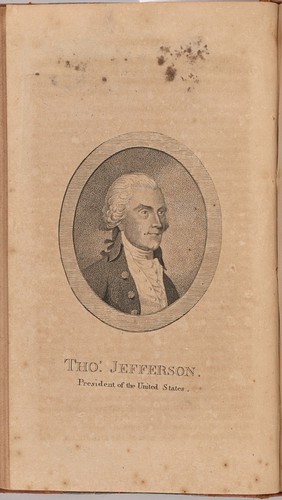
Thomas Jefferson

Also known as: Jefferson, Thomas, 1743-1826., Jefferson, Thomas Pres. U. S

62
BOOKS
3.8
AVG RATING (16)
0
READERS

Thomas Jefferson: Author of America is a short 2005 biography of Founding Father Thomas Jefferson, the third President of the United States (1801–1809) and the principal author of the Declaration of Independence (1776), by author, journalist and literary critic Christopher Hitchens.

Shadwell, United States
Wikipedia

The underground man, as both literary figure and social type, first enters European aware in the nineteenth century.

— from Selected writings, 1994

Most acclaimed

#2

Papers

0.0 (0)
#1

Selected writings

1994

0.0 (0)

Sir Thomas Browne (1605-82), physician and philosopher, is celebrated principally for his Religio Medici and his study of burial customs, Urn Burial, masterpieces of English prose. But a portrait of Browne as a seventeenth-century intellectual must include much that is rarely seen except by specialists. The Pseudodoxia Epidemica, for example, tracts, letters to naturalists and antiquarians, notebooks and observations on natural history, are neglected. This modernised edition includes the complete text of Urn Burial, selections from Religio Medici, and much else to give account of Browne as doctor, scientist, philosopher, Christian, political and social being. Designed for those unfamiliar with Browne's sometimes opaque prose, it includes substantial annotation and a full introduction. . Browne's elaborate wit engages us by its reflective, at times outrageous tone. He can parody himself: 'if elegancy still proceedeth...we shall, within few years, be fain to learn Latin to understand English...' He was 'rich in various knowledge, exuberant in conceptions and conceits; contemplative, imaginative, often truly great and magnificent in his style,' Coleridge said. His work has marked generations of English writers.
#3

Works

0.0 (0)

Hippocrates, said to have been born in Cos in or before 460 BCE, learned medicine and philosophy; travelled widely as a medical doctor and teacher; was consulted by King Perdiccas of Macedon and Artaxerxes of Persia; and died perhaps at Larissa. Apparently he rejected superstition in favour of inductive reasoning and the study of real medicine as subject to natural laws, in general and in individual people as patients for treatment by medicines and surgery. Of the roughly 70 works in the Hippocratic Collection," many are not by Hippocrates; even the famous oath may not be his. But he was undeniably the "Father of Medicine."

Books

Newest First
