
UNITED KINGDOM AUTHOR · FICTION · GENERAL
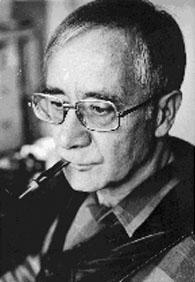
Alan Sillitoe
Alan Sillitoe was born in Nottingham, England, to working-class parents. His father worked in the Raleigh factory. In World War II he served with the Royal Air Force as a wireless operator in Malaysia from 1946-1949. Upon returning to England, he was diagnosed with tuberculosis and spent sixteen months in an RAF hospital. After he was discharged, he lived in France and Spain on his veteran's pension and attempted to recover from the disease. In 1955, while living in Mallorca with his lover, American poet Ruth Fainlight, he began to write his first novel, Saturday Night and Sunday Morning, which was published in 1958. He has written many novels and several volumes of poetry. In 1995 he wrote an autobiography, Life Without Armour. He married Ruth Fainlight, and lives in London.
SCENE: A spacious whitewashed room in Dreissiger's house at Peterswaldau, where the weavers must deliver their finished webs.
— from Three Plays
Most acclaimed

The Storyteller
"A beautiful collection of the legendary thinker's short stories. This is the first major collection of short stories from the legendary German-Jewish critic and philosopher Walter Benjamin (1892-1940). Benjamin is best known for his groundbreaking studies on culture and literature, including the collections Illuminations, One-Way Street and The Arcades Project, but here for the first time are gathered his experiments in fiction, with forms including novellas, fables, histories, aphorisms, parables, and riddles. As well as highlighting the themes that run throughout his work, the collection demonstrates that his singular style could create extraordinary imaginative worlds that will delight those who are fascinated by his thinking, as well as readers of literary fiction such as Franz Kafka and Stefan Zweig and the uncanny tales of E.T.A. Hoffmann. This collection is translated and edited by Sam Dolbear, Esther Leslie and Sebastian Truskolaski"--
Three Plays
World-renowned historian Howard Zinn has turned to drama to explore the legacy of Karl Marx and Emma Goldman and to delve into the intricacies of political and social conscience perhaps more deeply than traditional history permits. Three Plays brings together all this work, including the previously unpublished Daughter of Venus, along with a new introductory essay on political theater, and prefaces to each of the plays.“The first act of ‘Emma,’ Howard Zinn’s play about Emma Goldman, is a small miracle. Here is a drama that holds down the heroics, polemics and didacticism to which works about heroes and heroines are prone. True, Emma is idealized; she is loving, honest, selfless, daring, but she is also human and believable.”—Walter Goodman, New York Times“[Marx in Soho is] an imaginative critique of our society’s hypocrisies and injustices, and an entertaining, vivid portrait of Karl Marx as a voice of humanitarian justice — which is perhaps the best way to remember him.” —Kirkus Reviews“[Daughter of Venus’s] central concerns — personal and social ethics; the balance of obligations to ourselves, our families, and our fellow citizens; the uses and abuses of political and scientific power — remain as timely as ever. . . . Zinn not only displays a fluid and passionately committed style but also is attempting to do something interesting with it: to interweave a story of familial tensions and national politics, and in doing so to remind us that the way we live our lives on the small, local, day-to-day scale of family life can have repercussions and implications for the life of the nation at large.”—Louise Kennedy, Boston Globe
Collected stories
This indispensable volume contains the best of Frank O’Connor's short fiction. From “Guests of the Nation” to “The Mad Lomasneys” to “First Confession” to “My Oedipus Complex,” these tales of Ireland have touched generations of readers the world over and placed O'Connor alongside W. B. Yeats and James Joyce as the greatest of Irish authors. Analyzing a Robert Browning poem, O'Connor once wrote: “Since a whole lifetime must be crowded into a few minutes, those minutes must be carefully chosen indeed and lit by an unearthly glow.” Each of the sixty-seven stories gathered here achieves the same incredible feat of the imagination, laying bare entire lives and histories within the space of a few pages. Dublin schoolteacher Ned Keating waves good-bye to a charming girl and to any thoughts of returning to his village home in the lyrical and melancholy “Uprooted.” A boy on an important mission is waylaid by a green-eyed temptress and seeks forgiveness in his mother’s loving arms in “The Man of the House,” a tale that draws on O'Connor’s own difficult childhood. A series of awkward encounters and humorous misunderstandings perfectly encapsulates the complicated legacy of Irish immigration in “Ghosts,” the bittersweet account of an American family’s pilgrimage to the land of their forefathers. As a writer, critic, and teacher, O'Connor elevated the short story to astonishing new heights. This career-spanning anthology, epic in scope yet brimming with the small moments and intimate details that earned him a reputation as Ireland’s Chekhov, is a testament to Frank O’Connor's magnificent storytelling and a true pleasure to read from first page to last.