Discover

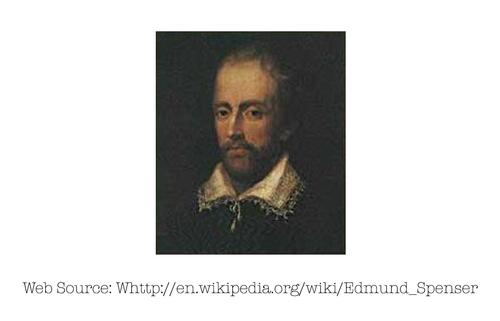
Edmund Spenser

Personal Information

Died January 1, 1599
East Smithfield, Kingdom of England
Also known as: Edmund Spencer, Spenser, Edmund, 1552?-1599.
53 books
3.4 (5)
40 readers

Description

There is no description yet, we will add it soon.

Books

Newest First

Selected shorter poems

0.0 (0)
0

This is the first collection of Spenser's shorter poems to offer modernised spelling and punctuation, thus placing the poet alongside his contemporaries - amongst them Sidney, Shakespeare, and Donne - as a writer who can now be read and understood by modern readers without the obstacles of archaic spelling and punctuation artificially obscuring his meaning. Spenser's celebrated manifesto poem, The Shepherds' Calendar (1579), together with its original prefatory material and the contemporary glosses by E.K., appears here for the first time in a modernised form, but with the conscious archaisms and dialectal forms retained so that it can now, for the first time since it was published, be read as the linguistic palimpsest Spenser intended it to be. Each poem is prefaced by a headnote explaining occasion, genre, sources, theme, and current critical debate, which, together with the detailed footnotes, allows the reader to place each work in its critical and historical context. Aimed at undergraduate as well as postgraduate readers, this groundbreaking edition will make the richness and variety of Spenser's shorter poems truly accessible to the modern reader.

Prentice Hall Literature - Timeless Voices, Timeless Themes - The British Tradition

James Joyce, Tony Blair, Bei Dao, Confucius, Saki, Dylan Thomas, Joseph Addison, Doris Lessing, Stephen Spender, Sir Philip Sidney, Elizabeth Barrett Browning, Philip Larkin, Jorge Luis Borges, Thomas Babington Macaulay, A. E. Housman, Arthur Rimbaud, Sydney Smith, Tu Fu, Nadine Gordimer, Edmund Spenser, Sophocles, Rudyard Kipling, Brooke, Rupert, William Butler Yeats, D. H. Lawrence, Graham Greene, Anita Desai, Elizabeth Bowen, John Keats, Walter Raleigh, Percy Bysshe Shelley, Ovid, Thomas Jefferson, Arthur C. Clarke, W. H. Auden, Lord Byron, Ben Jonson, William Shakespeare, Geoffrey Chaucer, Christopher Marlowe, Όμηρος, Edgar Allan Poe, Suckling, John Sir, Joanna Baillie, Mary Wollstonecraft, William Trevor, Emily Brontë, Alan Sillitoe, Richard Lovelace, John Donne, George Orwell, Winston Churchill, Derek Walcott, Sappho, Alexander Pope, Louis MacNeice, Thomas Gray, Jonathan Swift, Muriel Spark, Jane Austen, Siegfried Sassoon, Pablo Neruda, Charles Baudelaire, Charlotte Brontë, Anna Quindlen, Kobayashi, Issa, Thomas Malory, Thomas More, Ted Hughes, Anna Akhmatova, Eavan Boland, Mohandas Karamchand Gandhi, Heinrich Heine, Francis Jeffrey, Buson Yosa, Charles Dickens, Gerard Manley Hopkins, Yehuda Amichai, Daniel Defoe, Seamus Heaney, Alfred Lord Tennyson, Andrew Marvell, William Blake, T. S. Eliot, Stevie Smith, Joseph Conrad, Samuel Taylor Coleridge, Virginia Woolf, Francesco Petrarca, Matthew Arnold, Mary Shelley, John Milton, V. S. Naipaul, Samuel Pepys, James Boswell, Samuel Johnson
3.0 (3)
20

Edmund Spenser's poetry

0.0 (0)
1

This new edition addresses the shifts in scholarly and critical interests in Spenser studies since 1993 as well as access provided by new technology. Notes reflect the information that Spenser's best readers would have at their fingertips without spoiling the pleasure of reading Spenser for the first time. Mother Hubberds Tale from the 1591 Complaints is newly included. The Ruines of Rome, Spenser's translation of Joachim Du Bellay's Antiquitez, is also added to give readers the chance to see Spenser at work as a translator and to give the English perspective on Rome. Sixteen critical essays have been added to supplement fourteen earlier commentaries. Among the perspectives new to the Fourth Edition are those of C. S Lewis, Martha Craig, Gordon Teskey, Jeff Dolven, David Wilson-Okamura, and Jennifer Summit. In keeping with the last edition, critical pieces on the House of Busyrane, Spenser's pastoral, Muiopotmos, and Amoretti are grouped together to facilitate classroom discussion. New selections from Jane Grogan, Andrew D. Hadfield, Colin Burrow, Lynn Staley, Lauren Silberman, and A. E. B. Coldiron join the readings on House of Busyrane, and "Amoretti" grows with selections by A. Leigh DeNeef and Helena Mennie Shire." -- Publisher website.