Salman Rushdie
Personal Information
Description
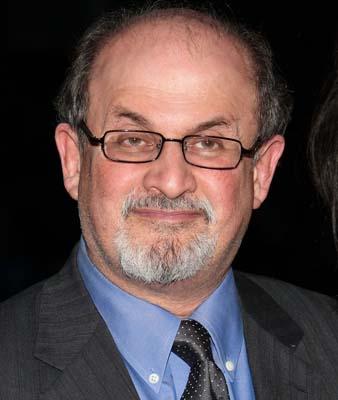
Salman Rushdie was born in 1947 in Bombay to a Kashmiri family. He won the Booker Prize in 1981. Much of his fiction is set on the Indian subcontinent. His style is often classified as magical realism mixed with historical fiction, and a dominant theme of his work is the story of the many connections, disruptions and migrations between the Eastern and Western world.
Books
Fury
Would you risk everything for love? Life has held nothing but hardships for Hunter Bane. Growing up with a learning disability wasn’t easy, especially when you’re poor. With only his brother to support him, Hunter clings to the short moments of happiness in life. Like when he meets Autumn Blakewood. Autumn Blakewood is a geek at heart. Reading is her passion, and she can’t spend one day without her books. She’s always locked up in her room studying, trying to avoid trouble. Until Hunter comes into her life. Hunter can’t resist the temptation to get closer to Autumn. She is his complete opposite, and yet he’s drawn to her in ways he can’t explain. But when his brother is caught dealing drugs and sent to prison, Hunter’s world shatters. To save his brother, Hunter has to join the gang he’s feared his entire life. Now he’s forced to choose between his family and the one girl he loves. Fighting for both, his fury is all he needs…
Shame
In het hedendaagse Pakistan, met zijn grote tegenstelling tussen rijk en arm, zijn machtsstrijd, politiek gekonkel en corruptie dagelijks voorkomende verschijnselen.
In Good Faith
Discusses his book Satanic verses, and his life after its publication.
Two years eight months and twenty-eight nights
"From Salman Rushdie, one of the great writers of our time, comes a spellbinding novel that blends history, mythology, and a timeless love story. A lush modern fairytale in which our world has been plunged into an age of unreason, Two Years Eight Months and Twenty-Eight Nights is a breathtaking achievement and an enduring testament to the power of storytelling" -- Provided by publisher. "Once upon a time, in a world just like ours, there came "the time of the strangenesses." Reason receded and the loudest, most illiberal voices reigned. A simple gardener began to levitate, and a powerful djinn -- also known as the Princess of Fairyland -- raised an army composed entirely of her semi-magical great-great-great-grandchildren. A baby was born with the ability to see corruption in the faces of others. The ghosts of two philosophers, long dead, began arguing once more. And a battle for the kingdom of Fairyland was waged throughout our world for 1,001 nights -- or, to be more precise, for two years, eight months, and twenty-eight nights. Two Years, Eight Months and Twenty-Eight Nights is a masterful, playfully enchanting meditation on the power of love and the importance of rationality, replete with flying carpets and dynastic intrigue" -- Provided by publisher.
Home
Victory City
Pampa Kampana, a 247-year-old demi-god, chronicles the birth and death of Bisnaga, a city she created and occasionally ruled.
Luka and the Fire of Life (Khalifa Brothers #2)
This breathtaking new novel centers on Luka, Haroun’s younger brother, who must save his father from certain doom. For Rashid Khalifa, the legendary storyteller of Kahani, has fallen into deep sleep from which no one can wake him. To keep his father from slipping away entirely, Luka must travel to the Magic World and steal the ever-burning Fire of Life. Thus begins a quest replete with unlikely creatures, strange alliances, and seemingly insurmountable challenges as Luka and an assortment of enchanted companions race through peril after peril, pass through the land of the Badly Behaved Gods, and reach the Fire itself, where Luka’s fate, and that of his father, will be decided. Filled with mischievous wordplay and delving into themes as universal as the power of filial love and the meaning of mortality, Luka and the Fire of Life is a book of wonders for all ages.
The Enchantress of Florence
A tall, yellow-haired, young European traveler calling himself "Mogor dell'Amore," the Mughal of Love, arrives at the court of the Emperor Akbar, lord of the great Mughal empire, with a tale to tell that begins to obsess the imperial capital, a tale about a mysterious woman, a great beauty believed to possess powers of enchantment and sorcery, and her impossible journey to the far-off city of Florence.The Enchantress of Florence is the story of a woman attempting to command her own destiny in a man's world. It is the story of two cities, unknown to each other, at the height of their powers--the hedonistic Mughal capital, in which the brilliant Akbar the Great wrestles daily with questions of belief, desire, and the treachery of his sons, and the equally sensual city of Florence during the High Renaissance, where Niccolo Machiavelli takes a starring role as he learns, the hard way, about the true brutality of power.Vivid, gripping, irreverent, bawdy, profoundly moving, and completely absorbing, The Enchantress of Florence is a dazzling book full of wonders by one of the world's most important living writers.From the Hardcover edition.
The Wizard of Oz
After a cyclone transports her to the land of Oz, Dorothy must seek out the great Wizard in order to return to Kansas.
Joseph Anton
On February 14, 1989, Salman Rushdie received a call from a journalist informing him that he had been "sentenced to death" by the Ayatollah Khomeini. It was the first time Rushdie heard the word fatwa. His crime? Writing a novel, The Satanic Verses, which was accused of being "against Islam, the Prophet, and the Quran." So begins the extraordinary story of how a writer was forced underground for more than nine years, moving from house to house, with the constant presence of an armed police protection team. Asked to choose an alias that the police could use, he thought of combinations of the names of writers he loved: Conrad and Chekhov: Joseph Anton. How do a writer and his family live with the threat of murder for over nine years? How does he go on working? How does despair shape his thoughts and actions, and how does he learn to fight back? In this memoir, Rushdie tells for the first time the story of his crucial battle for freedom of speech. He shares the sometimes grim, sometimes comic realities of living with armed policemen, and the close bonds he formed with his protectors; of his struggle for support and understanding from governments, intelligence chiefs, publishers, journalists, and fellow writers; and of how he regained his freedom. What happened to Salman Rushdie was the first act of a drama that is still unfolding--From publisher description.
The Body
The Harbrace Anthology of Short Fiction -- Fourth Edition
[Young Goodman Brown]( / Nathaniel Hawthorne -- [Fall of the House of Usher]( / Edgar Allan Poe -- [Bartleby, the scrivener]( / Herman Melville -- A whisper in the dark / Lousia May Alcott -- [The story of an hour]( / Kate Chopin -- An outpost of progress / Joseph Conrad -- The yellow wallpaper / Charlotte Perkins Gilman -- [Araby]( / James Joyce -- Bliss / Katherine Mansfield -- [A rose for Emily]( / William Faulkner -- A clean, well-lighted place / Ernest Hemingway -- The lamp at noon / Sinclair Ross -- Why I live at the P.O. / Eudora Welty -- My heart is broken / Mavis Gallant -- At the rendezous of victory / Nadine Gordimer -- The loons / Margaret Laurence -- Wild swans / Alice Munro -- Foghound in Avalon / Elizabeth McGrath -- The conversation of the Jews / Philip Roth -- The motor car / Austin C. Clarke -- Hazel / Carol Shields -- The boat / Alistair MacLeod -- The resplendent quetzal / Margaret Atwood -- Joseph's justice, interview with Maria Campbell / Maria Campbell -- Borders / Thomas King -- Everyday use / Alice Walker -- The naked man / Greg Hollingshead -- The prophet's hair / Salman Rushdie -- Summit with Sedna, the mother of sea beasts / Aloootook Ipellie -- Cages / Guy Vanderhaeghe -- Two kinds / Amy Tan -- Squatter / Rohinton Mistry.
Burn This Book
Published in conjunction with the PEN American Center, Burn This Book is a powerful collection of essays that explore the meaning of censorship and the power of literature to inform the way we see the world, and ourselves.
The Satanic Verses
The Satanic Verses is Salman Rushdie's fourth novel, first published September 26, 1988 and inspired in part by the life of the Islamic prophet Muhammad. As with his previous books, Rushdie used magical realism and relied on contemporary events and people to create his characters. The title refers to the satanic verses, a group of Quranic verses that refer to three pagan Meccan goddesses: Allāt, Uzza, and Manāt. The part of the story that deals with the "satanic verses" was based on accounts from the historians al-Waqidi and al-Tabari. In the United Kingdom, The Satanic Verses received positive reviews, was a 1988 Booker Prize finalist (losing to Peter Carey's Oscar and Lucinda) and won the 1988 Whitbread Award for novel of the year.
