Discover

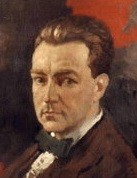
Oliver St. John Gogarty

Personal Information

Born August 17, 1878
Died September 22, 1957 (79 years old)
Also known as: Gogarty, Oliver St. John, Oliver St John Gogarty
15 books
4.5 (2)
18 readers

Description

Oliver Joseph St. John Gogarty, born in Rutland Square, Dublin, Ireland, was an Irish poet, author, otolaryngologist, athlete, amateur aviator, politician, and well-known conversationalist. He served as the inspiration for Buck Mulligan in James Joyce's novel Ulysses. In 1898 he went to the medical school at Trinity College in Dublin, where a serious interest in poetry and literature also began to manifest itself. Between 1901 and 1903, he won three successive Vice-Chancellor's prizes for verse. In 1900 he made the acquaintance of W. B. Yeats and George Moore and began to frequent Dublin literary circles. He also formed close friendships with other up-and-coming young poets, such as Seamus O'Sullivan and James Joyce. He passed his final medical examinations in June 1907, and in autumn of that year, Gogarty left for Vienna to finish the practical phase of his medical training. Returning to Dublin in 1908, Gogarty secured a post at Richmond Hospital. Three years later, he joined the staff of the Meath Hospital and remained there for the remainder of his medical career. Gogarty devoted less energy to his medical practice and more to his writing during the twenties and thirties. With the onset of World War II, Gogarty, who was an enthusiastic and talented amateur aviator, attempted to enlist in the RAF and the RAMC as a doctor. He was denied on grounds of age. He then departed in September 1939 for an extended lecture tour in the United States. When his return to Ireland was delayed by the war, Gogarty applied for American citizenship and eventually decided to reside permanently in the United States, and he never again lived in Ireland for any extended length of time. His primary American residence was in New York. Feeling that he was too old to sit for the medical examinations that would have qualified him as a practitioner in the United States, Gogarty instead chose to support himself entirely by his writing. In addition to various essays and short stories, his prose output included two period narratives composed with an eye to having them optioned as Hollywood films, and two loosely constructed memoirs. He also published two books of poems, and planned but never completed a collection of bawdy verse. Gogarty's literary output during the forties and fifties is generally considered to be inferior to his earlier writings. Source: [Wikipedia](

Books

Newest First

Collected Poems

D. J. Enright, Peter Redgrove, Alfred Noyes, Herman Melville, Wyatt, Thomas Sir, Vachel Lindsay, Dylan Thomas, Saint-John Perse, Kay Boyle, Stéphane Mallarmé, Elder Olson, Wilfred Owen, Yvor Winters, Jack Kerouac, Primo Levi, W. R. Rodgers, Edgell Rickword, William Butler Yeats, Patrick Kavanagh, Kōnstantinos Petrou Kabaphēs, Isabella Valancy Crawford, Stephen Crane, Lorna Goodison, Edwin Arlington Robinson, Howard Paton Vincent, Nikolai Tolstoy, John Betjeman, James Arlington Wright, Edith Dame Sitwell, Horace Gregory, Tomas Tranströmer, Kingsley Amis, Omoseye Bolaji, W. H. Auden, Rita Dove, Miriam Waddington, Marianne Moore, Allan Ahlberg, Patrick O'Brian, Dorothy Livesay, Edgar Allan Poe, Chinua Achebe, Conrad Aiken, George Seferis, John Collings Squire, Mervyn Peake, Oliver St. John Gogarty, Richard L. Tierney, Lewis, Alun, Alan Sillitoe, Thom Gunn, John Berger, Mark Strand, Clarke, Austin, Christy Brown, Robert Bly, Sylvia Plath, Paul Goodman, Lawrence Durrell, Austin Dobson, Louis MacNeice, Jonathan Swift, Edward Thomas, C. H. Sisson, Emily Dickinson, Robert Hillyer, Abbie Huston Evans, Ted Hughes, Condé Bénoist Pallen, David Constantine, Gascoyne, David, Eavan Boland, Pratt, E. J., U. A. Fanthorpe, Ruth Pitter, Josephine Miles, Frederick William Rolfe, Hope Mirrlees, Anthony Thwaite, Thomas Kinsella, John Reed, Edwin Muir, Clive James, Padraic Colum, William Blake, Stevie Smith, F. T. Prince, Louise Glück, Paul Auster, William Plomer, Maurice Lindsay, Theodore Roethke, Justice, Donald Rodney, Iain Crichton Smith, Nicholson, Norman, Federico García Lorca, Leslie Norris, Robert Hayden, Rolfe Humphries, Edna St. Vincent Millay, Ronald Duncan, Sylvia Townsend Warner
0.0 (0)
6

Selected poems

D. J. Enright, Jones Very, Herman Melville, Michael S. Harper, Wyatt, Thomas Sir, David Lawrence, Lewis Carroll, Paul Celan, Octavio Paz, Boynton, Henry Walcott, Pāratitācan̲, George Mackay Brown, Hans Magnus Enzensberger, Dylan Thomas, Saint-John Perse, Giuseppe Ungaretti, Stéphane Mallarmé, Sir Philip Sidney, Ennis Rees, Elizabeth Barrett Browning, John Glassco, Karl Jay Shapiro, William Barnes, Jorge Luis Borges, Niyi Osundare, Robert Louis Stevenson, Leah Goldberg, Cyprian Norwid, Yvor Winters, Anne Brontë, Carol Ann Duffy, Seán Ó Ríordáin, Czesław Miłosz, Sister Mary Madeleva, Oxenham, John, Mongane Wally Serote, Michael Rosen, Paul Éluard, Harvey Shapiro, Johannes Bobrowski, Barnabe Googe, Sophocles, Rudyard Kipling, Walter De la Mare, Aldous Huxley, Charles Olson, William Butler Yeats, Walt Whitman, Frank O'Hara, Kōnstantinos Petrou Kabaphēs, Diana Der Hovanessian, D. H. Lawrence, John Keats, Lorna Goodison, Edwin Arlington Robinson, Wallace Stevens, Percy Bysshe Shelley, César Vallejo, Paul Verlaine, Graham, W. S., Ovid, James Arlington Wright, John Ashbery, Анато́лий Александрович Биск, Tomas Tranströmer, John Updike, Gaspara Stampa, Emma Lazarus, W. H. Auden, Lord Byron, Robinson Jeffers, Fergusson, Robert, Léopold Sédar Senghor, Rita Dove, William Shakespeare, Laurie Lee, Carl Sandburg, John Frederick Nims, Langston Hughes, Yves Bonnefoy, Edgar Allan Poe, Conrad Aiken, John Greenleaf Whittier, Eugène Guillevic, Michael Longley, Günter Grass, F. R. Scott, Oliver St. John Gogarty, Muriel Rukeyser, Les A. Murray, Allen Ginsberg, Robert Pinsky, Odysseas Elytis, Pierre Reverdy, Hugo, Richard, Emily Brontë, Seamus Deane, Dannie Abse, Adrienne Rich, Laura Riding, Friedrich Hölderlin, Georg Trakl, John Davidson, Rabindranath Tagore, Pádraic H. Pearse, Clarke, Austin, Steve Griffiths, George Crabbe, Fred Wah, Robert Bly, Roy Fuller, Pierre de Ronsard, Gaius Valerius Catullus, John Wilmot, Earl of Rochester, Derek Walcott, Algernon Charles Swinburne, Cecil Day-Lewis, Anne Stevenson, David Malouf, Thomas Gray, Emily Dickinson, Siegfried Sassoon, Robert Herrick, Oscar Williams, Isaac Watts, Charlotte Brontë, Vernon Phillips Watkins, Rafael Alberti, Jean Garrigue, Zbigniew Herbert, Young, Andrew, A. M. Klein, James Tate, William Wordsworth, Charlotte Mary Mew, Theocritus, Charles Churchill, Oscar Wilde, Rainer Maria Rilke, Anna Akhmatova, George Fetherling, Robert Bringhurst, Gascoyne, David, Robert Henryson, Lewis, Saunders, Pratt, E. J., Rosalía de Castro, Thomas Merton, Edward Robeson Taylor, John Shaw Neilson, Christopher Smart, Ai Weiwei, John Skelton, Kevin Crossley-Holland, U. A. Fanthorpe, Margaret Avison, John Peale Bishop, Al Purdy, Boileau, Vladimir Nabokov, Thompson, Denys, Giacomo Leopardi, Kenneth Rexroth, Adam Czerniawski, Kenneth Koch, Gerard Manley Hopkins, Robin Hyde, John Ciardi, Alfred Lord Tennyson, Andrew Marvell, David John Murray Wright, Thomas Chatterton, William Blake, T. S. Eliot, Henry Wadsworth Longfellow, Giovanni Pascoli, Guillaume Apollinaire, Stevie Smith, Andrew Barton 'Banjo' Paterson, John Gay, Emile Nelligan, Henrik Nordbrandt, Ausiàs March, Aaron J. Clarke, Jules Laforgue, Ezra Pound, John Hollander, Christina Georgina Rosetti, George William Russell, Theodore Roethke, Jaime Torres Bodet, Jibanananda Das, Gyula Illyés, Robert Frost, John Milton, Attilio Bertolucci, Federico García Lorca, Sir Walter Scott, Lars Gustafsson, Anne Sexton, John Berryman, W. D. Snodgrass, Heinz Piontek, Kenneth Patchen, Bill Bissett, William Peskett, Sylvia Townsend Warner, Sophie Hannah, António Machado
0.0 (0)
0

Elbow room

0.0 (0)
7

In Elbow Room, Dennett shows how the classical formulation of the problem in philosophy depend on misuses of imagination, and he disentangles the philosophical problems of real interest from the "family of anxieties" they get enmeshed in-imaginary agents, bogeymen, and dire prospects that seem to threaten our freedom.

A serious thing

0.0 (0)
0

Play script for an Abbey Theatre production in Dublin, 1919.