
FRANCE AUTHOR · CRITICISM AND INTERPRETATION · TRANSLATIONS INTO ENGLISH
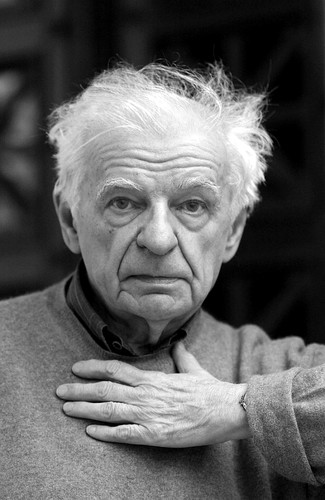
Yves Bonnefoy
The virtue of all-in wrestling is that it is the spectacle of excess.
— from Mythologies, 1957
Most acclaimed

Mythologies
1957
Collection of folklore stories re-told by Yeats. It gathers three of his other books, The Celtic Twilight, The Secret Rose and Stories of Red Hanrahan.
Correspondance
1994
How to reconcile the necessary loneliness of the creator and the need to build a community of spirits that are close to the neighboring requirements? For Yves Bonnefoy, sharing is the meaning of the poetic experience, in his eyes different from mere literature. One of the moments is that of writing a letter. The edition of his Correspondence associates the letters he has written with those he has received. It brings out the fabric of a life of man and poet, with its network of friendships, constant or mobile, according to alliances, chances and crumples. This first volume, begun with the collaboration of Yves Bonnefoy, brings together more than nine hundred letters exchanged in the second half of the twentieth century, to which are added some e-mails.^ The dialogues, with forty-nine correspondents, are organized around two axes: on the one hand, links from surrealism - André Breton, Pierre Alechinsky, Gilbert Lely, Christian Dotremont, George Henein, Raoul Ubac, Jacqueline Lamba, André Pieyre of Mandiargues, Hans Bellmer, Jean Brun; on the other hand, the friendships which after fifteen years led to the creation of L'Éphémère (1967-1972), the magnificent magazine published by the Maeght editions: André du Bouchet, Jacques Dupin and Gaëtan Picon , Louis-René des Forêts and Paul Celan.^ The other authors of the letters are in no way secondary characters, neither in themselves, nor by the place they occupied in the world of Bonnefoy: Gaston Bachelard, Jean Wahl and Andre Chastel, his masters; then Gilbert Lely, Salah Stétié, Pierre Jean Jouve, Gabriel Bounoure, Christiane Martin du Gard, Philippe Jaccottet, Boris Schloezer, André Frenaud, Michel Butor, Emil Cioran, Monique Wittig, Paul Benichou, Jean-Pierre Richard or Henry Corbin, for to name only them. Here you will find a wealth of information about the poet's work and the sensibility of an era, with notes enriched with excerpts from the writer's Chronology by himself, also unpublished.--Translation of page 4 of cover by Fabula.
Selected poems
1990
Charles Olson, the poet who coined the word post-modern and helped shape the generation that would emerge under its mantle, is known for the immense range of his intellectual and poetic reach. Here, in this selection by Robert Creeley, Olson's personal friend and literary ally, is the more "intimate order" of the poet who sought to embrace all of history and human thought. Olson came from working-class immigrant roots in a Massachusetts mill town. A scholar of profound originality and vision, he worked for Roosevelt's administration during the war years, then at Black Mountain, the prototypical experimental college and enclave of avantgarde writers and artists. In 1957 he settled in Gloucester, a town on the shore north of Boston where he had spent summers as a child. It was Gloucester, with its richness of history and human use, that provided the ground of The Maximus Poems, begun as letters some years before and which over the next two decades grew into a masterwork of epic dimensions. From the more than three hundred poems making up The Maximus Poems and the comparable number in Olson's Collected Poems, Creeley's selection makes available for the first time an essential sampling of Olson's poetry. Included are paradigmatic early works like "The Kingfishers," which Guy Davenport called "the most modern of American poems, the most energetically influential text in the last thirty-five years," as well as familiar pieces from Maximus like "Maximus, to Gloucester" and "Celestial Evening." Also represented are less known poems, such as "The chain of memory is resurrection" and "The Lamp," works that reveal a more personal side of this major American poet. Together these poems demonstrate Olson's genius and grace, a poet as at home in Gloucester as in the cosmos, a reckoner with dreams and myths, and "Western man at the limit of himself."