Discover

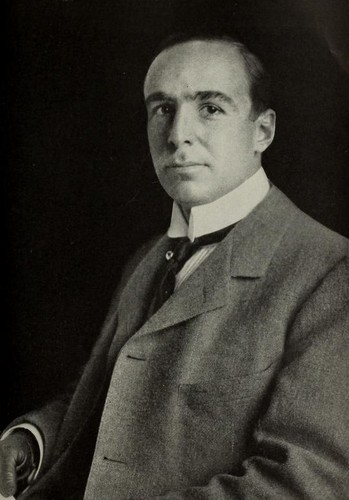
Winston Churchill

Personal Information

Born November 10, 1871
Died March 12, 1947 (75 years old)
St. Louis, United States
Also known as: Churchill Winston 1871-1947, Churchill. Winston. 1871-1947.
20 books
3.4 (10)
216 readers

Description

The American novelist, not the British statesman (Wikipedia).

Books

Newest First

The Dwelling Place of Light, Complete

0.0 (0)
2

From the book:In this modern industrial civilization of which we are sometimes wont to boast, a certain glacier-like process may be observed. The bewildered, the helpless - and there are many - are torn from the parent rock, crushed, rolled smooth, and left stranded in strange places. Thus was Edward Bumpus severed and rolled from the ancestral ledge, from the firm granite of seemingly stable and lasting things, into shifting shale; surrounded by fragments of cliffs from distant lands he had never seen. Thus, at five and fifty, he found himself gate-keeper of the leviathan Chippering Mill in the city of Hampton. That the polyglot, smoky settlement sprawling on both sides of an historic river should be a part of his native New England seemed at times to be a hideous dream; nor could he comprehend what had happened to him, and to the world of order and standards and religious sanctions into which he had been born. His had been a life of relinquishments. For a long time he had clung to the institution he had been taught to believe was the rock of ages, the Congregational Church, finally to abandon it; even that assuming a form fantastic and unreal, as embodied in the edifice three blocks distant from Fillmore Street which he had attended for a brief time, some ten years before, after his arrival in Hampton. The building, indeed, was symbolic of a decadent and bewildered Puritanism in its pathetic attempt to keep abreast with the age, to compromise with anarchy, merely achieving a nondescript medley of rounded, knob-like towers covered with mulberry-stained shingles. And the minister was sensational and dramatic. He looked like an actor, he aroused in Edward Bumpus an inherent prejudice that condemned the stage. Half a block from this tabernacle stood a Roman Catholic Church, prosperous, brazen, serene, flaunting an eternal permanence amidst the chaos which had succeeded permanence!

The inside of the cup

0.0 (0)
25

The number-one bestseller in 1913, The Inside of the Cup is a fascinating novel dealing with New England politics. It paved the way for social criticism in novels and is representative of nineteenth-century American thought.

A history of the English-speaking peoples

3.0 (3)
99

Sketches of sixteen of Churchill's favorite historical characters selected from his four-volume A history of the English-speaking Peoples, followed by a profile of Sir Winston drawn from autobiographical writings and speeches.

Richard Carvel

0.0 (0)
4

[This] novel focuses on the life of Richard Carvel; a wealthy young man from a prominent Maryland family just before and during the Revoloutionary War... Set at first around Annapolis, it's about a boy (Carvel) who is kidnapped and sent to England by pirates under his wicked uncle's direction in order to cheat him out of his estate. Meeting all sorts of major figures of the day, including John Paul Jones and Edmund Burke, he has all kinds of adventures in London. When the war breaks out he goes to sea again, this time aboard a ship commanded by Jones. He participates in the famous sea battle between the "Bonhomme Richard" and the "Serapis" (these might be the best scenes in the book). Wounded, he is brought to London to recuperate; he marries his childhood sweetheart there and they both sail to Annapolis to live.

Dr. Jonathan

0.0 (0)
0

From the book:This play was written during the war. But owing to the fact that several managers politely declined to produce it, it has not appeared on any stage. Now, perhaps, its theme is more timely, more likely to receive the attention it deserves, when the smoke of battle has somewhat cleared. Even when the struggle with Germany and her allies was in progress it was quite apparent to the discerning that the true issue of the conflict was one quite familiar to American thought, of self-determination. On returning from abroad toward the end of 1917 I ventured into print with the statement that the great war had every aspect of a race with revolution. Subliminal desires, subliminal fears, when they break down the censor of law, are apt to inspire fanatical creeds, to wind about their victims the flaming flag of a false martyrdom. Today it is on the knees of the gods whether the insuppressible impulses for human freedom that come roaring up from the subliminal chaos, fanned by hunger and hate, are to thrash themselves out in anarchy and insanity, or to take an ordered, intelligent and conscious course. Of the Twentieth Century, industrial democracy is the watchword, even as political democracy was the watchword of the two centuries that preceded it. Economic power is at last realized to be political power. No man owns himself, no woman owns herself if the individual is not economically free. Perhaps the most encouraging omen of the day is the fact that many of our modern employers, and even our modern financiers and bankers seem to be recognizing this truth, to be growing aware of the danger to civilization of its continued suppression. Educators and socio-logists may supply the theories; but by experiment, by trial and error, - yes, and by prayer, - the solution must be found in the practical domain of industry.

A traveller in war-time

0.0 (0)
3

From the book:I am reprinting here, in response to requests, certain recent experiences in Great Britain and France. These were selected in the hope of conveying to American readers some idea of the atmosphere, of "what it is like" in these countries under the immediate shadow of the battle clouds. It was what I myself most wished to know. My idea was first to send home my impressions while they were fresh, and to refrain as far as possible from comment and judgment until I should have had time to make a fuller survey. Hence I chose as a title for these articles, - intended to be preliminary," A Traveller in War-Time." I tried to banish from my mind all previous impressions gained from reading. I wished to be free for the moment to accept and record the chance invitation or adventure, wherever met with, at the Front, in the streets of Paris, in Ireland, or on the London omnibus. Later on, I hoped to write a book summarizing the changing social conditions as I had found them. Unfortunately for me, my stay was unexpectedly cut short. I was able to avail myself of but few of the many opportunities offered. With this apology, the articles are presented as they were written.

Mr. Crewe's career

0.0 (0)
0

Think that the problem of large corporations exercising undue influence in the political sphere is a recent phenomenon? If so, think again. Mr. Crewe's Career, an eye-opening historical novel set in the early twentieth century, follows the efforts of the railroad industry to steamroll its way into state politics in New Hampshire. This partly autobiographical political novel, set in New Hampshire, is a warning against the powers of the railroad interests to control elected government. Churchill himself had run for governor just two years earlier and had met his defeat at the hands of the state's railroad lobby. In the character of Humphrey Crewe, a somewhat politically naïve, comical figure who is running for governor, Churchill drew a character similar to himself. But Crewe is basically a minor figure, there to offer comic relief, but the main thrust of the story lies elsewhere. The main characters actually are Hillary Vane, the chief lawyer for the railroad company and major state political operator, and his son, Austen, who represents reform. Austen accuses his father of violating a "nearly forgotten" statute whereby the railroads were not to increase rates in exchange for the right to consolidate, a ruling they have long ignored. Churchill's real-life reform concerns came to the fore right here, as this was exactly what was happening in New Hampshire at the time. The battle between Austen and Hillary builds dramatically throughout the novel, until Austen is encouraged by other reformers to run for governor. But out of loyalty to his father, he declines the nomination.

Coniston

4.5 (2)
5

This book is about a love-story of long ago, of a time some little while after General Jackson had got into the White House and had shown the world what a real democracy was. The Era of the first six presidents had closed, and a new Era had begun. I am speaking of political Eras. Certain gentlemen, with a pious belief in democracy, but with a firmer determination to get on top, arose,—and got on top. So many of these gentlemen arose in the different states, and they were so clever, and they found so many chinks in the Constitution to crawl through and steal the people's chestnuts, that the Era may be called the Boss-Era. The reader is warned that this first love-story will, in a few chapters, come to an end: and not to a happy end—otherwise there would be no book. Lest he should throw the book away when he arrives at this page, it is only fair to tell him that there is another and a much longer love-story later on, if he will only continue to read, in which, it is hoped, he may not be disappointed. Please Note: This book is easy to read in true text, not scanned images that can sometimes be difficult to decipher. The Microsoft eBook has a contents page linked to the chapter headings for easy navigation. The Adobe eBook has bookmarks at chapter headings and is printable up to two full copies per year. Both versions are text searchable.

A Modern Chronicle

3.5 (2)
22

A Modern Chronicle — Complete" by Winston Churchill is a novel likely penned in the early 20th century. The book introduces readers to Honora Leffingwell, the central character, as it explores themes of ambition, identity, and societal expectations through her life experiences from childhood into early adulthood. The opening of the novel establishes Honora's unique background, detailing her birth in Nice and subsequent upbringing in St. Louis after the tragic loss of her parents. As she grows, Honora is acutely aware of her striking appearance and yearns for a life of excitement and fulfillment—much like that of her father, a once-dashing consul. The text also portrays her guardians, Uncle Tom and Aunt Mary, who strive to provide her with a respectable life amid the pressures of wealth and social status in their community. The interactions with characters such as Peter Erwin and her reflections on family and societal obligations suggest a budding conflict between her desires for greatness and the constraints of her upbringing. This initial setting hints at a rich exploration of Honora's character as she navigates her place in a rapidly changing world.

The Crossing

0.0 (0)
32

14 year old Manny is an orphan in Juarez, Mexico. He competes with his bigger, meaner rivals for the coins American tourists throw off the bridge between Texas and his town. Across that heavily guarded bridge await a different world and a better existence. On the night when Manny dares the crossing--through the muddy shallows of the Rio Grande, past the searchlights and the border patrol--the young man encounters an old stranger who could prove to be an ally or an enemy. Manny can't tell for certain. But if he is to achieve his dream, then he must be willing to risk everything--even his life.

Prentice Hall Literature - Timeless Voices, Timeless Themes - The British Tradition

James Joyce, Tony Blair, Bei Dao, Confucius, Saki, Dylan Thomas, Joseph Addison, Doris Lessing, Stephen Spender, Sir Philip Sidney, Elizabeth Barrett Browning, Philip Larkin, Jorge Luis Borges, Thomas Babington Macaulay, A. E. Housman, Arthur Rimbaud, Sydney Smith, Tu Fu, Nadine Gordimer, Edmund Spenser, Sophocles, Rudyard Kipling, Brooke, Rupert, William Butler Yeats, D. H. Lawrence, Graham Greene, Anita Desai, Elizabeth Bowen, John Keats, Walter Raleigh, Percy Bysshe Shelley, Ovid, Thomas Jefferson, Arthur C. Clarke, W. H. Auden, Lord Byron, Ben Jonson, William Shakespeare, Geoffrey Chaucer, Christopher Marlowe, Όμηρος, Edgar Allan Poe, Suckling, John Sir, Joanna Baillie, Mary Wollstonecraft, William Trevor, Emily Brontë, Alan Sillitoe, Richard Lovelace, John Donne, George Orwell, Winston Churchill, Derek Walcott, Sappho, Alexander Pope, Louis MacNeice, Thomas Gray, Jonathan Swift, Muriel Spark, Jane Austen, Siegfried Sassoon, Pablo Neruda, Charles Baudelaire, Charlotte Brontë, Anna Quindlen, Kobayashi, Issa, Thomas Malory, Thomas More, Ted Hughes, Anna Akhmatova, Eavan Boland, Mohandas Karamchand Gandhi, Heinrich Heine, Francis Jeffrey, Buson Yosa, Charles Dickens, Gerard Manley Hopkins, Yehuda Amichai, Daniel Defoe, Seamus Heaney, Alfred Lord Tennyson, Andrew Marvell, William Blake, T. S. Eliot, Stevie Smith, Joseph Conrad, Samuel Taylor Coleridge, Virginia Woolf, Francesco Petrarca, Matthew Arnold, Mary Shelley, John Milton, V. S. Naipaul, Samuel Pepys, James Boswell, Samuel Johnson
3.0 (3)
20

The celebrity

0.0 (0)
1

Jamie D. Lane is most sought-after pop star in the world. What few people know is how unhappy he's become, until burnout, coupled with a family tragedy, drive him to make a drastic decision. Craving freedom and needing to settle a private matter, Jamie cuts his trademark blonde curls, assumes a new identity, and secretly slips away to the Pacific Northwest incognito. But what he finds in small town Washington could open up Jamie's future--and change him forever. A teacher to inner city kids and former high school track star, Anne Stewart had once believed she could change the world. Then a near-fatal accident left her grappling with both the devastating effects of a head injury and deep bitterness toward the drunk driver who crippled her. However, when a man she knows as "Joe Bradley" hits town, they unexpectedly bond and help each other find themselves. But when the scope of The Celebrity's deception becomes clear to Anne, will it be too much to forgive?
