
UNITED STATES AUTHOR · FICTION · CHILDREN
Ann Lane Petry
Also known as: Ann Petry, Ann (Lane) Petry
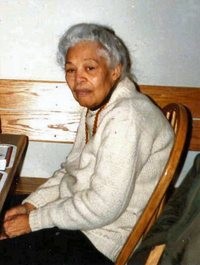
Ann Lane was born on October 12, 1908 in Old Saybrook, Connecticut as the youngest of three daughters to Peter Clark Lane and Bertha James Lane in Old Saybrook, Connecticut. Her parents belonged to the black minority of the small town. Her father was a pharmacist and her mother was a shop owner, chiropodist, and hairdresser. Ann and her sister were raised "in the classic New England tradition: a study in efficiency, thrift, and utility (…) They were filled with ambitions that they might not have entertained had they lived in a city along with thousands of poor blacks stuck in demeaning jobs." On February 22, 1938, she married George D. Petry of New Iberia, Louisiana, which brought Petry to New York. She not only wrote articles for newspapers such as The Amsterdam News, or The People’s Voice, and published short stories in The Crisis, but also worked at an after-school program at P.S. 10 in Harlem. Traversing the streets of Harlem, living for the first time among large numbers of poor black people, seeing neglected children up close – Petry’s early years in New York inevitably made impressions on her. Impacted by her Harlem experiences, Ann Petry used her creative writing skills to bring this experience to paper. Her daughter Liz explained to the Washington Post that “her way of dealing with the problem was to write this book, which maybe was something that people who had grown up in Harlem couldn’t do.” Petry’s most popular novel The Street was published in 1946 and won the Houghton Mifflin Literary Fellowship. With The Street, Petry became the first black woman writer with book sales topping a million copies.
Most acclaimed

Nine Short Novels by American Women
Life in the iron mills / Rebecca Harding Davis -- [The awakening]( / Kate Chopin -- Melanctha / Gertrude Stein -- Summer / Edith Wharton -- Quicksand / Nella Larsen -- Pale horse, pale rider / Katherine Anne Porter -- Tell me a riddle / Tillie Olsen -- Miss Muriel / Ann Petry -- Merle / Paule Marsha ll.
Prentice Hall Literature--Silver
The early history of American football can be traced to early versions of rugby football and association football. Both games have their origin in varieties of football played in Britain in the mid–19th century, in which a football is kicked at a goal or run over a line, which in turn were based on the varieties of English public school football games. American football resulted from several major divergences from association football and rugby football, most notably the rule changes instituted by Walter Camp, a Yale University and Hopkins School graduate considered to be the "father of gridiron football". Among these important changes were the introduction of the line of scrimmage, of down-and-distance rules and of the legalization of interference. In the late nineteenth and early twentieth centuries, gameplay developments by college coaches such as Eddie Cochems, Amos Alonzo Stagg, Parke H. Davis, Knute Rockne, John Heisman, and Glenn "Pop" Warner helped take advantage of the newly introduced forward pass.