Discover
Jan 1, 1858 — Jan 1, 1940· 82 yrs

SWEDEN AUTHOR · FICTION · CHILDREN

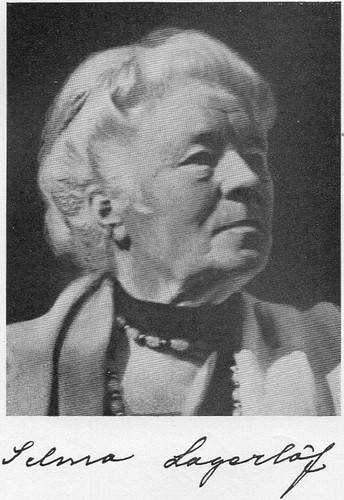
Selma Lagerlöf

Also known as: Selma Ottilia Lagerloef

27
BOOKS
3.8
AVG RATING (10)
3
READERS

Selma Ottilia Lovisa Lagerlöf (, US also , Swedish: [ˈsɛ̂lːma ˈlɑ̂ːɡɛˌɭøːv] ; 20 November 1858 – 16 March 1940) was a Swedish writer. She published her first novel, Gösta Berling's Saga, at the age of 33. She was the first woman to win the Nobel Prize in Literature, which she was awarded in 1909. In 1914, she was the first woman to be granted a membership of the Swedish Academy.

Östra Ämtervik church parish, Sweden
Wikipedia

ABOUT twelve years before Nils Holgersson started on his travels with the wild geese there was a manufacturer at Kolmarden who wanted to be rid of one of his dogs.

— from Further adventures of Nils

Most acclaimed

#2

The Emperor of Portugalia

0.0 (0)
#1

The Story Of Gosta Berling

0.0 (0)

Set in the 1820s in central Sweden, The Story of Gösta Berling follows the saga of the titular character as he falls from the priesthood and is rescued by the owner of a local estate. Joining the other saved souls in the pensioners’ wing of the mansion, he embarks upon a series of larger-than-life stories that tell of adventure, revelry, romance and sadness. Gösta Berling was the eventual Nobel Prize winner Selma Lagerlöf’s first published novel, and was written as an entry to a magazine competition. The richly detailed landscapes of Värmland were drawn from her own upbringing there, and the local folk tales inspired many of the individual stories in the book. The novel was published in Swedish in 1891; this edition is based on the 1898 English translation by Pauline Bancroft Flach. In 1924 the story was made into a silent film, launching the career of Greta Garbo.

#3

Short Fiction

0.0 (0)

Ernest Hemingway is perhaps the most influential American writer of the twentieth century. Though known mostly for his longer works, he began his writing career with the publication of short stories which helped develop his often-imitated concise, simple, and straightforward style, which stood in stark contrast to the more elaborate prose of many of his contemporaries. In 1947, during a University of Mississippi creative writing class, William Faulkner remarked that Hemingway “has never been known to use a word that might cause the reader to check with a dictionary to see if it is properly used.” Hemingway famously responded: “Poor Faulkner. Does he really think big emotions come from big words? He thinks I don’t know the ten-dollar words. I know them all right. But there are older and simpler and better words, and those are the ones I use.” Besides his writing style, Hemingway’s most well-known contribution to the literary landscape was the iceberg theory of writing, developed while composing the short story “Out of Season.” Hemingway later said of the story: “I had omitted the real end of it which was that the old man hanged himself. This was omitted on my new theory that you could omit anything if you knew that you omitted and the omitted part would strengthen the story and make people feel something more than they understood.” This collection comprises all of the public domain stories published in Hemingway’s short story collections, some miscellaneous stories published in various magazines, and his novellas. With the exception of stories within collections with a thematic link, such as In Our Time, they are arranged in publication order.
Books

Newest First
