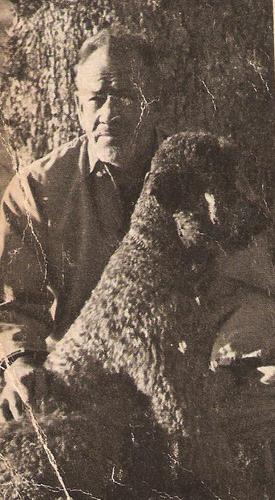
John Steinbeck
Personal Information
Description
John Steinbeck was an American writer. He wrote the Pulitzer Prize-winning novel The Grapes of Wrath (1939) and the novella Of Mice and Men (1937). He wrote a total of 27 books, including 16 novels, six non-fiction books, and five collections of short stories. In 1962, Steinbeck received the Nobel Prize for Literature .
Books
American Earth
The Pearl
Threatened by a dark and bloody conqueror, the world of Paragor seeks to forestall an inevitable doom. Six young people cross unknowingly into another land. What they find is a realm in the midst of war and hatred, and a people who have been awaiting their presence as saviours. As ordinary young men and women, what is it that they can do to save Paragor? Full of adventure, passion and intrigue, this romantic fantasy fiction novel stirs the heart.
America and Americans, and selected nonfiction
A unique selection of nonfiction work by the quintessential American writerMore than three decades after his death, John Steinbeck remains one of the nation's most beloved authors. Yet few know of his career as a journalist who covered world events from the Great Depression to Vietnam. Now, this original collection offers a portrait of the artist as citizen, deeply engaged in the world around him. In addition to the complete text of Steinbeck's last published book, America and Americans, this volume brings together for the first time more than fifty of Steinbeck's finest essays and jouralistic pieces.
Flight
Before the war-torn world of A Dewdrop Away, there existed a different world, a world where magic was more than a myth. Young Tiallin is part of this world, and as far as he knows, his colony is the only one of its kind left in Arborand. None of the other squirrel races seem to want anything to do with the magic-wielding, aloof white squirrels. To honor his eleventh season, Tiallin is awarded the fortune of working for blind King Sirius, who has grown paranoid due to the mysterious fate of the last white king. When Tiallin’s job becomes to investigate the king’s suspicions, he finds he knows even less about his own colony than he thought. Can Tiallin trust anyone when everyone, including his own family, seems to harbor their own secrets? Meanwhile, Edelle, a dutiful fox squirrel from a close knit community, embarks on a journey to save her colony from a crippling and puzzling famine, and Lute, a mixed breed misfit and former thief, is on the run from his second home and a crime he insists he didn’t commit. What happens when the destinies of three very different squirrels collide and intertwine and they are simultaneously forced to face the truth about themselves and the danger that has been patiently stalking them all from the beginning?
The grapes of wrath and other writings, 1936-1941 (Grapes of Wrath / Harvest Gypsies / Long Valley / Sea of Cortez)
This second volume in The Library of America's authoritative edition of John Steinbeck features his acknowledged masterpiece, The Grapes of Wrath. Written in an incredibly compressed five-month period, the novel had an electrifying impact upon publication in 1939, unleashing a political storm with its vision of America's dispossessed struggling for survival. It continues to exert a powerful influence on American culture, and has inspired artists as diverse as John Ford, Woody Guthrie, and Bruce Springsteen. Tracing the journey of the Joad family from the dust bowl of Oklahoma to the migrant camps of California, Steinbeck creates an American epic, spacious, impassioned, and pulsating with the rhythms of living speech. The novel won the Pulitzer Prize and has since sold millions of copies worldwide. . The text of The Grapes of Wrath has been newly edited based on Steinbeck's manuscript, typescript, and proofs. Many errors have been corrected and words omitted or misconstrued by his typist have been restored. In addition, The Harvest Gypsies, his 1936 investigative report on migrant workers which laid the groundwork for the novel, is included as an appendix. The Long Valley (1938) displays Steinbeck's brilliance as a writer of short stories, including such classics as "The Chrysanthemums," "The White Quail," "Flight," and "The Red Pony." Set in the Salinas Valley landscape which was Steinbeck's enduring inspiration, the stories explore moments of fear, tenderness, isolation, and violence with poetic intensity. The Log from the Sea of Cortez, an account of the 1940 marine biological expedition in which Steinbeck participated with his close friend Ed Ricketts, is a unique blend of science, philosophy, and adventure, as well as one of Steinbeck's most revealing expositions of his core beliefs. First published in 1941 as part of the collaborative volume Sea of Cortez, Steinbeck's narrative was reissued separately a decade later, augmented by the moving tribute "About Ed Ricketts."
Novels and Stories 1932-1937 (In Dubious Battle / Of Mice and Men / Pastures of Heaven / To a God Unknown / Tortilla Flat)
Five stories by John Steinbeck: The Pastures of Heaven; To a God Unknown; Tortilla Flat; In Dubious Battle; [Of Mice and Men]( Here for the first time in one volume are Steinbeck's early California writings. These five works chart Steinbeck's evolution into one of the greatest and most enduringly popular of American novelists.
Working days
John Steinbeck wrote The Grapes of Wrath during an astonishing burst of activity between June and October of 1938. Throughout the time he was creating his greatest work, Steinbeck faithfully kept a journal revealing his arduous journey toward its completion.The journal, like the novel it chronicles, tells a tale of dramatic proportions—of dogged determination and inspiration, yet also of paranoia, self-doubt, and obstacles. It records in intimate detail the conception and genesis of The Grapes of Wrath and its huge though controversial success. It is a unique and penetrating portrait of an emblematic American writer creating an essential American masterpiece.
Great World War II Stories
A perfect morning (from The young lions) / Irwin Shaw Lunghua camp (from Empire of the Sun) / J.G. Ballard The journey (from A town like Alice) / Nevil Shute The birth of an idea (from The man who never was) / Ewen Montague The big day (from From here to eternity) / James Jones Abducting the general (from Ill met by midnight) / W. Stanley Moss The landing at Kuralei (from Tales of the South Pacific) / James A. Michener Shall I live for a ghost (from The last enemy) / Richard Hillary Billy Pilgrim (from Slaughterhouse Five) / Kurt Vonnegut Battalion in defense (from Officers and gentlemen) / Evelyn Waugh Anopopei (from The naked and the dead) / Norman Mailer 'Plane land here' (from Wingate's raiders) / Charles J. Rolo Mission asymptote (from The white rabbit) / Bruce Marshall Fraternizing with the enemy? (from Reach for the sky) / Paul Brickhill Shooting party (from Grand party) Graham Brooks H-hour (from The longest day) / Cornelius Ryan Into Germany (from Carve her name with pride) / R.J. Minney Ironbottom Sound (from Ironbottom Sound) / Lindsay Baly The first bid for freedom (from The Colditz story) / P.R. Reed Some were unlucky (from Enemy coast ahead) / Guy Gibson, VC May 1941 (from Nella Last's diary) / Nella Last Major major major major (from Catch 22) / Joseph Heller The battle of the bulge (from The face of war) / Martha Gelhorn The invasion of Papua (from Retreat from Kokoda) / Raymond Paull No trouble at all (from The stories of flying officer X) / H.E. Bates Stalingrad The story of the battle (from Stalingrad point of return) / Ronald Seth The soldier looks for his family / John Prebble The white mouse and the Maquis d'Auvergne (from The white mouse) / Nancy Wake Fear of death / F.J. Salfeld The invaders (from The Moon is down) / John Steinbeck The compass rose (from The cruel sea) / Nicholas Monsarrat The diary of a desert rat (from The diary of a desert rat) / R.L. Crimp The Mannerheim Line (from Of many men) / James Aldridge Midway (from Torpedo Junction) / Robert J. Casey Hiroshima the fire (from Hiroshima) / John Hersey
Novels (Cannery Row / East of Eden / Grapes of Wrath / Moon is Down / Of Mice and Men)
Contains: [The Grapes of Wrath][The Moon is Down][Cannery Row][East of Eden][Of Mice and Men]: : :
The acts of King Arthur and his noble knights
Steinbeck was interested in the Arthurian legends for all his life. This is a beautiful retelling of these stories, with deep psychological insight.
The American Landscape
Deformations: twentieth-century landscapes of ruin. Walden / E.B. White From the Grand Canyon to Burbank (1945) / Henry Miller A Sand County Almanac / Aldo Leopold Illinois bus Ride / Aldo Leopold Thinking Like a Mountain / Aldo Leopold Silent Spring (1962) / Rachel Carson Realms of the Soil / Rachel Carson Of a Fire on the Moon (1969) / Norman Mailer A Brook in the City (1930) / Robert Frost The Mouth of the Hudson (1964) / Robert Lowell Decline and Fall (1960) / John Frederick Nims Burning Mountain (1960) / W.S. Merwin In the Heart of the Heart of the Country (1967) / William Gass The Cleveland Wrecking Yard (1967) / Richard Brautigan The Magic Poker (1969) / Robert Coover -- Early explorations. Descriptio Insularum Aquilonis (1076) / Adam of Bremen Letter ... Describing ... His First Voyage ... (1493) / Christopher Columbus Letter to the King (1524) / Giovanni da Verrazzano Decades of the New World (1533) / Peter Martyr Expedition to Cibola (1540) / Pedro de Castaneda First Voyage to Virginia (1584) / Arthur Barlowe Ode to the Virginian Voyage (?1605) / Michael Drayton Briefe and True Relation (1602) / John Brereton -- The cultivation of the promised land, 1620-1800. Of Plymouth Plantation (1620) / William Bradford Wonder-Working Providence of Sion's Saviour in New England (1653) / Edward Johnson The History and Present State of Virginia (1705) / Robert Beverely Letters from an American Farmer (1782) / Hector St. Jean De Crevecoeur -- Eighteenth-century perspectives: natural history and the sublime. Travels (1791) [A Trip up the Altamaha River] / William Bartram Travels (1791) [Ephemera: St. John's River] / William Bartram Travels (1791) [Salt Springs] / William Bartram Travels (1791) [A Sylvan Scene] / William Bartram Notes on Virginia (1784) [The Confluence of the Shenandoah and Potomac Rivers] / Thomas Jefferson Notes on Virginia (1784) [The Natural Bridge, Virginia] / Thomas Jefferson -- Poetry of scene: an American grand tour. View from West Point (1840) / Nathaniel Willis The Canal Boat (1846) / Nathaniel Hawthorne The Book of Niagara Falls / Horatio Parsons Black Mountain-Lake George (1840) / Nathaniel Willis from Travels in New England and New York (1821-1822) / Timothy Dwight Notch of the White Mountains (1835) / Nathaniel Hawthorne The American Scene (1907) / Henry James -- Landscape in the great theater of human events. The Legend of Sleepy Hollow (1820) / Washington Irving from The Last of the Mohicans (1826) / James Fenimore Cooper -- Landscape as idea: the transcendentalists. From Walden (1854) / Henry David Thoreau from Cape Cod (1864) / Henry David Thoreau from The Maine Woods (1864) / Henry David Thoreau from The Mountains of California (1894) / John Muir A Wind-storm in the Forests / John Muir -- Landscape as idea: romantic prose and poetry. Sights from a Steeple (1831) / Nathaniel Hawthorne The Ambitious Guest (1835) / Nathaniel Hawthorne [Island of the Fay]( / Edgar Allan Poe from Narrative of the Life of Frederick Douglass, An American Slave (1845) / Frederick Douglass A Forest Hymn (1825) / William Cullen Bryant Each and All (1839) / Ralph Waldo Emerson Haze (1843) / Henry David Thoreau Low-Anchored Cloud (1843) / Henry David Thoreau #824: The Wind begun to knead the Grass (?1864) / Emily Dickinson #550: I cross til I am weary (?1862) / Emily Dickenson #797: By my window I have for Scenery (?1863) / Emily Dickinson #1278: The Mountains stood in Haze- (?1873) / Emily Dickinson #1343: A single Clover Plank (?1875) / Emily Dickinson When Lilacs Last in the Dooryard Bloom'd (1865) / Walt Whitman Song of the Redwood-Tree (1874) / Walt Whitman A Voice from Death (1889) / Walt Whitman -- The ways west: explorers, travelers and emigrants. From The Journals of Lewis and Clark (1809) / Meriwether Lewis from Travels in the Interior of North America (1839) / Prince Maximilian from Astoria (1836) / Washington Irving from Report of the Exploring Expedition to the Rocky Mountains (1845) / John C. Fremont from Across the Great Southwestern Prairies (1845) / George W. Kendall from The Discovery of Yellowstone Park (1905) / Nathaniel Pitt Langford from The Exploration of the Colorado River and Its Canyons (1895) / John Wesley Powell from The Grand Canyon (1895) / John Wesley Powell from Roughing It (1872) / Mark Twain from Specimen Days (1822) / Walt Whitman from The West from a Car Window (1892) / Richard Harding Davis from the Central Gold Region (1860) / William Gilpin Dakota Wheat Fields (1880) / C.C. Coffin from Old Jules (1935) / Mari Sandoz from The Octopus (1901) / Frank Norris from The Grapes of Wrath (1939) / John Steinbeck -- Landscape as environment: local color landscapes. The Luck of Roaring Camp (1868) / Bret Harte [Beyond The Bayou ]( / Kate Chopin -- Landscapes as antagonist: the literary naturalists. The Blue Hotel (1898) / Stephen Crane from The Wild Palms (1927) / William Faulkner -- Landscape into myth and ritual. From Masked Gods (1950) / Frank Waters The Rock / Frank Waters The Canyon / Frank Waters Creation Myth Night Chant (Navaho) Rain Song (Pima) Big Swamps of the Congaree The Promised Land Big Corn from Mules and Men (1935) / Zora Neale Hurston form The Wounds of Jesus / The Reverend D.C. Lovelace from Davy Crockett (1934) / Constance Rourke -- Affirming the ancient connections: twentieth-century symbiotic landscapes. Big Two-Hearted River (1925) Part 1 Big Two-Hearted River (1925) Part 2 Night in the Garden (1942) / Edwin Way Teale The Flow of the River (1957) / Loren Eiseley Alone on a Mountaintop (1960) / Jack Kerouac The priest of the Sun (1958) / N. Scott Momaday Flowers by the Sea (1935) / William Carlos Williams Dawn (1917) / William Carlos Williams The Trees (1934) / William Carlos Williams Looking Across the Fields and Watching the Birds Fly (1954) / Wallace Stevens The Snow Man (1923) / Wallace Stevens Desert Places (1939) / Robert Frost Directive (1949) / Robert Frost West-Running Brook (1930) / Robert Frost Apology for Bad Dreams (1930) / Robinson Jeffers Meditation at Oyster River (1960) / Theodore Roethke A Road in Kentucky (1966) / Robert Hayden Ballad of Nat Turner (1966) / Robert Hayden Oak (1972) / Michael S. Harper Dead Oaks (1972) / Michael S. Harper Conserving the Magnitude of Uselessness (1970) / A.R. Ammons Possibility Along a line of Difference / A.R. Ammons The Hummingbird (1972) / Robert Pack Make Way (1973) / Robert Pack A Tree Telling of Orpheus (1966) / Denise Levertov Advent (?1949) / Brother Antoninus The South Coast (1959) / Brother Antoninus.
The United States in Literature -- All My Sons Edition
The Lucifer Society
Fiction
Fifty Best American Short Stories
Contents: Survivors / Elsie Singmaster -- Lost Phoebe / Theodore Dreiser -- Golden honeymoon / Ring W. Lardner -- I'm a fool / Sherwood Anderson -- My old man / Ernest Hemingway -- Telephone call / Dorothy Parker -- Double birthday / Willa Cather -- Faithful wife / Morley Callaghan -- Little wife / William March -- Babylon revisited / F. Scott Fitzgerald-- How beautiful with shoes / Wilbur Daniel Steele -- Resurrection of a life / William Saroyan -- Only the dead know Brooklyn / Thomas Wolfe -- Life in the day of a writer / Tess Slesinger -- Iron City / Lovell Thompson -- Christ in concrete / Pietro Di Donato -- Chrysanthemums / John Steinbeck -- Bright and morning star / Richard Wright -- Hand upon the waters / William Faulkner -- Net / Robert M. Coates -- Nothing ever breaks except the heart / Kay Boyle -- Search through the streets of the city / Irwin Shaw -- Who lived and died believing / Nancy Hale -- Peach stone / Paul Horgan -- Dawn of remembered spring / Jesse Stuart -- Catbird seat / James Thurber -- Of this time, of that place / Lionel Trilling -- Wind and the snow of winter / Walter Van Tilburg Clark -- Enormous radio / John Cheever -- Children are bored on Sunday / Jean Stafford -- NRACP / George P. Elliott -- In Greenwich there are many gravelled walks / Hortense Calisher -- Other foot / Ray Bradbury -- Three players of a summer game / Tennessee Williams -- Mother's tale / James Agee -- Magic barrel / Bernard Malamud -- Circle in the fire / Flannery O'Connor -- First flower / Augusta Wallace Lyons -- Contest for Aaron Gold / Philip Roth -- One ordinary day, with peanuts / Shirley Jackson -- To the wilderness I wander / Frank Butler -- Ledge / Lawrence Sargent Hall -- This morning, this evening, so soon / James Baldwin -- Tell me a riddle / Tillie Olsen -- Old army game / George Garrett -- Pigeon feathers / John Updike -- Sound of a drunken drummer / H.W. Blattner -- Keyhole eye / John Stewart Carter -- Long day's dying / William Eastlake -- Upon the sweeping flood / Joyce Carol Oates.
Great short stories
Travels with Charley
A quest across America, from the northernmost tip of Maine to California's Monterey Peninsula To hear the speech of the real America, to smell the grass and the tress, to see the colors and the light—these were John Steinbeck's goals as he set out, at the age of fifty-eight, to rediscover the country he had been writing about for so many years. With Charley, his French poodle, Steinbeck drives the interstates and the country roads, dines with truckers, encounters bears at Yellowstone and old friends in San Francisco. And he reflects on the American character, racial hostility, on a particular form of American loneliness he finds almost everywhere, and on the unexpected kindness of strangers that is also a very real part of our national identity. "Pure delight, a pungent potpourri of places and people interspersed with bittersweet essays on everything from the emotional difficulties of growing old to the reasons why giant sequoias arouse such awe." — The New York Times Book Review "Profound, sympathetic, often angry...an honest moving book by one of our great writers." — The San Francisco Examiner "This is superior Steinbeck—a muscular, evocative report of a journey of rediscovery." — John Barkham, Saturday Review Syndicate "The eager, sensuous pages in which he writes about what he found and whom he encountered frame a picture of our human nature in the twentieth century which will not soon be surpassed." — Edward Weeks, The Atlantic Monthly
The Winter of Our Discontent
Steinbeck's last great novel focuses on the theme of success and what motivates men towards it. Reflecting back on his New England family's past fortune, and his father's loss of the family wealth, the hero, Ethan Allen Hawley, characterises successin every era and in all its forms as robbery, murder, even a kind of combat, operating under 'the laws of controlled savagery.'
