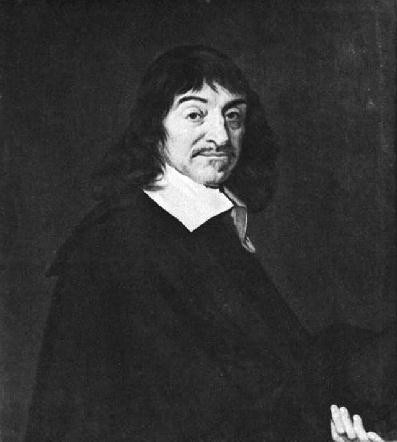
Discover

René Descartes

Personal Information

Born March 31, 1596
Died February 11, 1650 (53 years old)
Descartes, France
Also known as: Descartes R, Rene Descartes
75 books
3.9 (38)
611 readers

Description

René Descartes, also known as Renatus Cartesius, was a French philosopher, mathematician, physicist, and writer who spent most of his adult life in the Dutch Republic. He has been dubbed the "Father of Modern Philosophy", and much of subsequent Western philosophy is a response to his writings, which continue to be studied closely to this day. In particular, his Meditations on First Philosophy continues to be a standard text at most university philosophy departments. Descartes' influence in mathematics is also apparent; the Cartesian coordinate system—allowing geometric shapes to be expressed in algebraic equations—was named after him. He is credited as the father of analytical geometry. Descartes was also one of the key figures in the Scientific Revolution. Descartes frequently sets his views apart from those of his predecessors. In the opening section of the Passions of the Soul, a treatise on the Early Modern version of what are now commonly called emotions, Descartes goes so far as to assert that he will write on this topic "as if no one had written on these matters before". Many elements of his philosophy have precedents in late Aristotelianism, the revived Stoicism of the 16th century, or in earlier philosophers like St. Augustine. In his natural philosophy, he differs from the Schools on two major points: First, he rejects the analysis of corporeal substance into matter and form; second, he rejects any appeal to ends—divine or natural—in explaining natural phenomena. In his theology, he insists on the absolute freedom of God’s act of creation.

Books

Newest First

Meditations on First Philosophy - in Which the Existence of God and the Immortality of the Soul Are Demonstrated

0.0 (0)
0

The book is made up of six meditations, in which Descartes first discards all belief in things which are not absolutely certain, and then tries to establish what can be known for sure. The meditations were written as if he was meditating for 6 days: each meditation refers to the last one as "yesterday." However, Descartes did not take 6 days to complete this work, it actually took several years.

Descartes

4.0 (1)
23

Review: 'This new translation is designed as a replacement for the old but still widely used translation by Elizabeth Haldane and G. R. T. Ross ... Unlike the Haldane and Ross edition which was translated from a composite text based on both the French and Latin editions, the present translation is made from the Latin text alone, with significant changes in the French edition indicated in the footnotes. This is clearly much more satisfactory. The translation is generally accurate, and is neither excessively free nor excessively literal ... There is little doubt that this will become the standard translation of Descartes' philosophical writings, and it deserves a warm welcome.' French Studies Basics: Based on the new two volume Cambridge edition of the Philosophical Writings, this anthology of essential texts contains the most important and widely studied of the writings.

Essays

Jeremy Collier, Umberto Eco, H. I. D. Ryder, Arthur Penrhyn Stanley, Walter Kasper, Béla Bartók, Clement Mansfield Ingleby, John Fiske, John Dalberg-Acton, 1st Baron Acton, Jean-Luc Nancy, Michael Pye, Octavio Paz, Sayyid Aḥmad K̲h̲ān̲, Joseph Addison, Algirdas Julien Greimas, Евгений Иванович Замятин, Henry F. (Henry Francis) Pelham, Arthur Christopher Benson, Grant, Percy Stickney, Charles Carroll Everett, Jean François Lyotard, Herbert Spencer, Raymond Williams, William Hazlitt, Giorgio Agamben, Alfred Kerr, Aleksandr Aleksandrovich Blok, William Butler Yeats, William Graham Sumner, Allen Tate, James Beattie, J. H. Plumb, William Godwin, Francis Bacon, Henry David Thoreau, Henry Thomas Buckle, Arthur Schopenhauer, Herman Friedrich Grimm, John Addington Symonds, James Hadley, James Laughlin, Joseph Isaac Schneersohn, Irving Howe, E. M. W. Tillyard, Benjamin Rush, Plutarch, Morton Feldman, Simone Weil, Ralph Waldo Emerson, Howard Zinn, Ellen Key, Salisbury, Robert Cecil marquess of, J. Logie Robertson, Oliver Goldsmith, Thomas Henry Huxley, Arnold Zweig, Hugh Miller, Mackenzie, Morell Sir, George Orwell, Bing Xin, Roland Barthes, Errico Malatesta, George John Romanes, Parsons, Theophilus, Alice Meynell, Alejo Carpentier, Charles Baudelaire, Jacques Barzun, James Huneker, Thomas Paine, Thomas Merton, Jean-Paul Sartre, Montaigne, Michel de, David Hume, Paul Valéry, Félix Guattari, Wilhelm Max Wundt, Christopher Hill, Shen, Congwen, Italo Calvino, Robert Morgan, James Martineau, Abūlkalām Āzād, Friedrich Schiller, Rosemond Tuve, René Descartes, Immanuel Kant, Joseph Alois Schumpeter, Carl Gustav Jung, John Henry Newman, Thomas De Quincey, Virginia Woolf, Matthew Arnold, Frederic William Henry Myers, Ernst Troeltsch, Martin Buber, Hermann Bahr, Thomas Mann, Charles Augustin Sainte-Beuve, Jonathan Franzen, Samuel Johnson, Anscombe, G. E. M., Charles Lamb, George Brimley, John Abercrombie, Thomas Monro, Hubert Bland
0.0 (0)
1

Discourse on method and related writings

5.0 (1)
3

René Descartes was a central figure in the scientific revolution of the seventeenth century. In his Discourse on method he outlined the contrast between mathematics and experimental sciences, and the extent to which each one can achieve certainty. Drawing on his own work in geometry, optics, astronomy, and physiology, Descartes developed the hypothetical method that characterizes modern science, and this soon came to replace the traditional techniques derived from Aristotle. Many of Descartes' most radical ideas--such as the disparity between our perceptions and the realities that cause them--have been highly influential in the development of modern philosophy.

Treatise of man

0.0 (0)
4

xlviii, 232 p. : 24 cm
