Discover

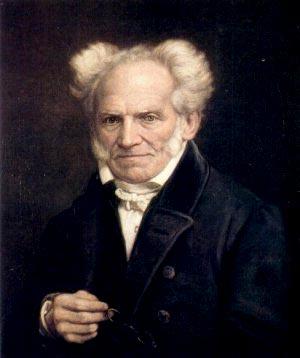
Arthur Schopenhauer

Personal Information

Born February 22, 1788
Died September 21, 1860 (72 years old)
Gdańsk, Kingdom of Prussia
Also known as: Arturo Schopenhauer, Schopenhauer
58 books
3.7 (19)
394 readers

Description

Arthur Schopenhauer was a German philosopher known for his atheistic pessimism and philosophical clarity. At age 25, he published his doctoral dissertation, On the Fourfold Root of the Principle of Sufficient Reason, which examined the fundamental question of whether reason alone can unlock answers about the world. Schopenhauer's most influential work, The World as Will and Representation, emphasized the role of man's basic motivation, which Schopenhauer called will. His analysis of will led him to the conclusion that emotional, physical, and sexual desires can never be fulfilled. Consequently, he favored a lifestyle of negating human desires, similar to the teachings of ancient Greek Stoic philosophers, Buddhism, and Vedanta.

Books

Newest First

Essays

Jeremy Collier, Umberto Eco, H. I. D. Ryder, Arthur Penrhyn Stanley, Walter Kasper, Béla Bartók, Clement Mansfield Ingleby, John Fiske, John Dalberg-Acton, 1st Baron Acton, Jean-Luc Nancy, Michael Pye, Octavio Paz, Sayyid Aḥmad K̲h̲ān̲, Joseph Addison, Algirdas Julien Greimas, Евгений Иванович Замятин, Henry F. (Henry Francis) Pelham, Arthur Christopher Benson, Grant, Percy Stickney, Charles Carroll Everett, Jean François Lyotard, Herbert Spencer, Raymond Williams, William Hazlitt, Giorgio Agamben, Alfred Kerr, Aleksandr Aleksandrovich Blok, William Butler Yeats, William Graham Sumner, Allen Tate, James Beattie, J. H. Plumb, William Godwin, Francis Bacon, Henry David Thoreau, Henry Thomas Buckle, Arthur Schopenhauer, Herman Friedrich Grimm, John Addington Symonds, James Hadley, James Laughlin, Joseph Isaac Schneersohn, Irving Howe, E. M. W. Tillyard, Benjamin Rush, Plutarch, Morton Feldman, Simone Weil, Ralph Waldo Emerson, Howard Zinn, Ellen Key, Salisbury, Robert Cecil marquess of, J. Logie Robertson, Oliver Goldsmith, Thomas Henry Huxley, Arnold Zweig, Hugh Miller, Mackenzie, Morell Sir, George Orwell, Bing Xin, Roland Barthes, Errico Malatesta, George John Romanes, Parsons, Theophilus, Alice Meynell, Alejo Carpentier, Charles Baudelaire, Jacques Barzun, James Huneker, Thomas Paine, Thomas Merton, Jean-Paul Sartre, Montaigne, Michel de, David Hume, Paul Valéry, Félix Guattari, Wilhelm Max Wundt, Christopher Hill, Shen, Congwen, Italo Calvino, Robert Morgan, James Martineau, Abūlkalām Āzād, Friedrich Schiller, Rosemond Tuve, René Descartes, Immanuel Kant, Joseph Alois Schumpeter, Carl Gustav Jung, John Henry Newman, Thomas De Quincey, Virginia Woolf, Matthew Arnold, Frederic William Henry Myers, Ernst Troeltsch, Martin Buber, Hermann Bahr, Thomas Mann, Charles Augustin Sainte-Beuve, Jonathan Franzen, Samuel Johnson, Anscombe, G. E. M., Charles Lamb, George Brimley, John Abercrombie, Thomas Monro, Hubert Bland
0.0 (0)
1

Umberto Eco's latest work unlocks the riddles of history in an exploration of the "linguistics of the lunatic," stories told by scholars, scientists, poets, fanatics, and ordinary people in order to make sense of the world. Exploring the "Force of the False," Eco uncovers layers of mistakes that have shaped human history, such as Columbus's assumption that the world was much smaller than it is, leading him to seek out a quick route to the East via the West and thus fortuitously "discovering" America. In a careful unveiling of the fabulous and the false, Eco shows us how serendipities - unanticipated truths - often spring from mistaken ideas. From Leibniz's belief that the I Ching illustrated the principles of calculus to Marco Polo's mistaking a rhinoceros for a unicorn, Eco tours the labyrinth of intellectual history, illuminating the ways in which we project the familiar onto the strange.

Die Welt als Wille und Vorstellung

3.3 (3)
95

The German philosopher explains his thoughts about intellectual perception and abstract representation and critically analyzes Kant's ideas and teachings. Bibliogs.

The essential Schopenhauer

0.0 (0)
3

"What is the meaning of life? How should I live? Is there any purpose to the universe? Generations have turned to the great German philosopher Arthur Schopenhauer for answers to such essential questions of existence. His influence has extended not only to later philosophers--Nietzsche, Freud, and Wittgenstein among them--but also to musicians, artists, and important novelists such as Tolstoy, Thomas Mann, and Proust. The Essential Schopenhauer, the most comprehensive English anthology now available of this seminal thinker's writings, will open English readers to Schopenhauer's profound ideas. Selected by Wolfgang Schirmacher, president of the International Schopenhauer Association, The Essential Schopenhauer is an invaluable and accessible introduction to Schopenhauer's powerful body of work."--Publisher's website.

On human nature

0.0 (0)
0

"On Human Nature: A Gathering While Everything Flows brings together the late essays, autobiographical reflections, an interview, and a poem by the eminent literary theorist and cultural critic Kenneth Burke (1897-1993). Burke was an innovative and original thinker who worked at the intersection of sociology, psychology, literary theology, and semiotics. This book, a selection of fourteen representative pieces of his productive later years, addresses many important themes Burke tackled throughout his career such as logology (his attempt to find a universal language theory and methodology), technology, and ecology. The essays also elaborate Burke's notions about creativity and its relation to stress, language and its literary uses, and the relation of mind and body."--Jacket.

Aphorismen zur Lebensweisheit

4.5 (2)
29

Nineteenth-century German philosopher Arthur Schopenhauer (1788-1860) championed individual strength of will and independent, reasoned deliberation above the irrational impulses that animated most of society. In The Wisdom of Life, taken from his last work, Parerga und Paralipomena (1851), he discusses how to order our lives to obtain the greatest amount of pleasure and success; then he offers guidelines for living life to its fullest. But for Schopenhauer a life well lived should always reach beyond itself to a higher plane.

Arthur Schopenhauer

0.0 (0)
0

Arthur Schopenhauer devoted his adult life to the articulation of a philosophy for the world, a philosophy that would benefit mankind by providing a solution to the riddle of existence. This biography provides a critical introduction to the life and work of the 19th-century German philosopher.

Parerga und Paralipomena: Kleine philosophische Schriften

0.0 (0)
0

Book digitized by Google from the library of Harvard University and uploaded to the Internet Archive by user tpb.
