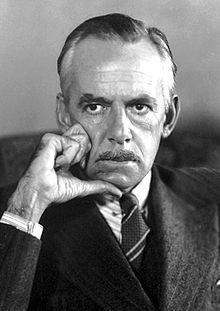

UNITED STATES AUTHOR · DRAMA · FICTION
Eugene O'Neill
Also known as: Eugene Gladstone O'Neill, Eugene O,Neill
Eugene O'Neill was an American playwright, and Nobel laureate in Literature. His plays are among the first to introduce into American drama the techniques of realism, associated with Russian playwright Anton Chekhov, Norwegian playwright Henrik Ibsen, and Swedish playwright August Strindberg. His plays were among the first to include speeches in American vernacular and involve characters on the fringes of society, engaging in depraved behavior, where they struggle to maintain their hopes and aspirations, but ultimately slide into disillusionment and despair. O'Neill wrote only one well-known comedy (Ah, Wilderness!).Nearly all of his other plays involve some degree of tragedy and personal pessimism.
The Villagers said that John Redding was a queer child.
— from Complete plays, 1956
Most acclaimed

Complete plays
1956
"This landmark gathering of Zora Neale Hurston's short fiction - most of which appeared only in literary magazines during her lifetime and some of which has never been published - reveals the evolution of the talents of one of the most important African-American writers. Spanning the years from 1921, when Howard University's literary magazine published "John Redding Goes to Sea," to 1955, when Hurston was working on different versions of the story of the beheading of John the Baptist as told by Salome's mother, five years before her death, these stories attest to the author's tremendous range at the same time as they establish themes that recur in her longer fiction." "In such stories as "Spunk," "The Gilded Six-Bits," and "The Conscience of the Court," Hurston's customary use of metaphor and black dialect enriches her simple narratives and brings her characters vividly to life. Folklore, the cornerstone of Hurston's fiction, is integral to such stories as "Cock Robin Beale Street," "Book of Harlem," and "'Possum or Pig?" Biblical themes, another trademark Hurston offering, appear in "The Seventh Veil" and "The Bone of Contention." These and the other stories in this collection map, in rich language and imagery, Hurston's development and concerns as a writer and provide an invaluable reflection of the mind and imagination of the author of the acclaimed novel Their Eyes Were Watching God."--BOOK JACKET.
Long Day's Journey into Night
Depicts a day in the life of a family deteriorating from alcoholism, drug addiction, and imminent death. Ageing actor, James Tyrone, has abandoned all hope of being a great performer and has settled for being a hack. His bitter wife, Mary, has slipped into morphine addiction, while his eldest son, Jamie, is a drunk. Jamie is envious of the writing talent of his younger brother, Edmund. These four haunted lives clash.
Three Plays
World-renowned historian Howard Zinn has turned to drama to explore the legacy of Karl Marx and Emma Goldman and to delve into the intricacies of political and social conscience perhaps more deeply than traditional history permits. Three Plays brings together all this work, including the previously unpublished Daughter of Venus, along with a new introductory essay on political theater, and prefaces to each of the plays.“The first act of ‘Emma,’ Howard Zinn’s play about Emma Goldman, is a small miracle. Here is a drama that holds down the heroics, polemics and didacticism to which works about heroes and heroines are prone. True, Emma is idealized; she is loving, honest, selfless, daring, but she is also human and believable.”—Walter Goodman, New York Times“[Marx in Soho is] an imaginative critique of our society’s hypocrisies and injustices, and an entertaining, vivid portrait of Karl Marx as a voice of humanitarian justice — which is perhaps the best way to remember him.” —Kirkus Reviews“[Daughter of Venus’s] central concerns — personal and social ethics; the balance of obligations to ourselves, our families, and our fellow citizens; the uses and abuses of political and scientific power — remain as timely as ever. . . . Zinn not only displays a fluid and passionately committed style but also is attempting to do something interesting with it: to interweave a story of familial tensions and national politics, and in doing so to remind us that the way we live our lives on the small, local, day-to-day scale of family life can have repercussions and implications for the life of the nation at large.”—Louise Kennedy, Boston Globe