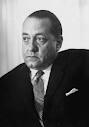
Alejo Carpentier
Personal Information
Description
Alejo Carpentier y Valmont (Lausana, 26 de diciembre de 1904-París, 24 de abril de 1980) fue un escritor cubano y francés que influyó notablemente en la literatura latinoamericana durante su periodo de auge. La crítica lo consideró uno de los escritores fundamentales del siglo XX en lengua española, y uno de los artífices de la renovación literaria latinoaméricana, en particular a través de un estilo que incorpora varias dimensiones y aspectos de la imaginación para recrear la realidad, elementos que contribuyeron a su formación y uso de «lo real maravilloso». Entre sus novelas destacan El reino de este mundo (1949), Los pasos perdidos (1953), El siglo de las luces (1962), El recurso del método (1974) y La consagración de la primavera (1978). Fuente: [Wikipedia](
Books
Essays
Umberto Eco's latest work unlocks the riddles of history in an exploration of the "linguistics of the lunatic," stories told by scholars, scientists, poets, fanatics, and ordinary people in order to make sense of the world. Exploring the "Force of the False," Eco uncovers layers of mistakes that have shaped human history, such as Columbus's assumption that the world was much smaller than it is, leading him to seek out a quick route to the East via the West and thus fortuitously "discovering" America. In a careful unveiling of the fabulous and the false, Eco shows us how serendipities - unanticipated truths - often spring from mistaken ideas. From Leibniz's belief that the I Ching illustrated the principles of calculus to Marco Polo's mistaking a rhinoceros for a unicorn, Eco tours the labyrinth of intellectual history, illuminating the ways in which we project the familiar onto the strange.
Los pasos perdidos
"Translated into twenty languages and published in more than fourteen Spanish editions, The Lost Steps, originally published in 1953, is Alejo Carpentier's most heralded novel. A composer, fleeing an empty existence in New York City, takes a journey with his mistress to one of the few remaining areas of the world not yet touched by civilization - the upper reaches of a great South American river. The Lost Steps describes his search, his adventures, and the remarkable decision he makes in a village that seems truly outside history."--BOOK JACKET.
Siglo de las luces
A swashbuckling tale set in the Caribbean at the time of the French Revolution, Explosion in a Cathedral focuses on Victor Hugues, a historical figure who led the naval assault to take back the island of Guadeloupe from the English at the beginning of the nineteenth century. In Carpentier’s telling, this piratical character walks into the lives of the wealthy orphans Esteban and Sofia and casts them abruptly into the midst of the immense changes sweeping the world outside their Havana mansion.
El amor a la ciudad
"Deliciosas crónicas sobre La Habana hechas con amor y humor. Carpentier recorre sus calles y plazas, su puerto y la noche, sus cambiantes rostros de ciudad provinciana o cosmopolita, pequeño burguesa o prerevolucionaria. Esta recopilación de artículos periodísticos y breves ensayos salpica la descripción de la capital cubana con pintorescas anécdotas de personajes famosos o desconocidos. La prosa de Carpentier se desviste de su disfraz barroco para traducir, con el paso ligero de un caminante feliz, sus andanzas por la ciudad portuaria"--Handbook of Latin American Studies, v. 58.
Music in Cuba
From the Publisher: A publishing event: the foundational work on Cuban music by a major figure of the twentieth century, now in English for the first time. In the wake of the Buena Vista Social Club, the world has rediscovered the rich musical tradition of Cuba. A unique combination of popular and elite influences, the music of this island nation has fascinated since the golden age of the son and that New World aural collision of Africa and Europe that made Cuban music the rage in Paris, New York, and Mexico beginning in the 1920s. Originally published in 1946 and never before available in an English translation, Music in Cuba is not only the best and most extensive study of Cuban musical history, it is a work of literature in its own right. Drawing on such primary documents as obscure church circulars, dog-eared musical scores pulled from attics, and the records of the Spanish colonial authorities, Music in Cuba sweeps panoramically from the sixteenth into the twentieth century. Carpentier covers European-style elite Cuban music as well as the popular worlds of rural Spanish folk and urban Afro-Cuban music. In a substantial introduction based on extensive original research, Timothy Brennan explores Carpentier's career prior to the writing of his novels. Looking especially at Carpentier's work as a music reviewer, radio producer, and musical theorist, Brennan suggests new ways of thinking about the role of Latin American artists in Europe between the wars, and the central place of radio and music-club cultures in the European avant-gardes.
El siglo de las luces
Los avatares del comerciante marsellés Victor Hugues en el Caribe y en un París convulsionado por la Revolución son el tema central de El sigo de las luces, una novela tan fascinante como ambiciosa en la que historia y ficción confunden sus límites.
Explosion in a Cathedral
Historical novel set in Cuba at the time of the French Revolution. A story of three Creole orphans caught up in the immense changes sweeping the Caribbean at the turn of the 19th century.
Recurso del método
This novel tells the tale of the dictator of an unnamed Latin American country who has been living the life of luxury in high-society Paris. When news reaches him of a coup at home, he rushes back and crushes it with brutal military force. But returning to Paris he is given a chilly welcome, and learns that photographs of the atrocities have been circulating among his well-to-do friends. Meanwhile World War One has broken out, and another rebellion forces the dictator back across the ocean. As he struggles with the Marxist forces beginning to find footing in his own country, and Europe is devastated.
El reino de este mundo
A few years after its liberation from the brutality of French colonial rule in 1803, Haiti endured a period of even greater brutality under the reign of King Henri-Christophe, who was born a slave in Grenada but rose to become the first black king in the Western Hemisphere. In prose of often dreamlike coloration and intensity, Alejo Carpentier records the destruction of the black regime--built on the same corruption and contempt for human life that brought down the French while embodying the same hollow grandeur of false elegance, attained only through slave labor--in an orgy of voodoo, race hatred, madness, and erotomania.
Reasons of state
"One of the most significant novels in Latin American literature, written by Cuba's most important modern novelist--to win a bet with Gabriel Garcia Marquez. In the early 1970s, friends Gabriel Garcia Marquez, Augusto Roa Bastos and Alejo Carpentier reached a joint decision: they would each write a novel about the dictatorships then wreaking misery in Latin America. Garcia Marquez went on to write The Autumn of the Patriarch and Roa Bastos I, the Supreme. The third novel in this remarkable trinity is Reasons of State, hailed as the most significant novel ever to come out of Cuba. As with Garcia Marquez, Reasons of State is a bold story, boldly told -- daring in its perceptions, rich in lush detail, inventive in prose, and deadly compelling in its suspenseful plot. Inexplicably out of print for years, it tells the tale of the dictator of an unnamed Latin American country who has been living the life of luxury in high-society Paris. When news reaches him of a coup at home, he rushes back and crushes it with brutal military force. But returning to Paris he is given a chilly welcome, and learns that photographs of the atrocities have been circulating among his well-to-do friends. Meanwhile World War One has broken out, and another rebellion forces the dictator back across the ocean. As he struggles with the Marxist forces beginning to find footing in his own country, and Europe is devastated, Carpentier constructs a masterful and biting satire of the new world order"--
Los mejores relatos latinoamericanos
Hombre de la esquina rosada / Jorge Luis Borges -- Los fugitivos / Alejo Carpentier -- La autopista del sur / Julio Cortázar -- Nos han dado la tierra / Juan Rulfo -- Recuerdo de las sierras / Adolfo Bioy Casares -- En este pueblo no hay ladrones / Gabriel García Márquez.