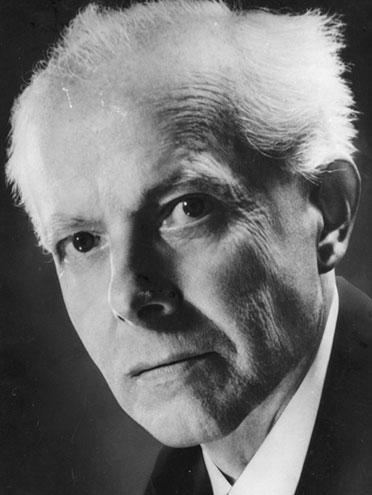
Béla Bartók
Personal Information
Description
A Hungarian composer and pianist.
Books
Bela Bartók studies in ethnomusicology
Composer, folklorist, and performer Bela Bartok (1881-1945) is internationally renowned as one of the most important and influential musicians of the twentieth century. Throughout his life he wrote lectures and essays that dealt with virtually every aspect of East European folk music. Many of those essays, previously scattered in specialty journals in four different languages, are collected here for the first time. All are concerned with that branch of musicology within which Bartok was most influential, and for which he is best known: research into folk music, or ethnomusicology. The volume includes a preface by editor Benjamin Suchoff, a leading expert on Bartok's music and writings. Suchoff examines Bartok's developing views on the folk-music traditions of Hungary, Romania, Slovakia, and the Arab world.
Essays
Umberto Eco's latest work unlocks the riddles of history in an exploration of the "linguistics of the lunatic," stories told by scholars, scientists, poets, fanatics, and ordinary people in order to make sense of the world. Exploring the "Force of the False," Eco uncovers layers of mistakes that have shaped human history, such as Columbus's assumption that the world was much smaller than it is, leading him to seek out a quick route to the East via the West and thus fortuitously "discovering" America. In a careful unveiling of the fabulous and the false, Eco shows us how serendipities - unanticipated truths - often spring from mistaken ideas. From Leibniz's belief that the I Ching illustrated the principles of calculus to Marco Polo's mistaking a rhinoceros for a unicorn, Eco tours the labyrinth of intellectual history, illuminating the ways in which we project the familiar onto the strange.