Discover

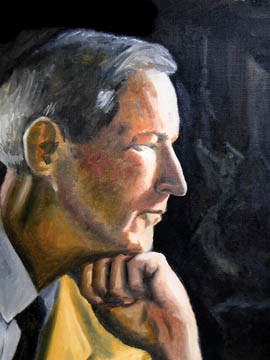
Jacques Barzun

Personal Information

Born January 1, 1907 (119 years old)
Créteil, France
Also known as: JACQUES & HENRY F. GRAFF BARZUN, Jacques BARZUN
46 books
3.6 (7)
186 readers

Description

There is no description yet, we will add it soon.

Books

Newest First

From Dawn to Decadence

4.0 (1)
35

"Highly regarded here and abroad for some thirty works of cultural history and criticism, master historian Jacques Barzun has now set down in one continuous narrative the sum of his discoveries and conclusions about the whole of Western culture since 1500.". "In this account, Barzun describes what Western Man wrought from the Renaissance and Reformation down to the present in the double light of its own time and our pressing concerns. He introduces characters and incidents with his usual literary style and grace, bringing to the fore those that have been forgotten or obscured. His compelling chapters - such as "Puritans as Democrats," "The Monarchs' Revolution," "The Artist Prophet and Jester" - show the recurrent role of great themes throughout the eras."--BOOK JACKET.

An essay on French verse

0.0 (0)
1

"In An Essay on French Verse--For Readers of English Poetry, Jacques Barzun addresses the baffling English prejudice against French poetry"--Back cover.

Essays

Jeremy Collier, Umberto Eco, H. I. D. Ryder, Arthur Penrhyn Stanley, Walter Kasper, Béla Bartók, Clement Mansfield Ingleby, John Fiske, John Dalberg-Acton, 1st Baron Acton, Jean-Luc Nancy, Michael Pye, Octavio Paz, Sayyid Aḥmad K̲h̲ān̲, Joseph Addison, Algirdas Julien Greimas, Евгений Иванович Замятин, Henry F. (Henry Francis) Pelham, Arthur Christopher Benson, Grant, Percy Stickney, Charles Carroll Everett, Jean François Lyotard, Herbert Spencer, Raymond Williams, William Hazlitt, Giorgio Agamben, Alfred Kerr, Aleksandr Aleksandrovich Blok, William Butler Yeats, William Graham Sumner, Allen Tate, James Beattie, J. H. Plumb, William Godwin, Francis Bacon, Henry David Thoreau, Henry Thomas Buckle, Arthur Schopenhauer, Herman Friedrich Grimm, John Addington Symonds, James Hadley, James Laughlin, Joseph Isaac Schneersohn, Irving Howe, E. M. W. Tillyard, Benjamin Rush, Plutarch, Morton Feldman, Simone Weil, Ralph Waldo Emerson, Howard Zinn, Ellen Key, Salisbury, Robert Cecil marquess of, J. Logie Robertson, Oliver Goldsmith, Thomas Henry Huxley, Arnold Zweig, Hugh Miller, Mackenzie, Morell Sir, George Orwell, Bing Xin, Roland Barthes, Errico Malatesta, George John Romanes, Parsons, Theophilus, Alice Meynell, Alejo Carpentier, Charles Baudelaire, Jacques Barzun, James Huneker, Thomas Paine, Thomas Merton, Jean-Paul Sartre, Montaigne, Michel de, David Hume, Paul Valéry, Félix Guattari, Wilhelm Max Wundt, Christopher Hill, Shen, Congwen, Italo Calvino, Robert Morgan, James Martineau, Abūlkalām Āzād, Friedrich Schiller, Rosemond Tuve, René Descartes, Immanuel Kant, Joseph Alois Schumpeter, Carl Gustav Jung, John Henry Newman, Thomas De Quincey, Virginia Woolf, Matthew Arnold, Frederic William Henry Myers, Ernst Troeltsch, Martin Buber, Hermann Bahr, Thomas Mann, Charles Augustin Sainte-Beuve, Jonathan Franzen, Samuel Johnson, Anscombe, G. E. M., Charles Lamb, George Brimley, John Abercrombie, Thomas Monro, Hubert Bland
0.0 (0)
1

Umberto Eco's latest work unlocks the riddles of history in an exploration of the "linguistics of the lunatic," stories told by scholars, scientists, poets, fanatics, and ordinary people in order to make sense of the world. Exploring the "Force of the False," Eco uncovers layers of mistakes that have shaped human history, such as Columbus's assumption that the world was much smaller than it is, leading him to seek out a quick route to the East via the West and thus fortuitously "discovering" America. In a careful unveiling of the fabulous and the false, Eco shows us how serendipities - unanticipated truths - often spring from mistaken ideas. From Leibniz's belief that the I Ching illustrated the principles of calculus to Marco Polo's mistaking a rhinoceros for a unicorn, Eco tours the labyrinth of intellectual history, illuminating the ways in which we project the familiar onto the strange.

A catalogue of crime

0.0 (0)
10

An annotated list of more than five thousand books, including novels, short story collections, histories of the genre, true crime tales, and Sherlock Holmes studies
