Discover

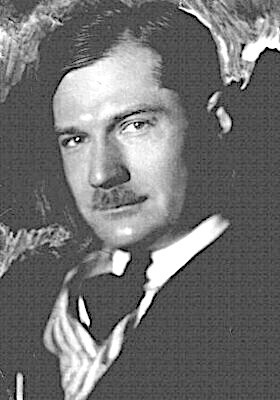
Евгений Иванович Замятин

Personal Information

Born February 1, 1884
Died March 10, 1937 (53 years old)
Lebedyan, Russian Empire
Also known as: Yevgeny Ivanovich Zamyatin, Evgenii Ivanovich Zamiatin
15 books
4.0 (45)
348 readers

Description

Yevgeny Ivanovich Zamyatina, sometimes anglicized as Eugene Zamyatin, was a Russian author of science fiction, philosophy, literary criticism, and political satire. Zamyatin is the author of a dystopian novel "Мы" (We) (1921). George Orwell believed that Aldous Huxley's Brave New World (1932) must be partly derived from We. Kurt Vonnegut said that in writing Player Piano (1952) he "cheerfully ripped off the plot of Brave New World, whose plot had been cheerfully ripped off from Yevgeny Zamyatin's We.

Books

Newest First

Essays

Jeremy Collier, Umberto Eco, H. I. D. Ryder, Arthur Penrhyn Stanley, Walter Kasper, Béla Bartók, Clement Mansfield Ingleby, John Fiske, John Dalberg-Acton, 1st Baron Acton, Jean-Luc Nancy, Michael Pye, Octavio Paz, Sayyid Aḥmad K̲h̲ān̲, Joseph Addison, Algirdas Julien Greimas, Евгений Иванович Замятин, Henry F. (Henry Francis) Pelham, Arthur Christopher Benson, Grant, Percy Stickney, Charles Carroll Everett, Jean François Lyotard, Herbert Spencer, Raymond Williams, William Hazlitt, Giorgio Agamben, Alfred Kerr, Aleksandr Aleksandrovich Blok, William Butler Yeats, William Graham Sumner, Allen Tate, James Beattie, J. H. Plumb, William Godwin, Francis Bacon, Henry David Thoreau, Henry Thomas Buckle, Arthur Schopenhauer, Herman Friedrich Grimm, John Addington Symonds, James Hadley, James Laughlin, Joseph Isaac Schneersohn, Irving Howe, E. M. W. Tillyard, Benjamin Rush, Plutarch, Morton Feldman, Simone Weil, Ralph Waldo Emerson, Howard Zinn, Ellen Key, Salisbury, Robert Cecil marquess of, J. Logie Robertson, Oliver Goldsmith, Thomas Henry Huxley, Arnold Zweig, Hugh Miller, Mackenzie, Morell Sir, George Orwell, Bing Xin, Roland Barthes, Errico Malatesta, George John Romanes, Parsons, Theophilus, Alice Meynell, Alejo Carpentier, Charles Baudelaire, Jacques Barzun, James Huneker, Thomas Paine, Thomas Merton, Jean-Paul Sartre, Montaigne, Michel de, David Hume, Paul Valéry, Félix Guattari, Wilhelm Max Wundt, Christopher Hill, Shen, Congwen, Italo Calvino, Robert Morgan, James Martineau, Abūlkalām Āzād, Friedrich Schiller, Rosemond Tuve, René Descartes, Immanuel Kant, Joseph Alois Schumpeter, Carl Gustav Jung, John Henry Newman, Thomas De Quincey, Virginia Woolf, Matthew Arnold, Frederic William Henry Myers, Ernst Troeltsch, Martin Buber, Hermann Bahr, Thomas Mann, Charles Augustin Sainte-Beuve, Jonathan Franzen, Samuel Johnson, Anscombe, G. E. M., Charles Lamb, George Brimley, John Abercrombie, Thomas Monro, Hubert Bland
0.0 (0)
1

Soviet Russian literature

0.0 (0)
0

1917 thru 1977 has witnessed a great deal of literary ferment in Soviet Russia, as well as a major "third emigration" of writers to the West--including, of course, the great figure of the period, Solzhenitsyn. Marc Slonim's comprehensive critical survey of the Soviet literary scene since 1917--widely acclaimed upon its original publication in 1964--now puts into social and historical context this diffuse literary activity.

Мы

4.0 (45)
342

Wikipedia We is set in the future. D-503, a spacecraft engineer, lives in the One State, an urban nation constructed almost entirely of glass, which assists mass surveillance. The structure of the state is Panopticon-like, and life is scientifically managed F. W. Taylor-style. People march in step with each other and are uniformed. There is no way of referring to people except by their given numbers. The society is run strictly by logic or reason as the primary justification for the laws or the construct of the society. The individual's behavior is based on logic by way of formulas and equations outlined by the One State. We is a dystopian novel completed in 1921. It was written in response to the author's personal experiences with the Russian revolutions of 1905 and 1917, his life in the Newcastle suburb of Jesmond and work in the Tyne shipyards at nearby Wallsend during the First World War. It was at Tyneside that he observed the rationalization of labor on a large scale.

Modern Italian short stories

0.0 (0)
1

Thirty-four contemporary short stories, most of them published for the first time in English.