Marguerite Yourcenar
Description
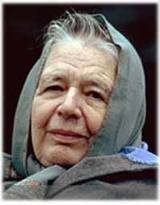
Marguerite Yourcenar, pseudonyme de Marguerite Cleenewerck de Crayencour, née le 8 juin 1903 à Bruxelles et morte le 17 décembre 1987 à Bar Harbor dans l'État du Maine (États-Unis), est une femme de lettres française (naturalisée américaine en 1947). Romancière, nouvelliste et autobiographe, elle est aussi poétesse, traductrice, essayiste et critique littéraire. Elle est la première femme élue membre de l'Académie française en 1980. Des romans historiques aux mémoires autobiographiques, l'œuvre de Yourcenar se caractérise d'abord par l'élaboration esthétique de sa langue, au style épuré et classique, et par le privilège donné à la narration. Inspirée à la fois par la sagesse orientale et la philosophie gréco-latine, la pensée de l'écrivaine se reconnaît notamment dans l'humanisme de la Renaissance entendu comme curiosité universelle nourrie par la lecture des livres anciens.
Books
L'Œuvre au noir
L'Œuvre au noir est un roman de 1968 de l'écrivaine belgo-française Marguerite Yourcenar. Son récit est centré sur la vie et la mort de Zénon, médecin, philosophe, scientifique et alchimiste né à Bruges à l'époque de la Renaissance. Le livre a été publié en France en 1968 et a immédiatement rencontré un intérêt populaire ainsi que des critiques élogieuses, obtenant le Prix Femina à l'unanimité l'année de sa publication. Le cinéaste belge André Delvaux l'a adapté au cinéma en 1988.
Pasmunt van de droom
In 1933 vormen zich rond de Duce in Italië twee kampen van voor- en tegenstanders.
A blue tale and other stories
These three stories, the last of Yourcenar's fiction to be translated into English, were written between 1927 and 1930 when the author was in her mid-twenties. "A Blue Tale" is a sensual, fantastic attempt to describe reality in tones of blue. Drawing on an ancient oral tradition, Yourcenar offers a tale of the credulity of men who are lured by riches - in this case, sapphires. "The First Evening" was originally written, though left unfinished, by Yourcenar's father, Michel de Crayencour. He exerted a strong influence on his daughter's life and on the early stages of her writing career. Yourcenar revised and completed this tale depicting a jaded French intellectual and man-of-the-world whose wedding night is disrupted by shocking news, and it was published under her name after her father's death. "The Evil Spell," like Memoirs of Hadrian, is set in the Mediterranean, a physical and spiritual place that fired Yourcenar's literary imagination. The tale reveals Yourcenar's fascination with the occult, a realm she would find herself attracted to more than once later on - most notably at a crucial turning point in The Abyss.
Mémoires d'Hadrien
Mémoires d'Hadrien est un roman historique de l'écrivaine française Marguerite Yourcenar, publié en 1951. Ces pseudo-mémoires de l'empereur romain Hadrien ont immédiatement rencontré un extraordinaire succès international et assuré à son auteur une grande célébrité. Il s’agit d’une œuvre dont le projet remonte à l’adolescence de l’autrice. Yourcenar considérant le projet comme trop ambitieux pour être une œuvre de jeunesse, le décrivait de la trempe de ceux « qu’on ne doit pas oser avant d’avoir dépassé quarante ans ». Le livre est présenté comme une longue lettre d’un vieil empereur adressée à son petit-fils adoptif et éventuel successeur âgé de 17 ans, Marc Aurèle. L’empereur Hadrien médite et se remémore ses triomphes militaires, son amour de la poésie et de la musique, sa philosophie ainsi que sa passion pour son jeune amant bithynien, Antinoüs.
The Keeper
When his little sister Sorcha is kidnapped by the Morrigan, Oisin must discover the secret of the Book of Magic in order to save his sister and defeat the Morrigan.
Sous bénéfice d'inventaire
Marguerite Yourcenar is known in France as a brilliant essayist as well as a great novelist, but until now her essays have not been widely available to English-language readers. "The Dark Brain of Piranesi" gathers seven of her most important critical essays, essential to the understanding of the searching and remarkably informed spirit of this protean writer. The book begins with an essay on the "Historia Augusta", that chronicles the lives of the Caesars. Next, an essay whose wider subject is human intolerance cruelty in the sixteenth century but whose starting point is the violent Reformation epic "Les Tragiques". Yourcenar's evocation of the unstable life of the the château of Chenonceaux reminds us that we are all playthings of the conjugated powers of politics and money. A masterly account of Piranesi's great series of engraving analyzes the formal motivations of this extraordinary (and imaginary) architecture period. Finally, three great names of modern literature: Selma Lagerlöf, Nobel Prize epic storyteller; the enigmatic Greek poet of Alexandria, Constantin Cavafy; Thomas Mann, and the complex relations of the author to the old and learned traditions of the hermeticists and alchemists. -- From publisher's description.
