Discover

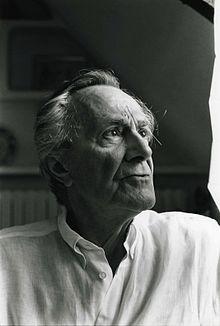
Jean François Lyotard

Personal Information

Born January 1, 1924
Died January 1, 1998 (74 years old)
Versailles, France
Also known as: Jean-François Lyotard, Jean-François Lyotard
32 books
0.0 (0)
51 readers

Description

Jean-François Lyotard (; French: [ʒɑ̃ fʁɑ̃swa ljɔtaʁ]; 10 August 1924 – 21 April 1998) was a French philosopher, sociologist, and literary theorist. His interdisciplinary discourse spans such topics as epistemology and communication, the human body, modern art and postmodern art, literature and critical theory, music, film, time and memory, space, the city and landscape, the sublime, and the relation between aesthetics and politics. He is best known for his articulation of postmodernism after the late 1970s and the analysis of the impact of postmodernity on the human condition. Lyotard was a key personality in contemporary continental philosophy and authored 26 books and many articles. He was a director of the International College of Philosophy founded by Jacques Derrida, François Châtelet, Jean-Pierre Faye, and Dominique Lecourt.

Books

Newest First

Essays

Jeremy Collier, Umberto Eco, H. I. D. Ryder, Arthur Penrhyn Stanley, Walter Kasper, Béla Bartók, Clement Mansfield Ingleby, John Fiske, John Dalberg-Acton, 1st Baron Acton, Jean-Luc Nancy, Michael Pye, Octavio Paz, Sayyid Aḥmad K̲h̲ān̲, Joseph Addison, Algirdas Julien Greimas, Евгений Иванович Замятин, Henry F. (Henry Francis) Pelham, Arthur Christopher Benson, Grant, Percy Stickney, Charles Carroll Everett, Jean François Lyotard, Herbert Spencer, Raymond Williams, William Hazlitt, Giorgio Agamben, Alfred Kerr, Aleksandr Aleksandrovich Blok, William Butler Yeats, William Graham Sumner, Allen Tate, James Beattie, J. H. Plumb, William Godwin, Francis Bacon, Henry David Thoreau, Henry Thomas Buckle, Arthur Schopenhauer, Herman Friedrich Grimm, John Addington Symonds, James Hadley, James Laughlin, Joseph Isaac Schneersohn, Irving Howe, E. M. W. Tillyard, Benjamin Rush, Plutarch, Morton Feldman, Simone Weil, Ralph Waldo Emerson, Howard Zinn, Ellen Key, Salisbury, Robert Cecil marquess of, J. Logie Robertson, Oliver Goldsmith, Thomas Henry Huxley, Arnold Zweig, Hugh Miller, Mackenzie, Morell Sir, George Orwell, Bing Xin, Roland Barthes, Errico Malatesta, George John Romanes, Parsons, Theophilus, Alice Meynell, Alejo Carpentier, Charles Baudelaire, Jacques Barzun, James Huneker, Thomas Paine, Thomas Merton, Jean-Paul Sartre, Montaigne, Michel de, David Hume, Paul Valéry, Félix Guattari, Wilhelm Max Wundt, Christopher Hill, Shen, Congwen, Italo Calvino, Robert Morgan, James Martineau, Abūlkalām Āzād, Friedrich Schiller, Rosemond Tuve, René Descartes, Immanuel Kant, Joseph Alois Schumpeter, Carl Gustav Jung, John Henry Newman, Thomas De Quincey, Virginia Woolf, Matthew Arnold, Frederic William Henry Myers, Ernst Troeltsch, Martin Buber, Hermann Bahr, Thomas Mann, Charles Augustin Sainte-Beuve, Jonathan Franzen, Samuel Johnson, Anscombe, G. E. M., Charles Lamb, George Brimley, John Abercrombie, Thomas Monro, Hubert Bland
0.0 (0)
1

L'assassinat de l'expérience par la peinture, Monoroy

0.0 (0)
0

Lyotard met Jacques Monory in 1972, and the text on him published at that time was the first that Lyotard dedicated to contemporary art since Discourse, Figure. Lyotard's interest in the plastic arts thus fits fully within the setting of his political preoccupations. The artist-protagonist stages the recurring motifs that fascinate Lyotard: the scene of the crime, the revolver, the woman, the victim, glaciers, deserts, stars. The atmosphere of the essays on Monory is "Californian". Monory's imaginary repertoire goes well beyond the masters of modernity and is in line rather with a "modern contemporary surrealism". Both Lyotard and Monory live the "dilemma of Americanisation", the America represented by cinema, fashion, novels, music. It is in this atmosphere that Lyotard and Monory will finally evoke their supreme experience of difference: desire and fear, exultation and a profound malaise. The plastic universe of Monory and the aesthetic meditations of Lyotard are in perfect symbiosis.

The Lyotard dictionary

0.0 (0)
0

"Drawing on the internationally recognised expertise of a multi-disciplinary team of contributors, the entries in The Lyotard Dictionary explain all of Lyotard's main concepts"--P. of cover.

Why Philosophize?

0.0 (0)
0

Why Philosophize? is a series of lectures given by Jean-Francois Lyotard to students at the Sorbonne embarking on their university studies. The circumstances obliged him to be both clear and concise: at the same time, his lectures offer a profound and far-reaching meditation on how essential it is to philosophize in a world where philosophy often seems irrelevant, outdated, or inconclusive. Lyotard begins by drawing on Plato, Proust and Lacan to show that philosophy is a never-ending desire - for wisdom, for the 'other'. In the second lecture he draws on Heraclitus and Hegel to explore the close relation between philosophy and history: the same restlessness, the same longing for a precarious unity, drives both. In his third lecture, Lyotard examines how philosophy is a form of utterance, both communicative and indirect. Finally, he turns to Marx, exploring the extent to which philosophy can be a transformative action within the world. These wonderfully accessible lectures by one of the most influential philosophers of the last 50 years will attract a wide readership, since, as Lyotard says, 'How can one not philosophize?' They are also an excellent introduction to Lyotard's mature thought, with its emphasis on the need for philosophy to bear witness, however obliquely, to a recalcitrant reality. -- Provided by publisher.

The confession of Augustine

0.0 (0)
0

"This posthumous work by one of the leading philosophers of the twentieth century engages Augustine's Confessions, one of the major canonical works of world literature and the very paradigm of autobiography as a definable genre of writing.". "Lyotard approaches his subject by returning to his earliest phenomenological training, rearticulating Augustine's sensory universe from a vantage point imaginarily inside the confessant's world, a vantage point that reveals the intense point of conjuncture between the sensual and the spiritual, the erotic world and the mystical, being and appearance, sin and salvation. Lyotard reveals the very origins of phenomenology in Augustine's narrative, and in so doing also shows the origins of semiotics to lie there (in the explication of the Augustinian heavens as skin, as veil, as vellum).". "Lyotard's text centers on what he takes to be Augustine's central confession: the repeated avowal of an essential uncertainty concerning the status of the faith confessed, of being in a sense already too late, of a difficulty in being no longer of this world while being in it all the same. Far from offering the foundation of all subsequent journeys to selfhood, Lyotard sees the Confessions as many evocations of a certain loss of self, of a temporality that is not given or recuperated all at once - or once and for all but that time and again is lost or forgotten."--BOOK JACKET.

Pérégrinations

0.0 (0)
4

Here Lyotard offers a critical analysis of his own work, an intriguing narrative of his complex and often contradictory lifelong intellectual journey. It focuses on three principal realms of interest — the ethical-political, the aesthetic, and the historical — which are accented in the subtitle as law, form, and event. Lyotard recasts questions relating to justice, philosophy, and Kantian aesthetics in such a way that they take on a new vitality and critical importance. "Peregrinations" has been hailed as one of the most significant theoretical texts of recent years. It is both an ideal introduction to his work and a complex critical reevaluation of his entire theoretical oeuvre.

Postmodern fables

0.0 (0)
1

This latest offering from one of the founding figures of postmodernism is a collection of fifteen "fables" that ask, in the words of Jean-Francois Lyotard, "how to live, and why?" Here, Lyotard provides a mixture of anarchistic irreverence and sober philosophical reflection on a wide range of topics with attention to issues of justice and ethics, aesthetics, and judgment. In sections titled "Verbiages," "System Fantasies," "Concealments," and "Crypts," Lyotard unravels and reconfigures idealist notions of subjects as various and fascinating as the French Revolution, the Holocaust, the reception of French theory in the Anglo-American world, the events of May 1968, the Gulf War, academic travelers as intellectual tourists, the collapse of communism, and his own work in the context of others'.

Soundproof room

0.0 (0)
1

"In this, one of the last published books planned by one of the major cultural philosophers of our time, Lyotard addresses, in his powerful and allusive critical voice, Malraux's reflections on art and literature. The result, more than a sequel to Lyotard's acclaimed biography Signe Malraux, tells us as much about Lyotard and his critical concerns as it does about Malraux. It gives us Lyotard's final thoughts on his long study of the critical, disruptive possibilities of art and of the relation between aesthetics and politics. At first glance, Lyotard's sympathetic and generous analysis of Malraux might be surprising to some, for Malraux's metaphysics of art seems far removed from, if not diametrically opposed to, Lyotard's postmodern, experimental approach. But this is perhaps the book's greatest achievement, for Lyotard succeeds both in giving a compelling critical reading of Malraux (and through him of an entire era of art criticism) and in presenting, complicating, and developing his own position on art and aesthetics." "In order to present Lyotard's exquisitely compact style in the best possible way, the original French text appears on facing pages with the English translation."--BOOK JACKET.

Libidinal economy

0.0 (0)
4

"This is a philosophical development of the Freudian concept of 'libidinal economy' and one of Lyotard's most important works. In part a response to Deleuze and Guattari's Anti-Oedipus, it can also be seen as culminating a line of modern thought ranging from de Sade, Nietzsche and Bataille, to Deleuze, Klossowski, Irigaray and Cixous. It is thus important in the context of modern French philosophy, and also in its relevance to contemporary thinking on a broad range of questions, including sexual politics, semiotics and literary studies."--BOOK JACKET.