
CISLEITHANIA AUTHOR · JUDAISM · HISTORY
Martin Buber
Also known as: מרטין בובר, מארטין בובער
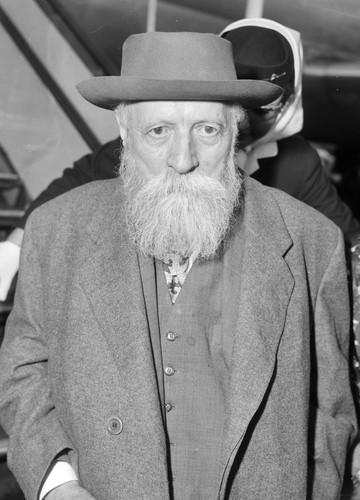
Martin Buber (pronounced [ˈmaʁtiːn̩ ˈbuːbɐ] ; Hebrew: מרטין בובר, Yiddish: מארטין בובער; 8 February 1878 – 13 June 1965) was an Austrian-Israeli philosopher best known for his philosophy of dialogue, a form of existentialism centered on the distinction between the I–Thou relationship and the I–It relationship. Born in Vienna, Buber came from a family of observant Jews, but broke with Jewish custom to pursue secular studies in philosophy. He produced writings about Zionism and worked with various bodies within the Zionist movement extensively over a nearly 50-year period spanning his time in Europe and the Near East. In 1923, Buber wrote his famous essay on existence, Ich und Du (later translated into English as I and Thou), and in 1925 he began translating the Hebrew Bible into the German language. He was nominated for the Nobel Prize in Literature ten times, and the Nobel Peace Prize seven times.
THE PRESENT VOLUME owes its existence to Rafael Buber.
— from Ich und du, 1923
Most acclaimed

Ich und du
1923
"Martin Buber, heavily influenced by the writings of Friedrich Nietzsche, unites the proto-Existentialist currents of modern German thought with the Judeo-Christian tradition, powerfully updating faith for modern times.". "This work is the centerpiece of Buber's philosophy. It lays out a view of the world in which human beings can enter into relationships using their innermost and whole being to form true partnerships. These deep forms of rapport contrast with those that spring from the Industrial Revolution, namely the common, but basically unethical, treatment of others as objects for our use and the incorrect view of the universe as merely the object of our senses' experiences. Buber goes on to demonstrate how these interhuman meetings are a reflection of the human meeting with God. For Buber, the essence of biblical religion consists in the fact that - regardless of the infinite abyss between them - a dialogue between man and God is possible."--BOOK JACKET.
Selections
Born in India and considered the leading poet on the South Asian subcontinent, Faiz Ahmed Faiz (1911-1984) was a two-time Nobel nominee and winner of the 1962 Lenin Peace Prize. His evening readings in Hindi/Urdu-speaking regions drew thousands of listeners. Associated with the Communist party in his youth, Faiz became an outspoken poet in opposition to the Pakistani government. He was also a professor of English literature, a distinguished editor and a major figure in the Afro-Asian writer's movement. This volume offers a selection of Faiz's poetry in a bilingual Urdu/English edition with a new introduction by poet and translator Agha Shahid Ali.