Discover

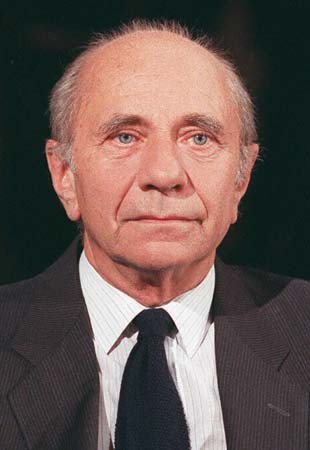
Georges Duby

Personal Information

Born October 7, 1919
Died December 3, 1996 (77 years old)
10ᵗʰ arrondissement of Paris, France
Also known as: DUBY Georges -, G Duby
59 books
4.5 (4)
161 readers

Description

There is no description yet, we will add it soon.

Books

Newest First

Art and Society in the Middle Ages

0.0 (0)
1

"Georges Duby, one of France's greatest medieval historians, returns to one of the themes central to his work and dear to his heart. Over the thousand years from the fifth to the fifteenth century, he traces the evolution of artistic forms in parallel with that of the material and cultural structures of society, in the belief that this will lead to a better understanding of both." "Duby traces shifts in the centres of artistic production and changes in the nature and status of those who promoted works of art and those who produced them, while at the same time emphasizing the crucial continuities that still gave the art of medieval Europe a basic unity, despite the emergence of national characteristics."--Jacket.

History Continues

0.0 (0)
2

In this engaging intellectual autobiography, Georges Duby looks back on a career that has led him to be called one of the most distinguished historians in the Western world. Since its beginning in the 1940s, Duby's career has been rich and varied, encompassing economic history, social history, the history of mentalites, art history, microhistory, urban history, the history of women and sexuality, and, most recently, the Church's influence on feudal society. In retracing this singular career path, Duby candidly remembers his life's most formative influences, including the legendary historians Marc Bloch and Lucien Febvre, the Annales School so closely associated with them, and the College de France. Duby also offers insights about the proper methods of gathering and using archival data and on constructing penetrating interpretations of the documents. Indeed, his discussion of how he chose his subjects, collected his materials, developed the arguments, erected the scaffolding, and constructed his theses offers the best introduction to the craft available to aspiring historians.

Moyen Age 987-1460

0.0 (0)
7

Duby examines the history of France from the rise of the Capetians in the mid-tenth century to the execution of Joan of Arc in the mid-fifteenth. He takes the evolution of power and the emergence of the French state as his central themes, and guides the reader through complex - and, in many respects, still unfamiliar, yet fascinating terrain. He describes the growth of the castle and the village, the building blocks of the new Western European civilization of the second millennium AD.

The knight, the lady, and the priest

0.0 (0)
1

"Until the Middle Ages, a king could marry his first cousin, a priest could have a wife and several concubines, and a nobleman could banish a wife if she didn't produce a son. Marriage was an instrument of control in the hands of kings and noblemen, who used it to keep their power intact; to gain land, wealth, and authority; and to bind women to the partiarchal system".